It sounds like a strange question. You buy an air purifier to improve the air quality. The idea that it could make things worse feels counterintuitive. But the concern is legitimate, and the people asking it online aren't being paranoid — they're doing exactly the right thing.
Some air purifiers do produce ozone. Some produce it intentionally. Some produce it as a byproduct of a technology that also does useful things. And ozone, even at relatively low concentrations, is a respiratory irritant that can worsen symptoms for people with asthma, lung disease, or chemical sensitivities — the very people most likely to be shopping for an air purifier in the first place.
Here's what's actually going on, and how to tell the difference between a purifier that helps and one that doesn't.
What ozone is and why it matters indoors
Ozone is a molecule made of three oxygen atoms. Outdoors, it forms naturally in the upper atmosphere and provides the protective ozone layer. At ground level, it's a component of smog — produced by the reaction of sunlight with pollutants from vehicle exhaust and industry. Ground-level ozone is a known respiratory irritant, and outdoor air quality warnings specifically track it.
Indoors, ozone can be generated by certain air purifier technologies. At elevated concentrations, ozone irritates the airways, can worsen asthma symptoms, and may cause coughing, chest tightness, and shortness of breath. The EPA has noted that ozone can react with other indoor chemicals to create secondary pollutants, including formaldehyde and ultrafine particles, that weren't present before the purifier was turned on.
This is the core of the concern: some purifiers, in trying to clean your air, introduce a pollutant that wasn't there.
The technologies that produce ozone — and why
Not all air purifiers involve ozone. The concern is specific to certain types.
Dedicated ozone generators are marketed as air purifiers in some contexts, sold on claims that high ozone concentrations destroy mold, bacteria, and odors. This is chemically true — ozone is a strong oxidizer and does break down organic compounds. But the concentrations required for effective "shock treatment" are far higher than any level safe for continuous human occupancy. The EPA, FDA, and CPSC have all issued warnings about ozone generators used in occupied spaces. These are not the same as air purifiers that use ionization technology responsibly — they're a different product category, and they don't belong in a lived-in room.
Electrostatic precipitators use an electrical charge to trap particles on collection plates. As a byproduct of generating that charge, they can produce ozone. The amount varies by design, but the mechanism makes low-level ozone production an inherent risk with many units of this type.
Ultraviolet germicidal irradiation (UV-C) on its own doesn't produce ozone. However, UV-C lamps that emit wavelengths below 200 nanometers — specifically in the vacuum UV range — can generate ozone through photochemical reactions with oxygen. Most reputable UV-C air purifiers are designed to operate at wavelengths that don't produce ozone, but the quality of their design varies.
Bipolar ionization and negative ion generators are where the most confusion lives. These technologies work by releasing charged ions into the room air — ions that attach to particles, causing them to clump together, making them easier to capture or fall out of the air. This is a legitimate and useful air cleaning mechanism. But poorly designed or cheaply made ionizers can produce ozone as a byproduct of the ion-generation process. Well-designed bipolar ionization systems produce very little or no measurable ozone. The technology itself isn't the problem — the implementation is.
Why the r/AirPurifiers skepticism is justified
The air purifier market has not been well-regulated historically. Products have been sold with ozone-producing claims marketed as benefits — using language like "activated oxygen" or "energized oxygen" to make ozone sound like a feature rather than a risk. Some units sold as ionizers or "air sanitizers" produce enough ozone to be problematic for sensitive individuals even at normal residential distances.
This is why the online air purifier community is sometimes skeptical of ionization technology. That skepticism is a reasonable response to a market that has, in some categories, not been honest. The appropriate response isn't to dismiss the whole technology class — ionization done right is genuinely useful — but to look for evidence that a specific product has been tested and certified to safe ozone thresholds.
What CARB certification actually means
The California Air Resources Board sets the most stringent ozone-emission standards for air-cleaning devices sold in the United States. To be CARB-certified, an air purifier must be tested and verified to produce no more than 0.050 parts per million of ozone under standard conditions. That threshold is the same as the FDA's limit for ozone output from medical devices intended for continuous use.
CARB certification isn't a marketing claim — it's a third-party-tested threshold that a product either meets or doesn't meet. If an air purifier carries CARB-certified ozone-free status, it has been independently verified to produce ozone at or below that safe limit. It's one of the most useful pieces of information available when evaluating whether a purifier with ionization technology is safe to run continuously in a living space.
The iAdaptAir is CARB-certified ozone-free. That certification applies to the full unit including its bipolar ionization technology — it isn't a claim that the HEPA filter doesn't produce ozone (HEPA filters don't), it's a statement that the whole system, tested together, meets the safe threshold.
Other ways a purifier can theoretically worsen air quality
Ozone gets most of the attention, but it's worth knowing the other mechanisms.
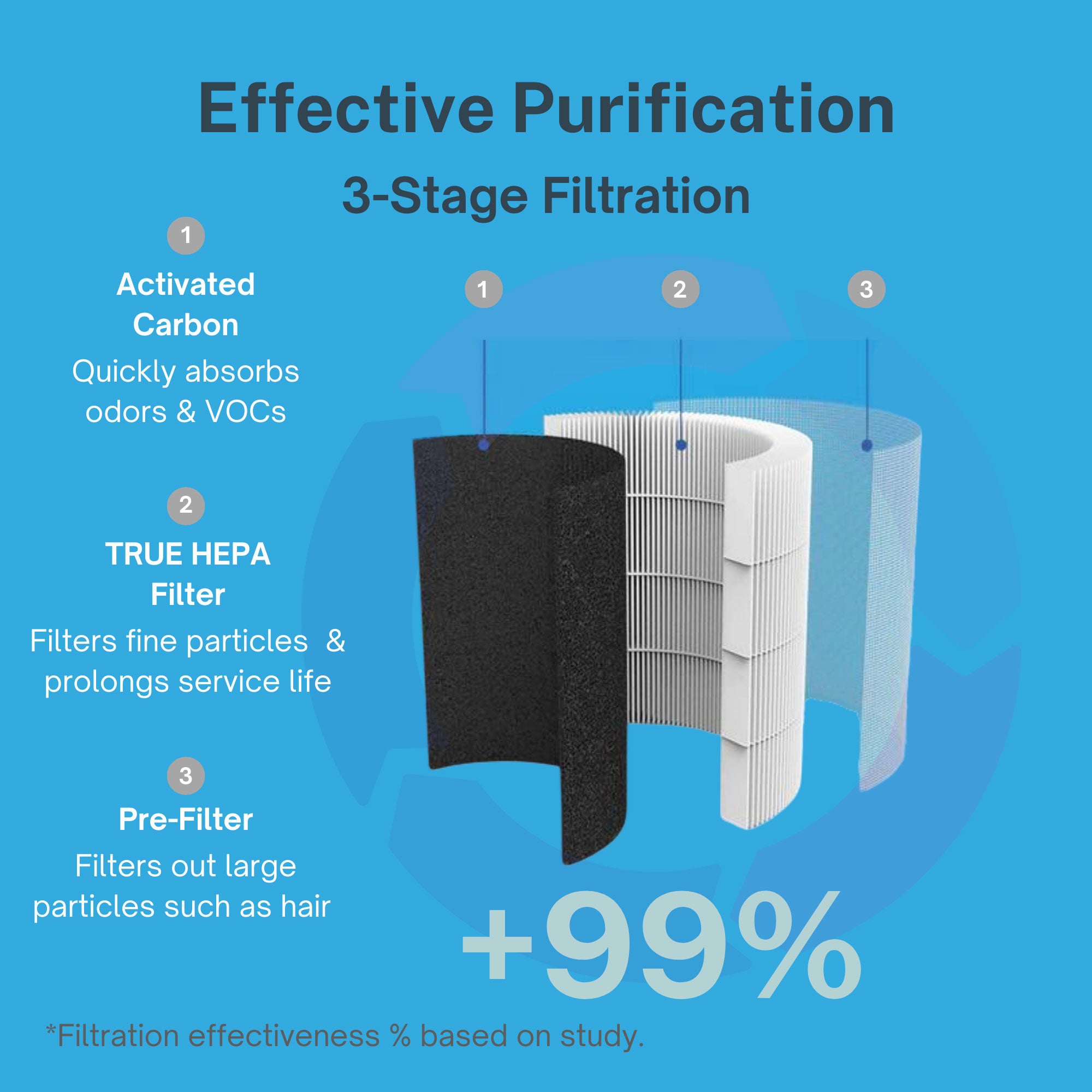
A loaded, never-replaced filter can become a breeding ground for biological growth in very humid conditions. HEPA filters trap mold spores, bacteria, and other biological material. In a high-humidity environment with a filter that hasn't been replaced on schedule, that accumulated material can create a secondary contamination source as the purifier's airflow passes over it. This is an argument for filter maintenance, not against air purification — but it's real.
UV-C lamps past their useful life lose germicidal effectiveness and may produce unintended byproducts depending on lamp type. Like filters, UV-C components need to be replaced on the manufacturer's recommended schedule.
Using an ozone generator in an occupied room, as described above, is not safe regardless of how it's marketed.
Running a purifier that creates secondary pollutants through reaction with indoor VOCs is a documented risk with high-ozone-output devices. If your home has elevated VOC levels from paint, new furniture, or cleaning products, adding a high-ozone unit dramatically increases the risk of secondary pollutant formation.
How to evaluate a purifier before you buy
Look for CARB certification, specifically for air purifiers with any ionization or UV technology. This is the clearest independent verification that ozone output has been tested and verified to a safe threshold.
Read the product specifications for the UV-C component. Look for confirmation that the lamps operate at wavelengths above 200 nanometers — the range that doesn't produce ozone through photochemical reactions.
Be cautious with products marketed as "ozone generators," "activated oxygen generators," or similar — these are a different category from air purifiers and are not intended for occupied spaces.
For people with asthma, CIRS, or chemical sensitivities, CARB certification is especially worth prioritizing. These are exactly the people for whom even low-level ozone exposure is most problematic, and they're often the most motivated air purifier buyers.
Clean air means genuinely cleaner air
A good air purifier makes your indoor environment better — capturing particles, removing VOCs and odors, addressing biological contaminants, and running continuously without introducing new problems. The technology to do all of that without producing meaningful ozone exists, is well-characterized, and is independently verifiable.
The skepticism from the online air purifier community is warranted by a portion of the market. The answer to that skepticism isn't to avoid ionization technology — it's to look for independent certification that a specific product has been tested to safe standards.
When you see CARB-certified ozone-free on a purifier that uses ionization, that's not marketing language. It's a verified test result. And for anyone managing a sensitive respiratory environment, it's the clearest signal that the technology is on your side.
For air purification you can trust to make your air better — not worse — shop Air Oasis and Breathe Better, Live Better.