Spring pollen season feels different for some people than others. For most, it means a few weeks of sneezing and congestion. For others — people with ash tree allergies in particular — it can mean genuine respiratory distress. Wheezing. Chest tightness. Asthma flares that come out of nowhere. Days that are hard to get through.
If your spring symptoms have ever felt like more than just "bad allergies," ash pollen may be part of the reason.
What makes ash tree pollen a significant allergen
Ash trees (Fraxinus species) are among the most widely planted trees in North America. They've been a staple of urban and suburban landscaping for decades — lining streets, filling parks, shading neighborhoods coast to coast. That widespread distribution matters enormously for allergy sufferers because it means exposure to ash pollen is hard to avoid in the spring across much of the country.
Ash trees typically pollinate in spring, with timing varying by region and species — generally from March through May in most of the continental United States. The pollen is lightweight, wind-dispersed, and produced in substantial quantities. On high-pollen days, visible clouds of it can drift considerable distances from source trees.
The American College of Allergy, Asthma & Immunology identifies ash as a clinically significant tree allergen. Research published in Allergy has characterized the major allergen proteins in ash pollen — particularly Ole e 1-like proteins, so named for their structural similarity to proteins in olive pollen, a well-studied allergen family. These proteins are potent IgE sensitizers, meaning they're effective at triggering the immune responses that underlie allergic reactions.
Why ash pollen and asthma are closely linked
Not all tree pollens are equally likely to provoke lower airway symptoms. Ash is notable in allergy research for its documented association with asthma exacerbations — not just upper respiratory symptoms like congestion and sneezing, but also lower respiratory symptoms such as wheezing, chest tightness, and shortness of breath.
Research examining tree pollen species and asthma risk noted that Oleaceae pollen — which includes ash, olive, and privet — shows particularly strong associations with bronchial inflammation in sensitized individuals compared to many other common tree pollen types. The Ole e 1-like proteins characteristic of this pollen family appear to have properties that make them especially effective at triggering airway inflammation in people with underlying airway sensitivity.
For someone who already has asthma, ash pollen season can be among the most challenging weeks of the year. Peak pollen days may correlate with increased rescue inhaler use, reduced exercise tolerance, and disrupted sleep due to nighttime coughing or wheezing. For people who don't have a formal asthma diagnosis but have reactive airways, high ash pollen exposure can be the first time they experience symptoms that feel like more than typical hay fever.
This is worth taking seriously. If you experience chest symptoms during the spring pollen season — not just nasal congestion, but actual breathing difficulty — that pattern warrants evaluation by a clinician. Asthma can be triggered or worsened by pollen exposure, and it's manageable with appropriate diagnosis and treatment.
The cross-reactivity factor with olive and privet
Ash pollen's relationship to olive (Olea europaea) pollen deserves specific mention. Because ash and olive share structurally similar major allergen proteins, sensitization to one can produce cross-reactive responses to the other. This matters most for people who live in or travel to regions with significant olive cultivation, or who have olive trees in their neighborhood. If you've ever noticed that your symptoms worsen in certain geographic areas or around ornamental olive plantings, cross-reactivity between ash and olive allergens is a plausible explanation worth exploring with an allergist.
Privet (Ligustrum species), another common ornamental shrub also in the Oleaceae family, shares similar allergen proteins and can contribute to the same seasonal immune burden. In many suburban environments, a person may be exposed to ash, privet, and potentially olive pollen within a narrow window, compounding the total allergen load and making symptoms harder to control.
What severe ash pollen reactions look like
Ash tree allergies produce the full spectrum of allergic rhinitis symptoms — nasal congestion, runny nose, sneezing, and itchy, watery eyes. These are the most common presentations. But in people with significant sensitization or underlying airway reactivity, ash pollen can also provoke lower respiratory symptoms.
Wheezing, a whistling sound when breathing, reflects narrowing of the airways in response to inflammation. Chest tightness — a sense of pressure or constriction — can accompany airway inflammation even without audible wheezing. Persistent cough that worsens during pollen season, particularly at night, is another pattern associated with pollen-triggered airway irritation. Shortness of breath with activities that normally cause none is a signal that warrants medical attention.
These symptoms exist on a spectrum. They don't mean everyone with ash tree allergies will develop asthma. But they do mean that ash pollen is not a trivially mild allergen, and that for people with the relevant susceptibilities, exposure management is genuinely important — not just a quality-of-life preference.
Reducing ash pollen exposure at home
Outdoor pollen exposure is difficult to fully control. But your indoor environment is something you have real influence over, and that matters during ash season.
Pollen doesn't respect closed windows entirely — it infiltrates through gaps, clings to clothing and hair, and comes in on pets. But keeping windows closed during high-pollen periods, showering after spending time outdoors, and changing clothes when you come inside all meaningfully reduce how much pollen you introduce into your living space.
Monitoring daily pollen counts helps you make informed decisions about outdoor time and when to be especially vigilant about indoor air management. Many weather services now include tree-specific pollen forecasts.
For people with ash tree allergies and any degree of respiratory involvement, indoor air quality during pollen season is not a secondary concern. It's where you have the most control over what you breathe.
How air purification supports respiratory health during ash season
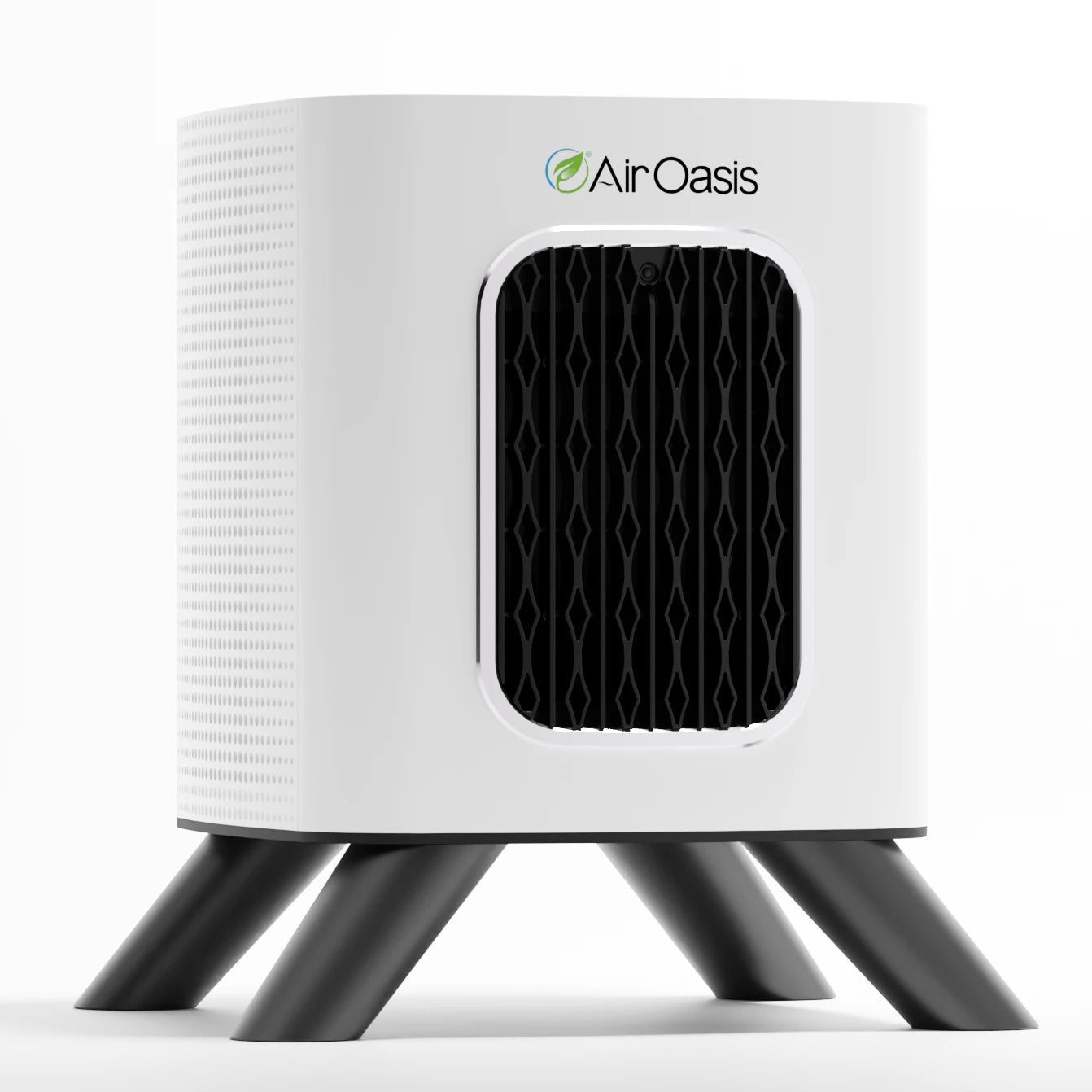
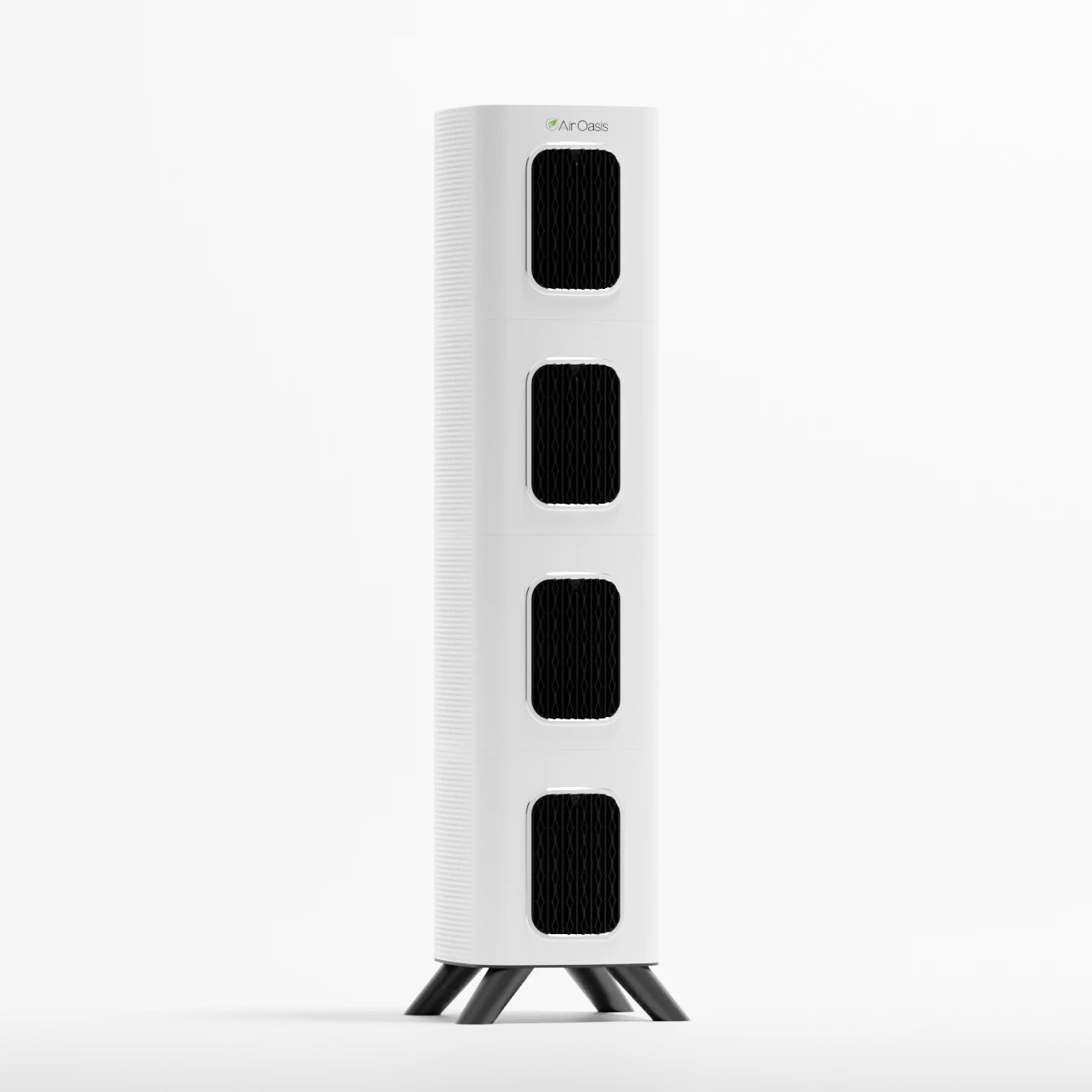
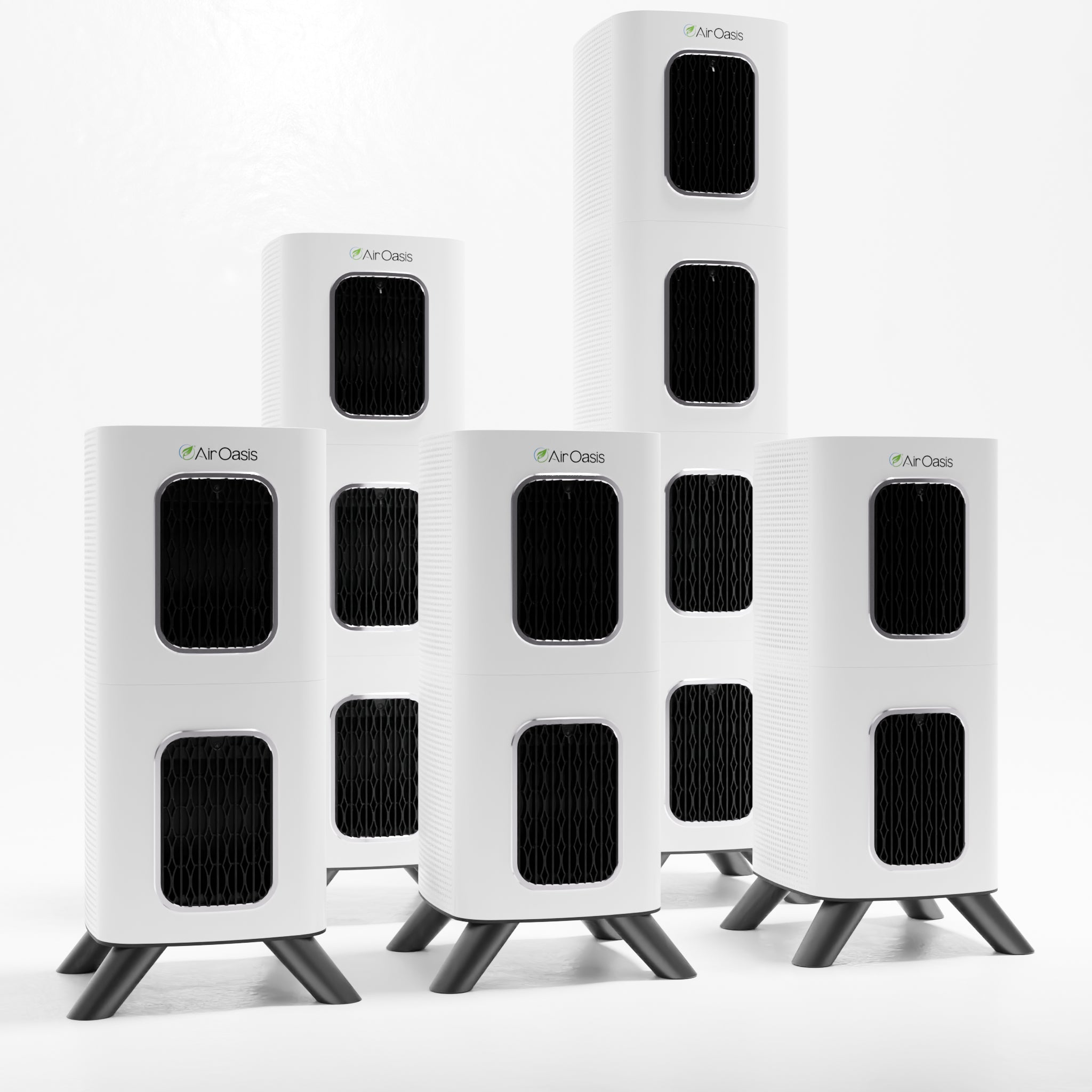
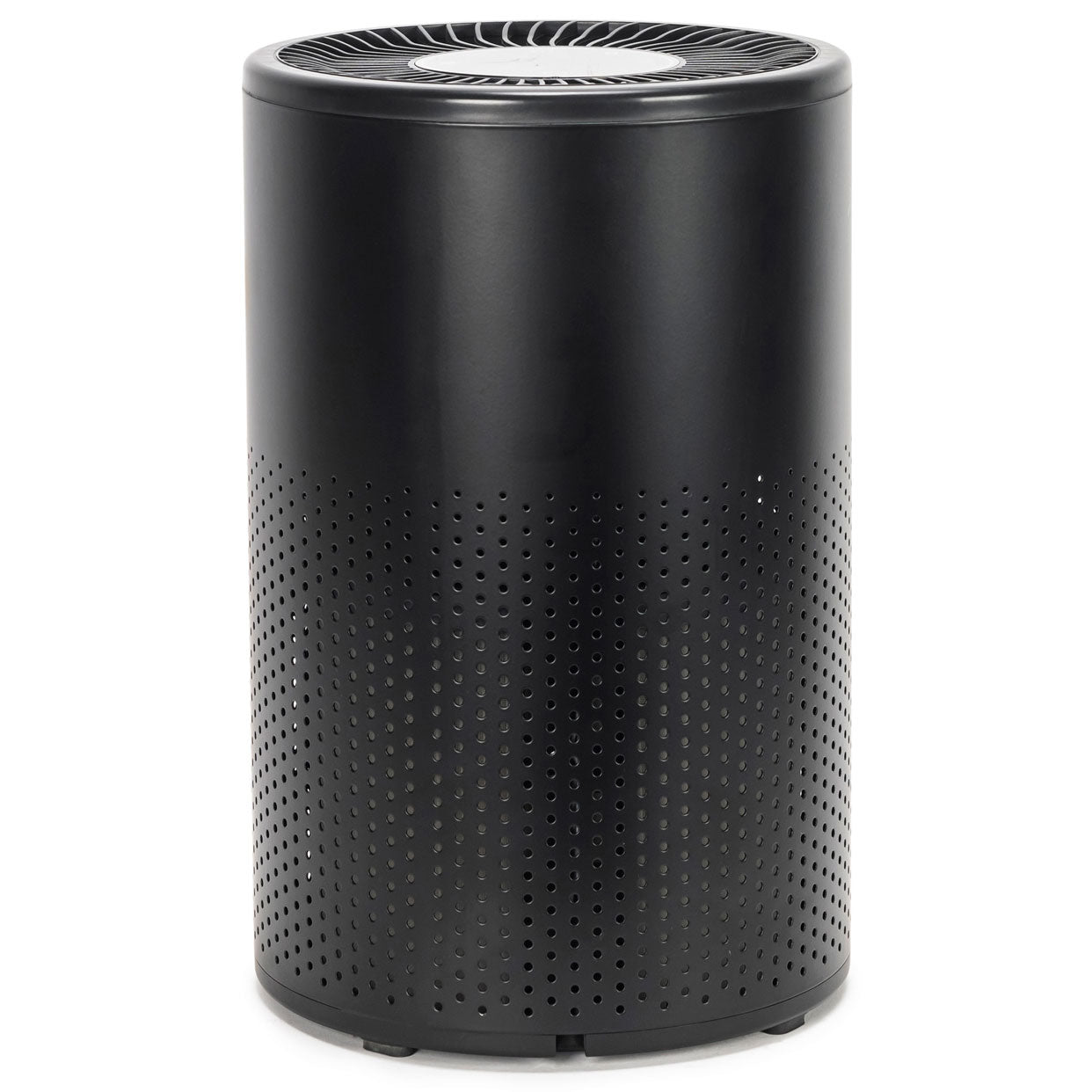
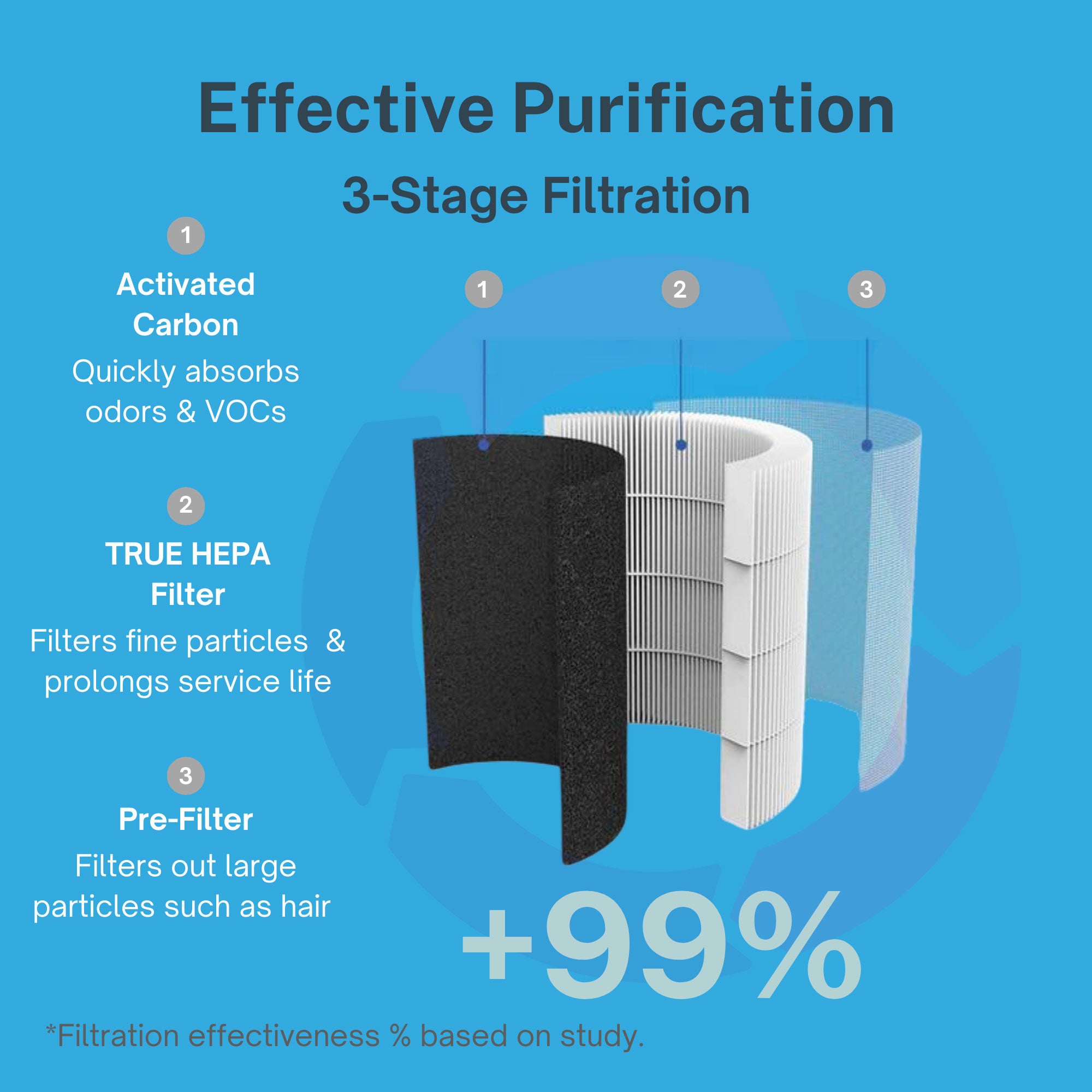
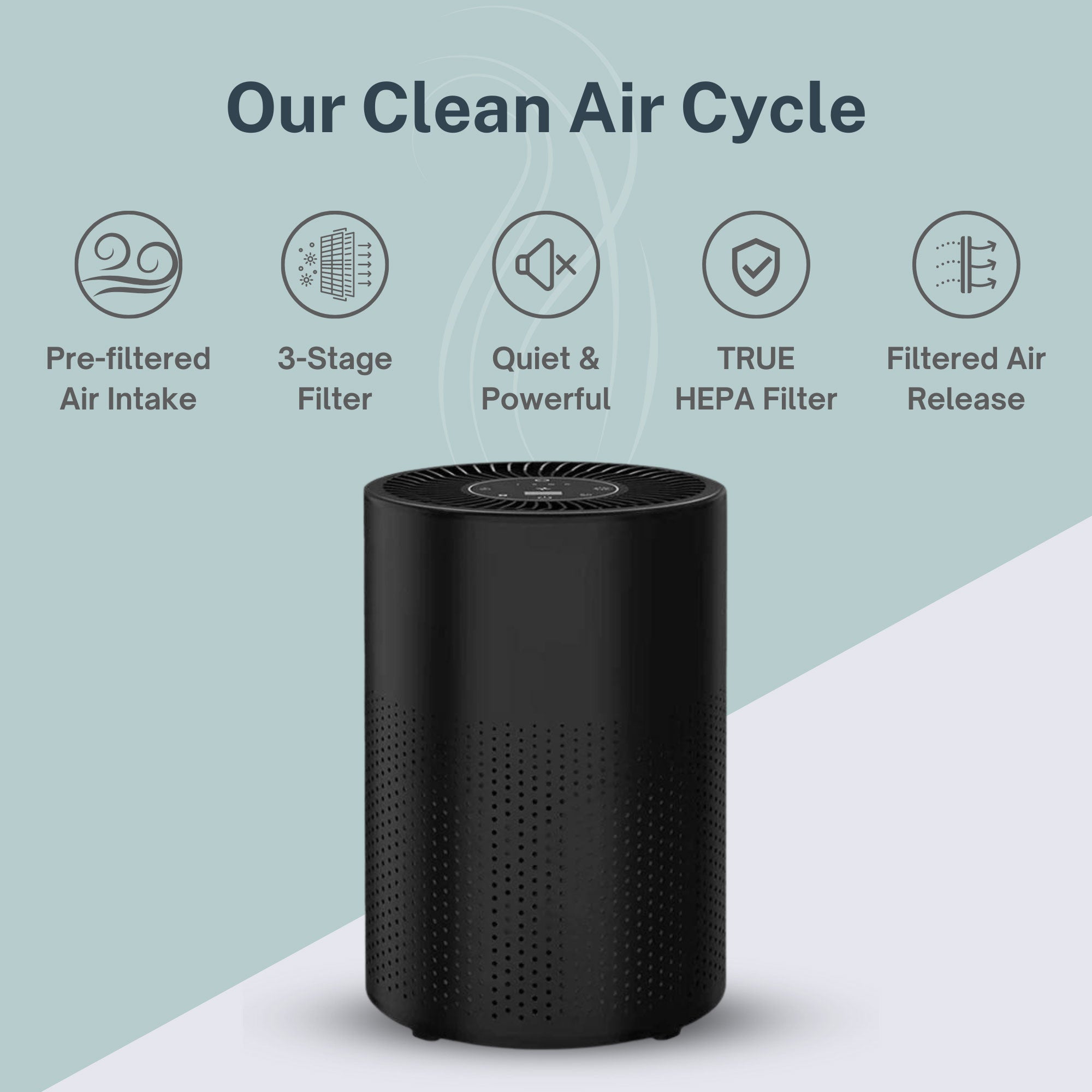
The iAdaptAir by Air Oasis uses true HEPA filtration to capture airborne particles as small as 0.3 microns. Ash pollen grains are substantially larger than that threshold — typically in the 20–35 micron range — meaning they're captured efficiently by a properly sized HEPA unit running continuously in your space.
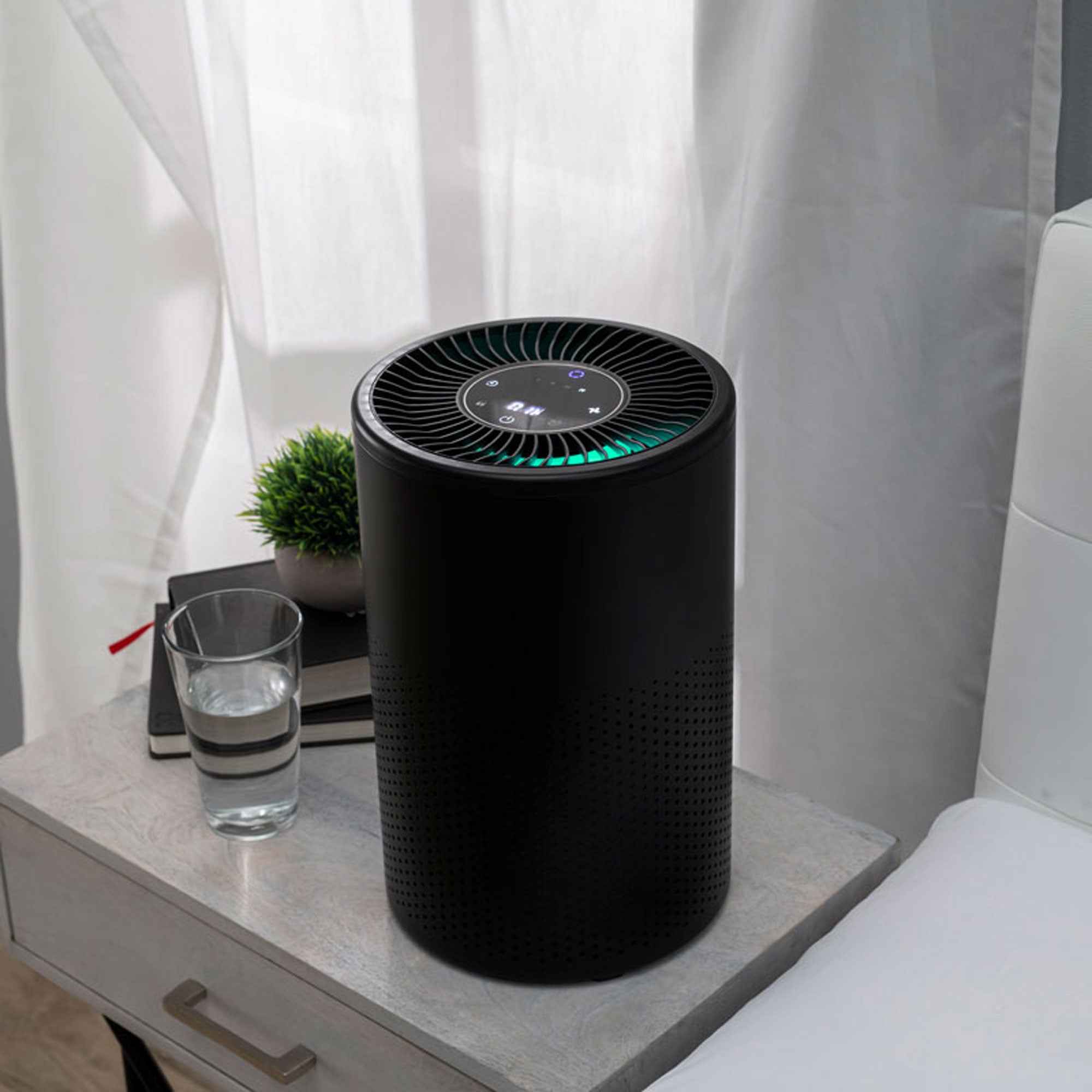
For people managing allergy-related respiratory symptoms, the iAdaptAir's CARB-certified ozone-free design is an important consideration. Ozone is a respiratory irritant and is contraindicated for continuous use in homes where airway sensitivity is already a factor. The iAdaptAir produces no ozone — it's safe for continuous operation even for people with asthma or reactive airways. That means it can run throughout pollen season without adding an additional respiratory burden.
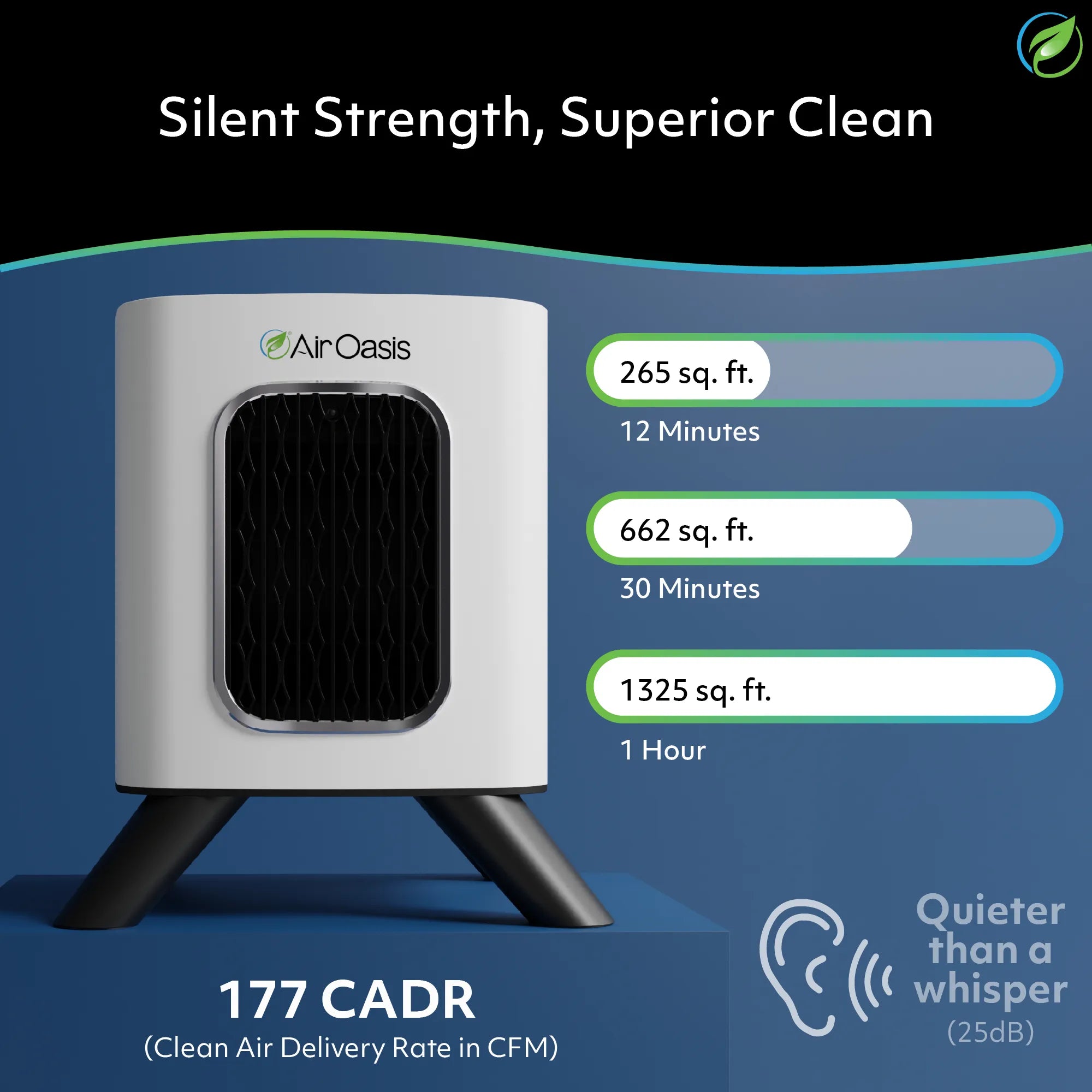
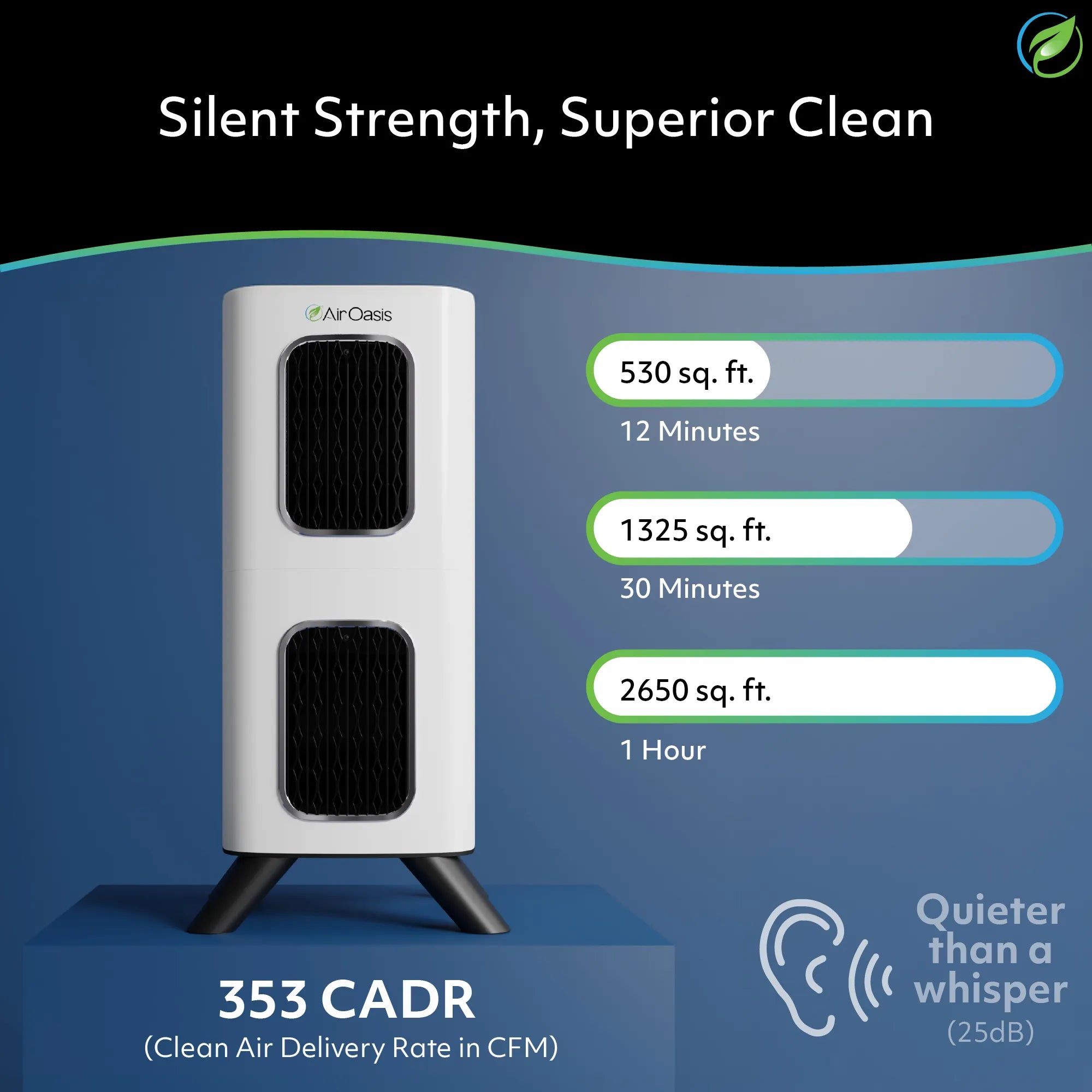
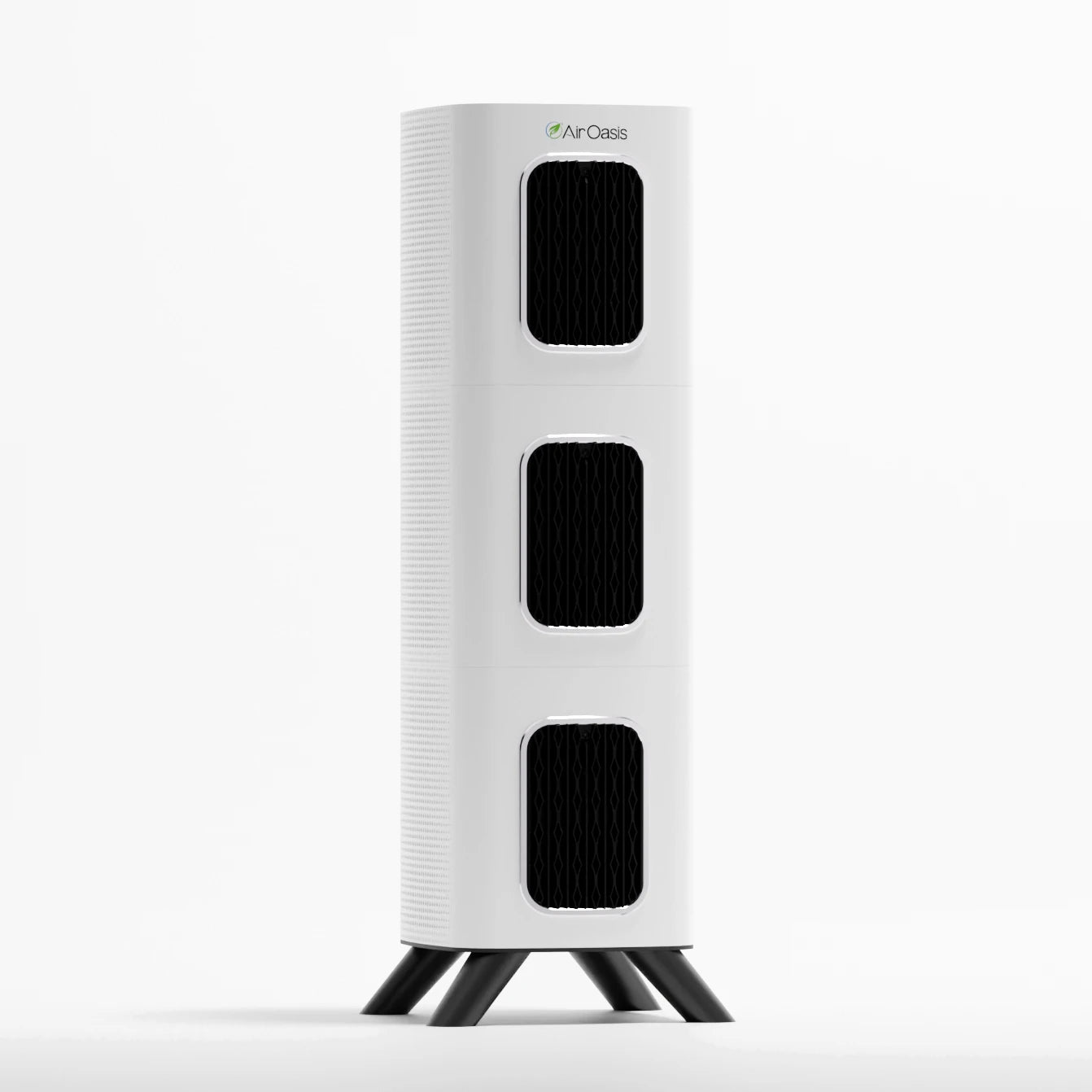
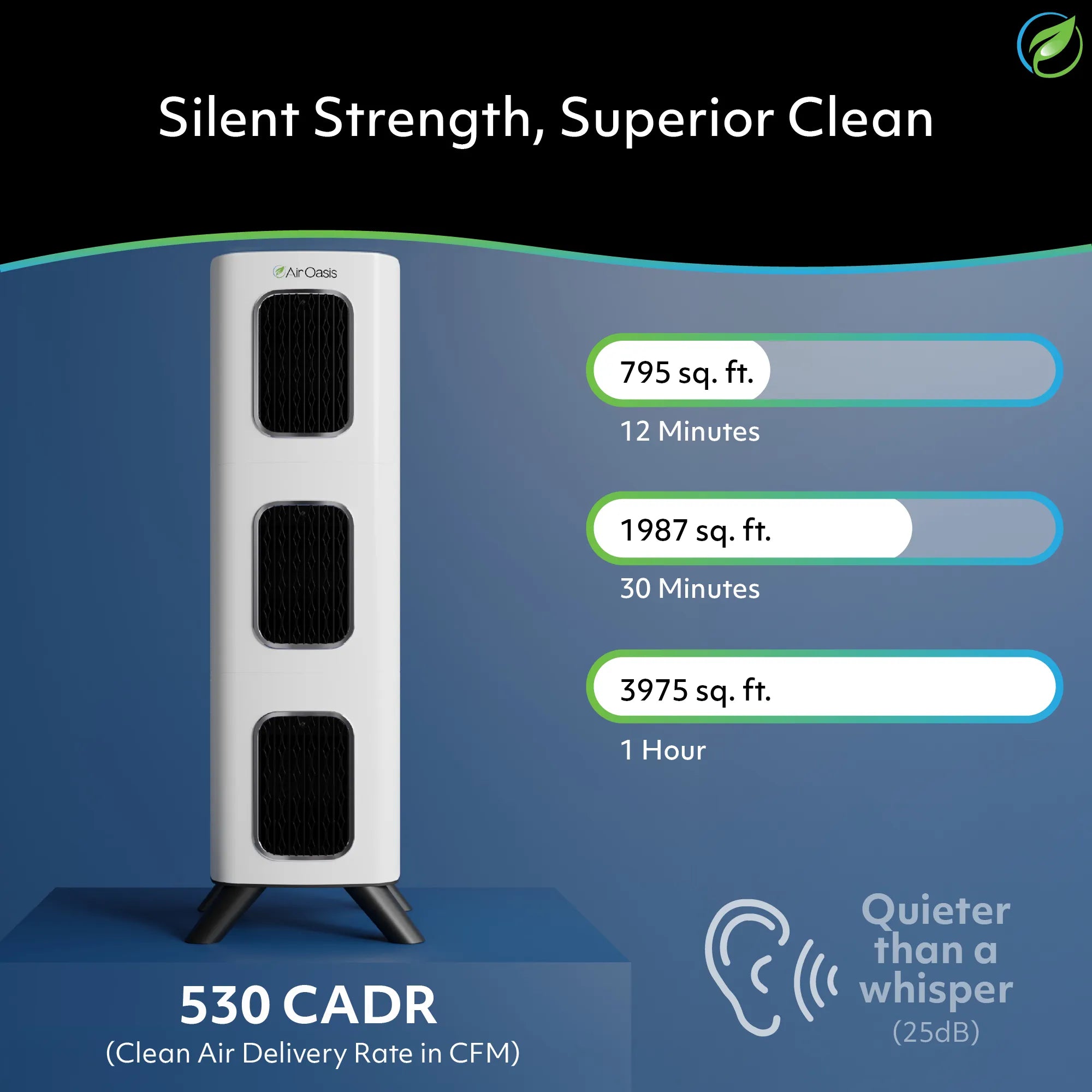
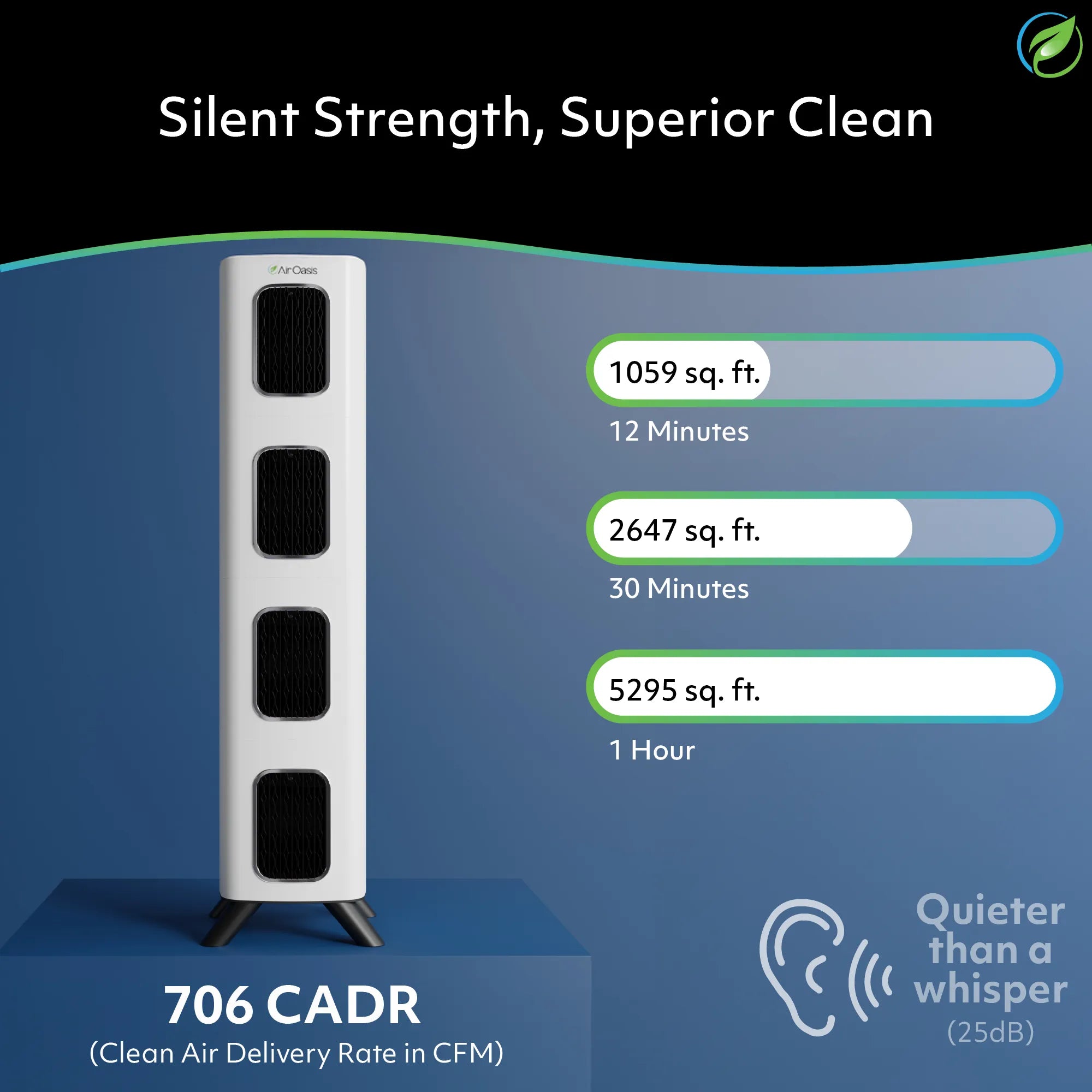
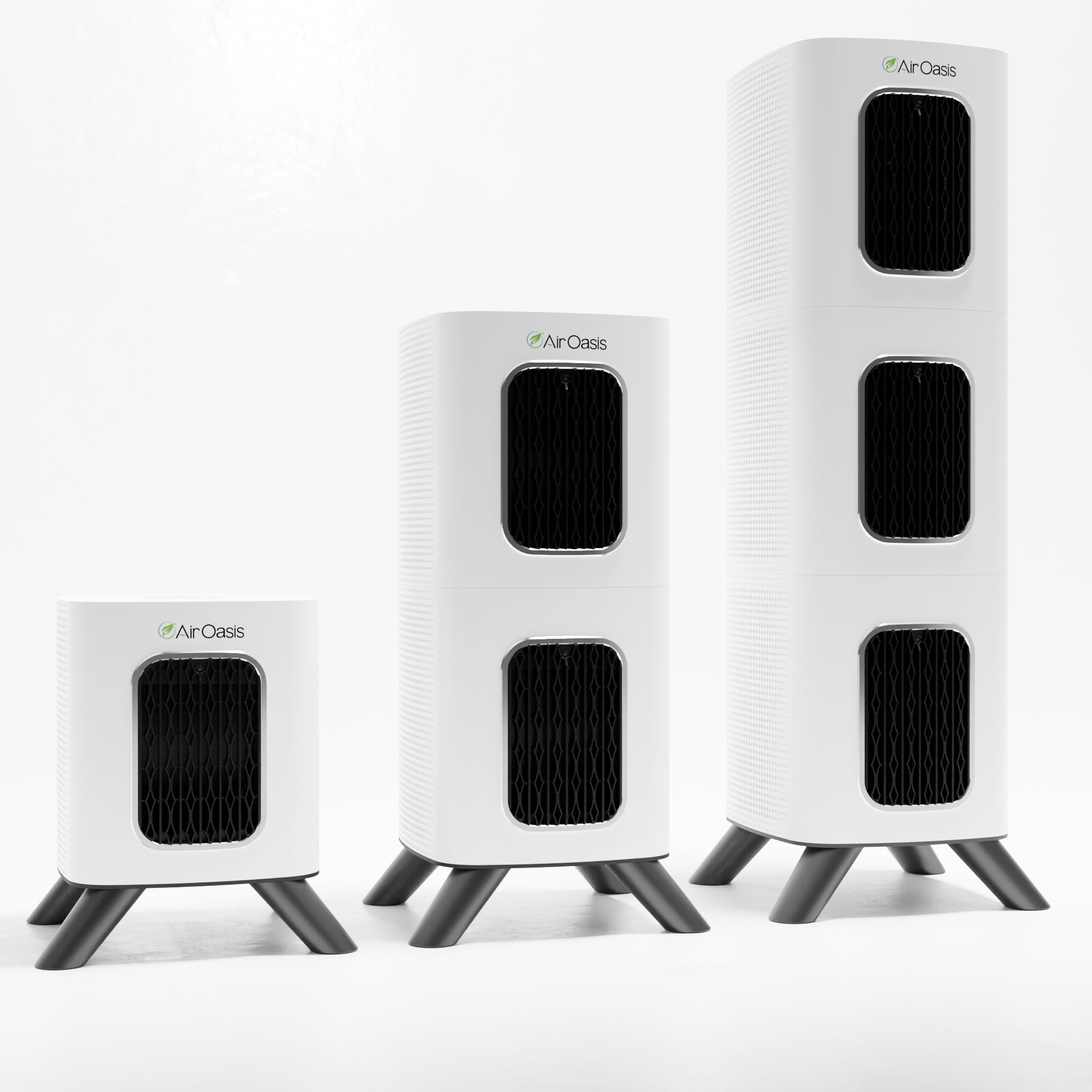
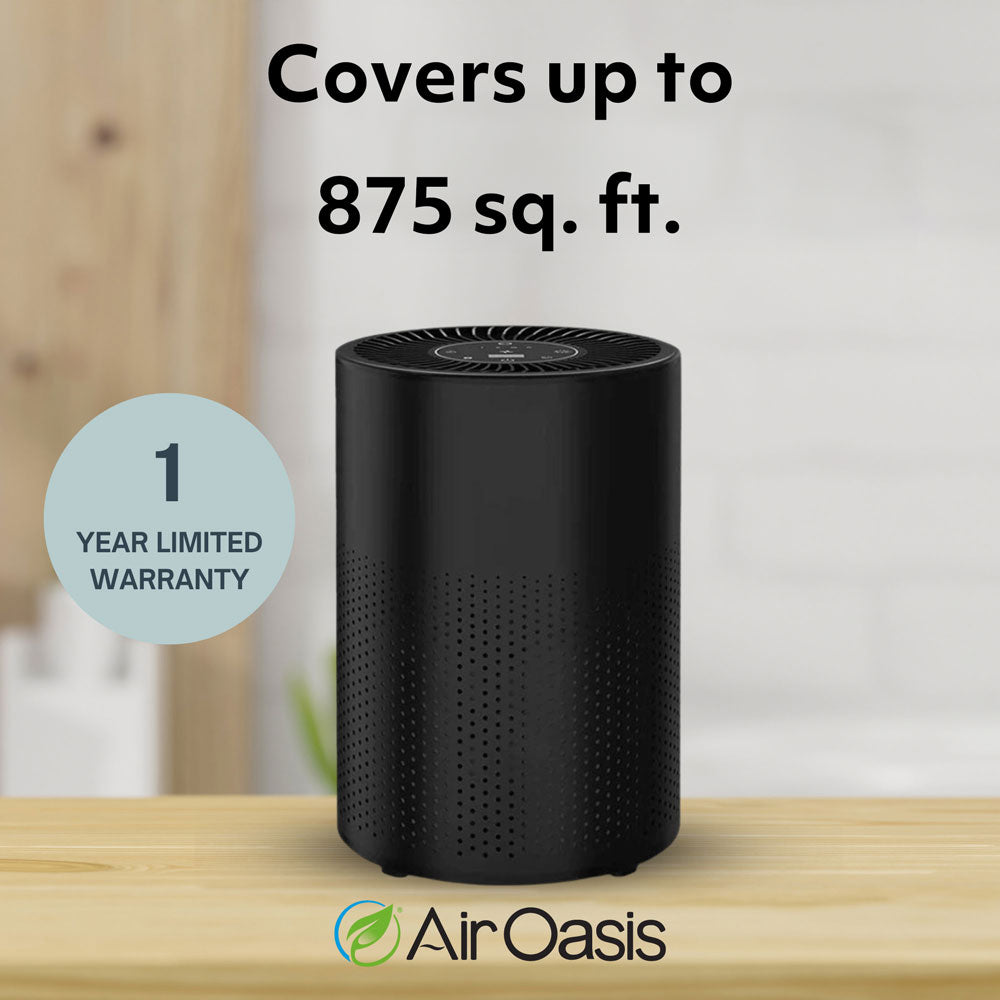
Sizing it to your actual room ensures genuine whole-room air circulation rather than localized filtration. The 2S covers up to 265 square feet, the 2M up to 530, the 2L up to 795, and the 2P up to 1,059 — all based on 12-minute air cycles at standard ceiling height. The rooms where you sleep and spend the most time are the highest priority during the active pollen season.
Breathe easier this spring
Ash tree allergies don't affect everyone the same way. For some people, spring means mild symptoms and easy management. For others — especially those with asthma or airway sensitivity — it means weeks of real respiratory challenge. Understanding which category you fall into and having a plan for both your medical management and your indoor environment make a measurable difference.
If spring symptoms are affecting your breathing, not just your nose, talk to an allergist. And for your home environment, give your airways the clean air they need to recover each night. Shop the iAdaptAir at Air Oasis and make this pollen season more manageable. Breathe Better, Live Better.