You've put real money into finishing your basement. New drywall, flooring, maybe a home theater or a guest bedroom. It looks great — but here's a question worth asking before you settle in: is the air down there actually clean? Basements have a distinct set of air quality challenges that upper floors simply don't share, and understanding them is the difference between choosing the right air purifier and choosing one that's too small for the job.
The Short Answer: Same Purifier, Smarter Sizing
A finished basement doesn't require a specialized or different type of air purifier. The same filtration technologies that clean air in a bedroom or living room — True HEPA filtration, activated carbon, UV-C light, bipolar ionization — are exactly what you need below grade too. What changes is not the technology but the sizing calculation, and in some basements, that calculation deserves more thought than a quick square-footage check.
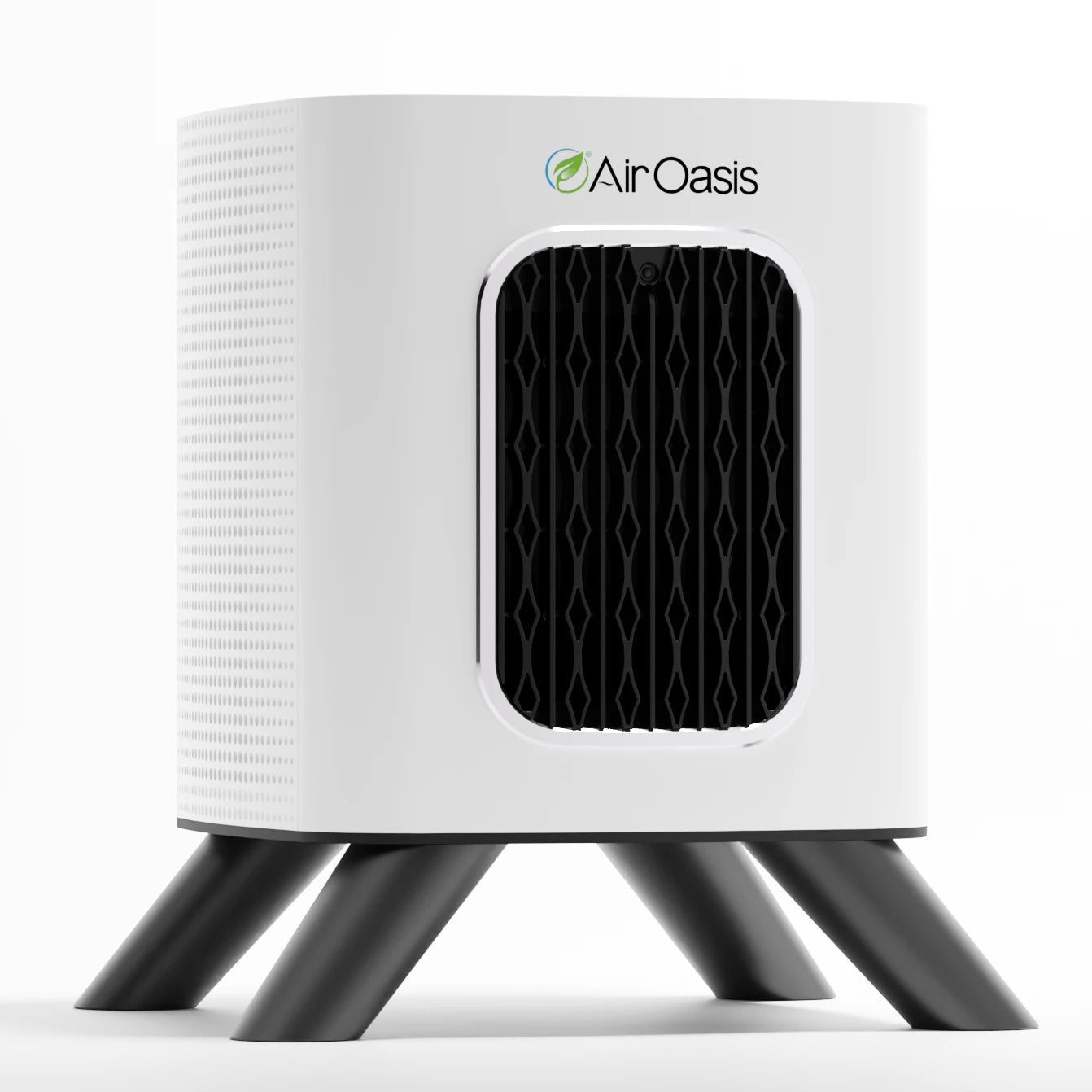
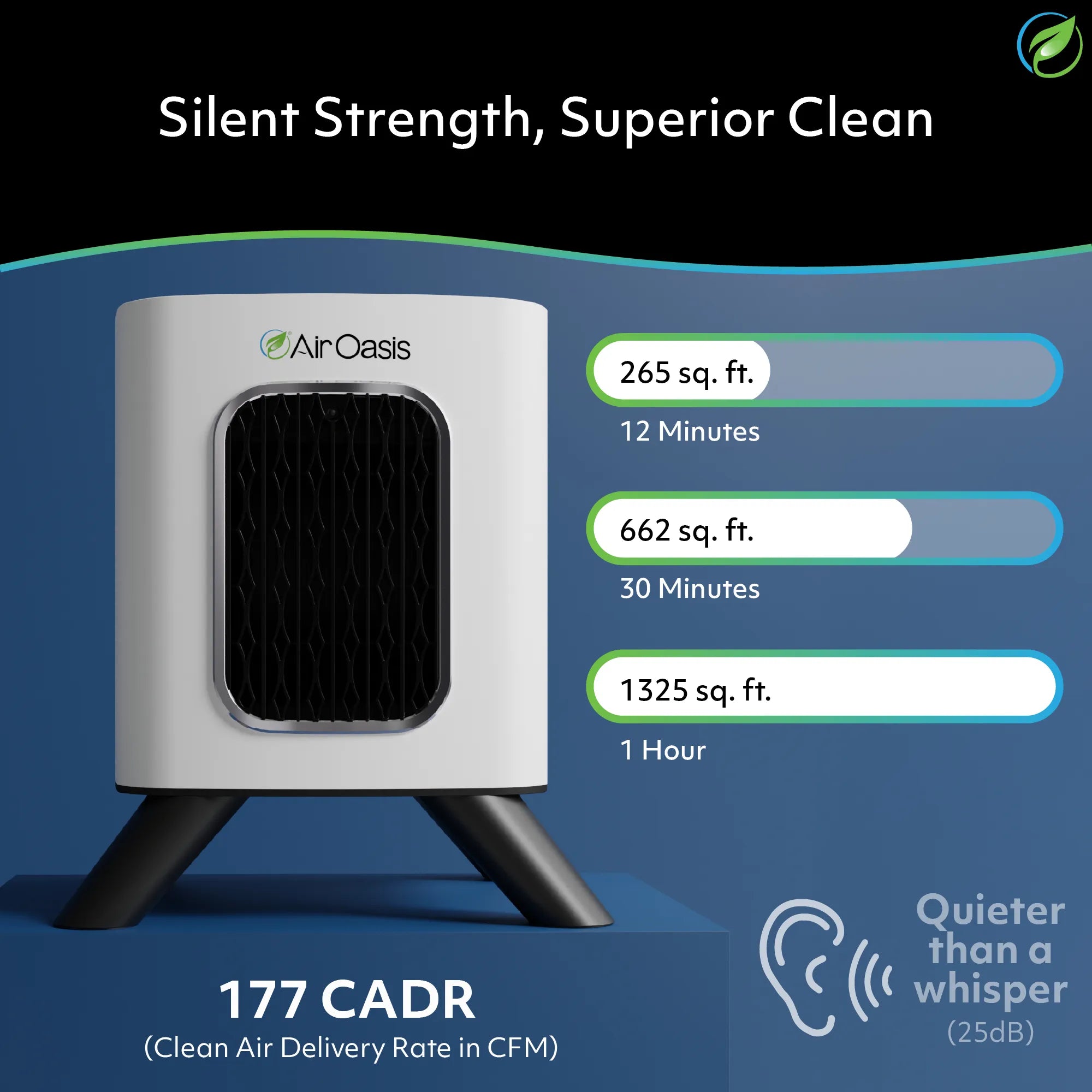
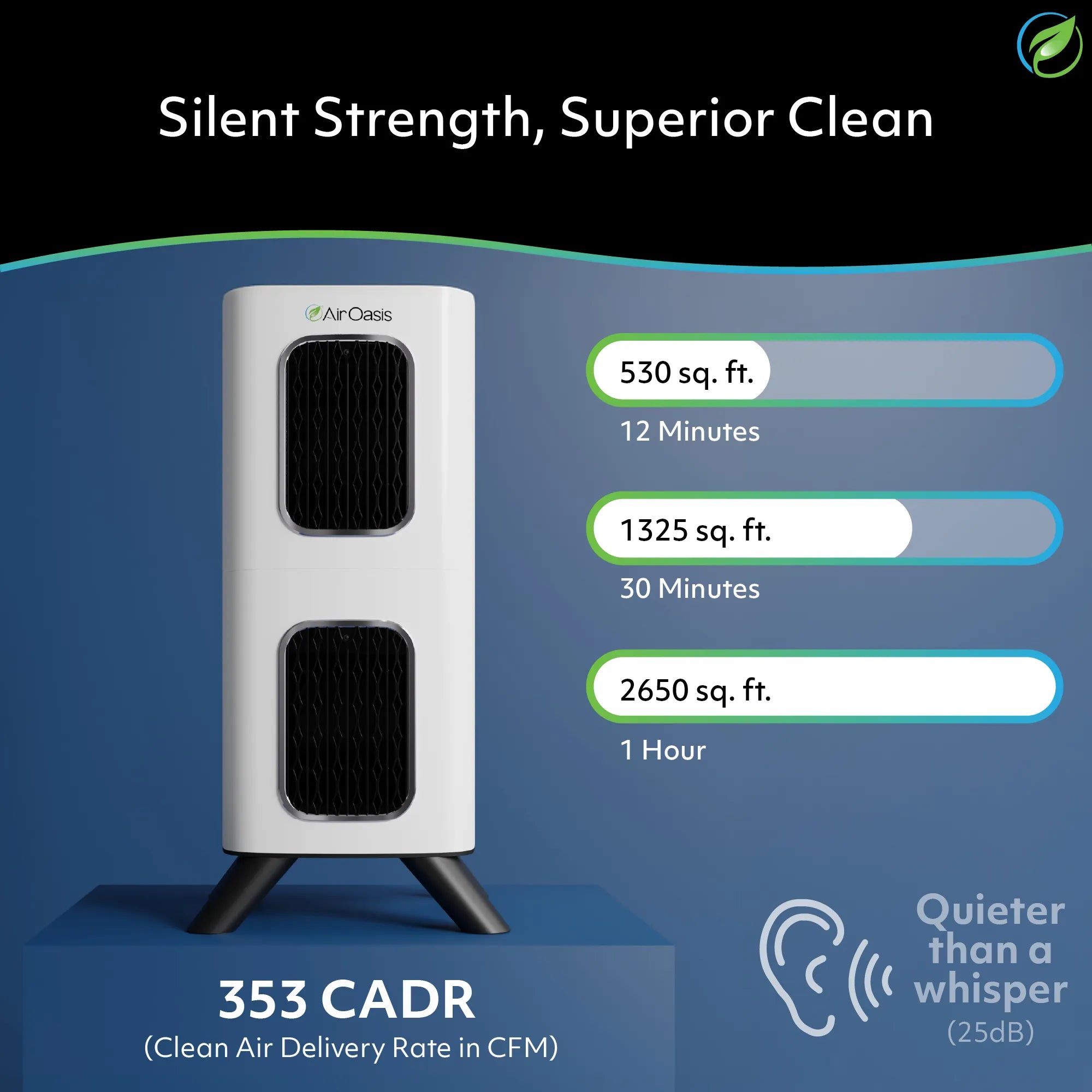
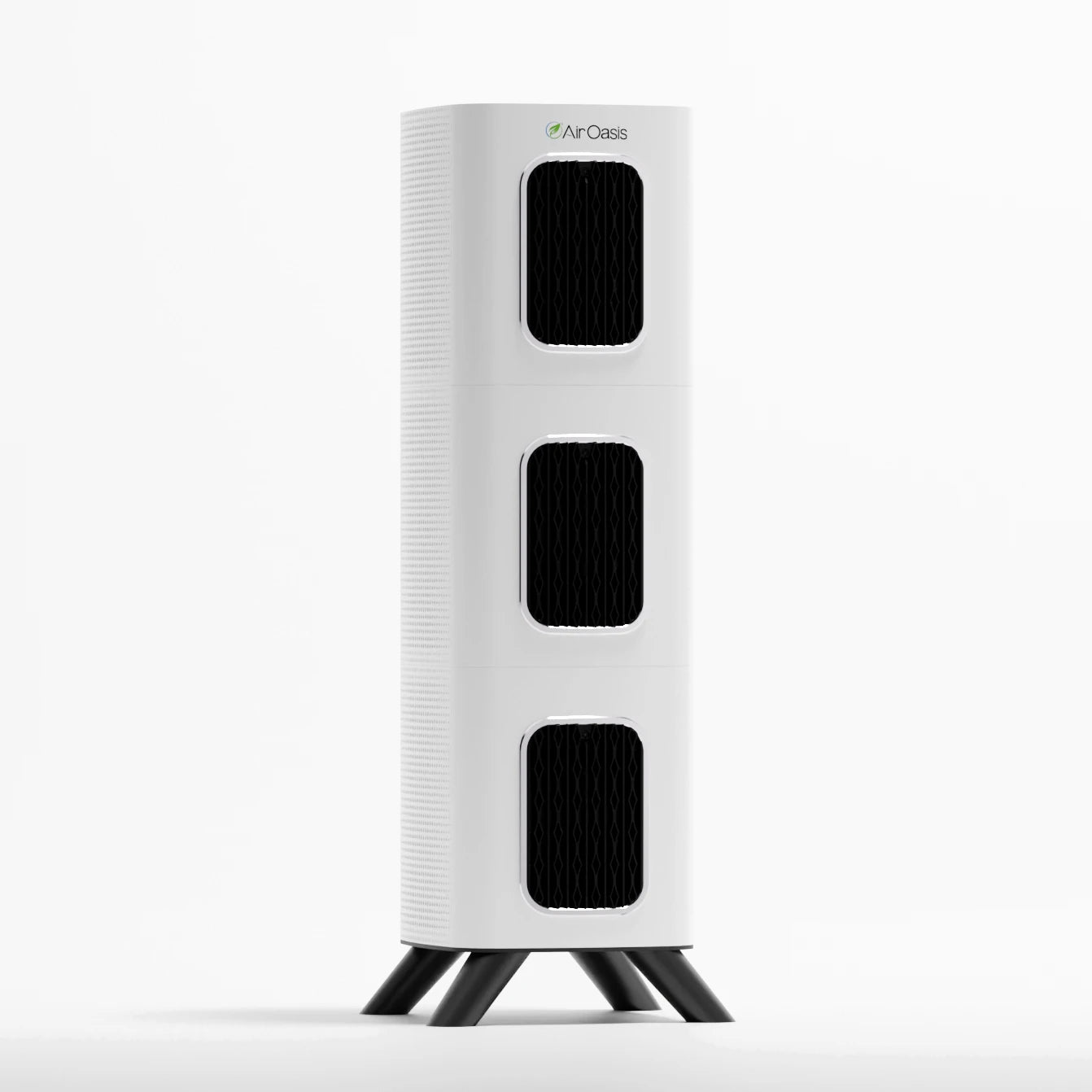
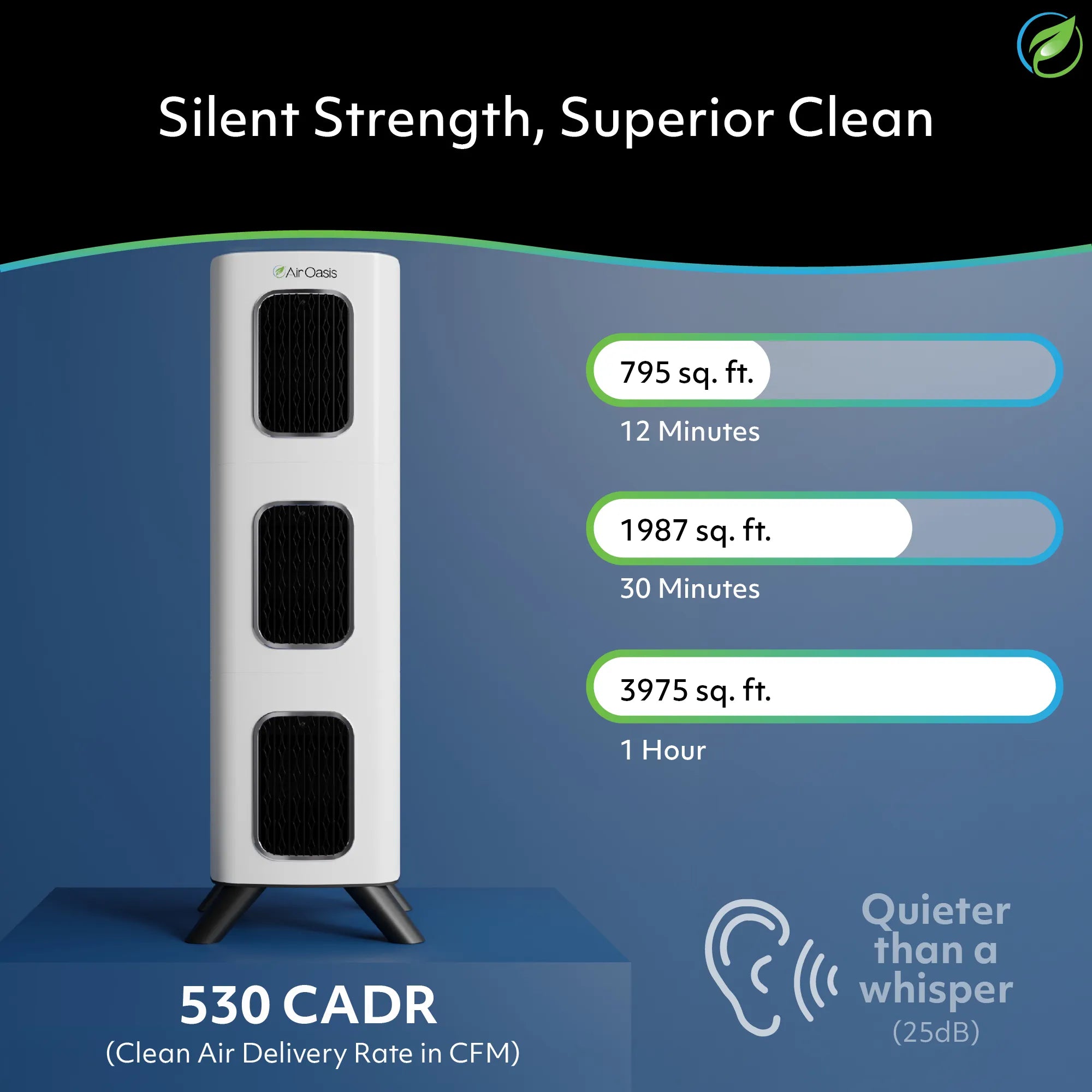
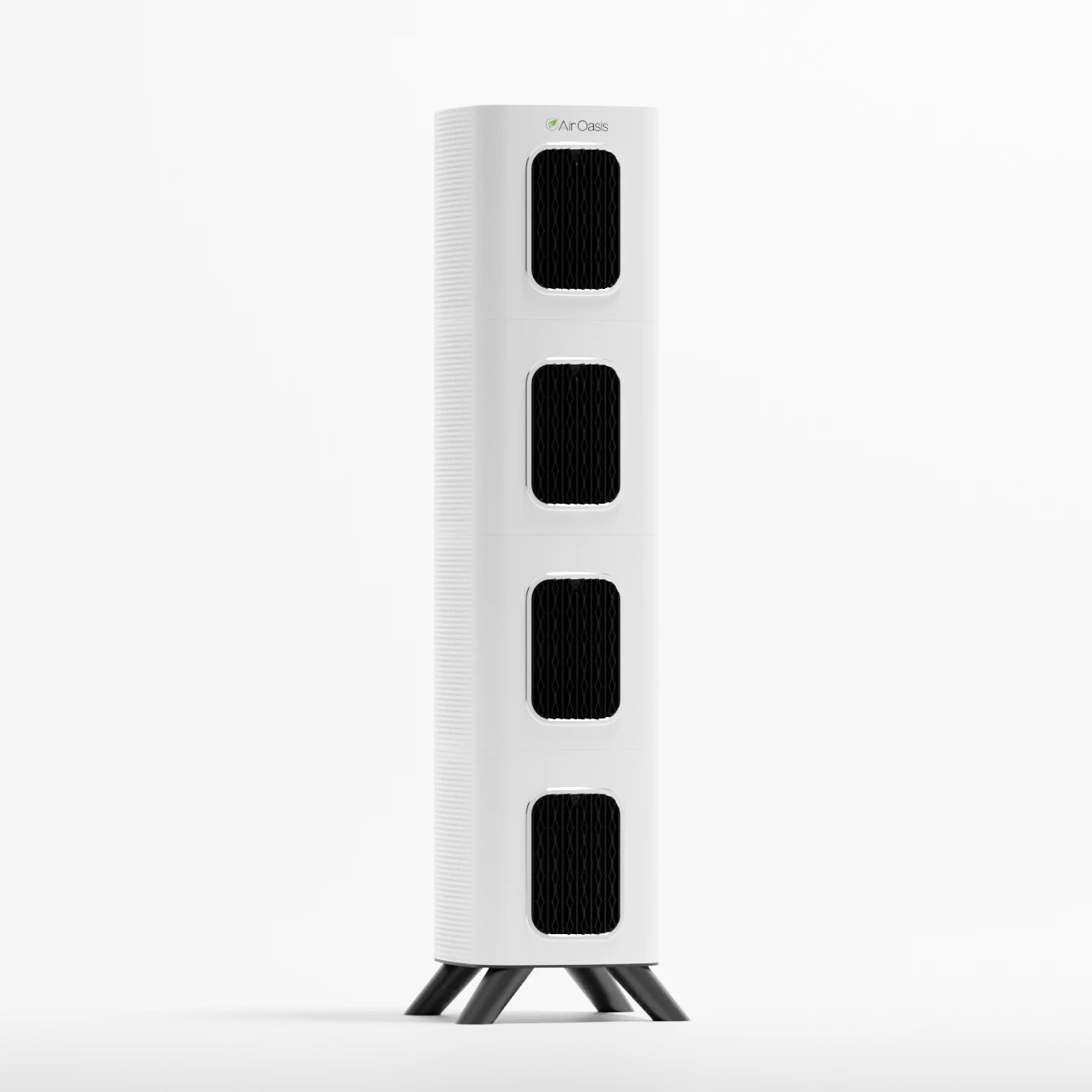
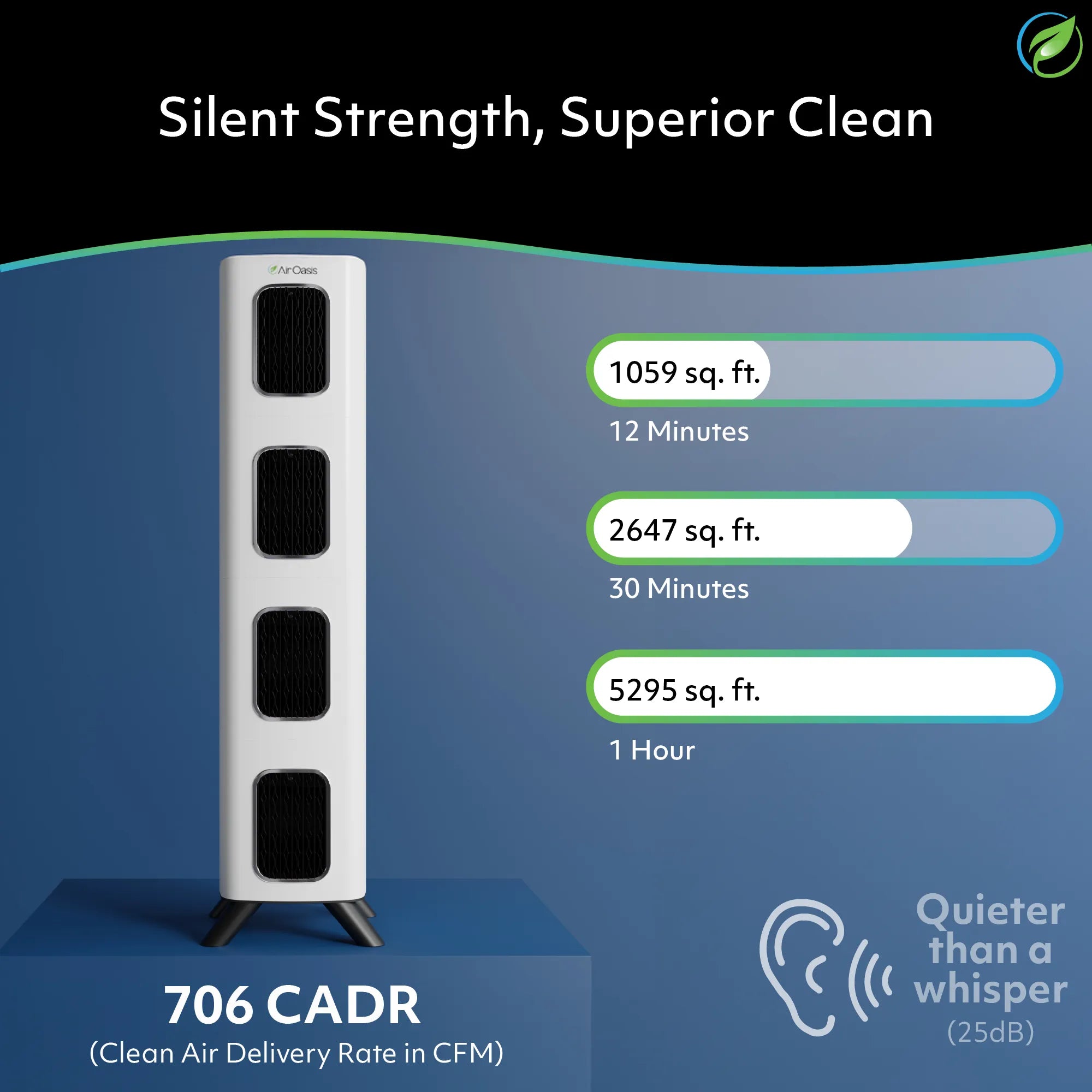
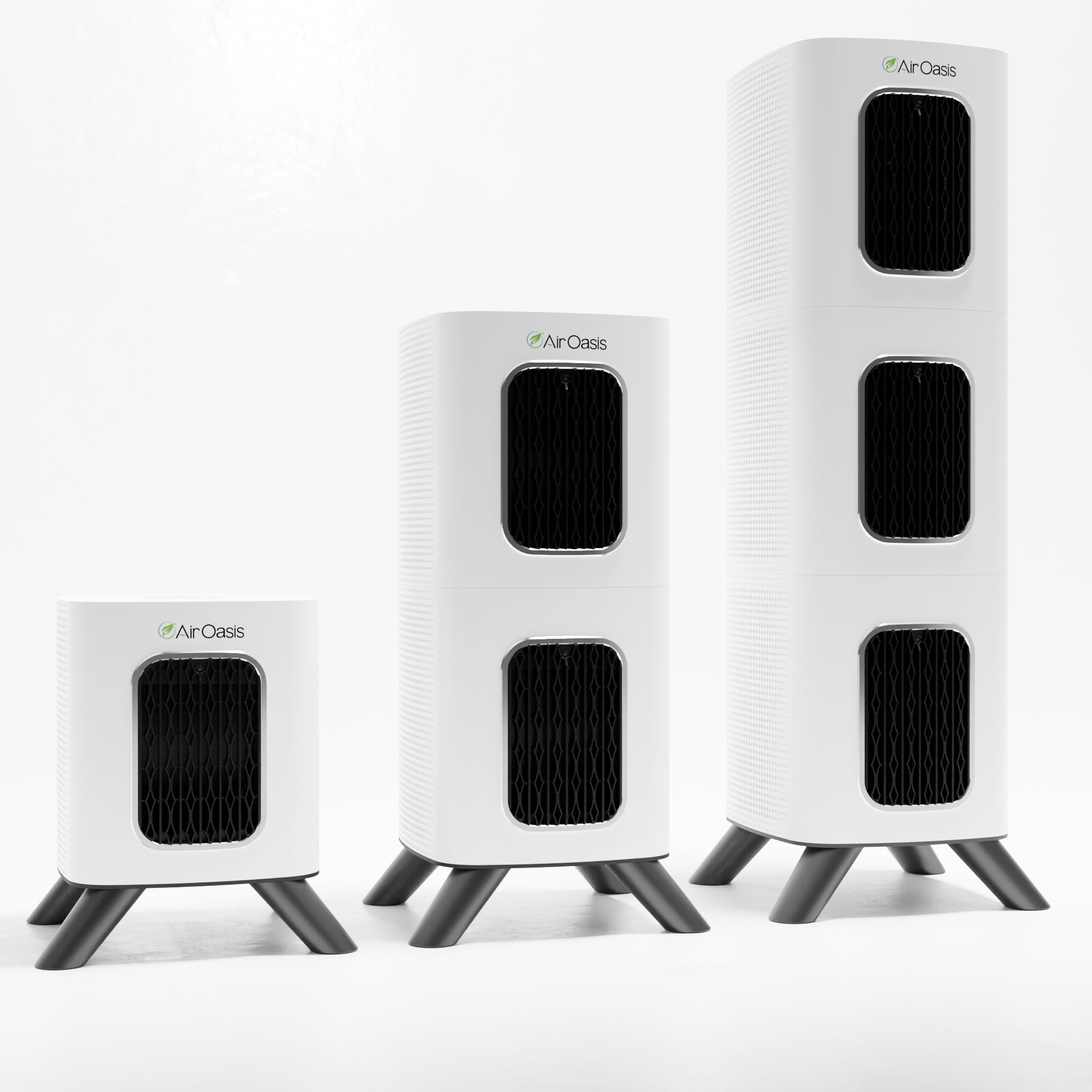
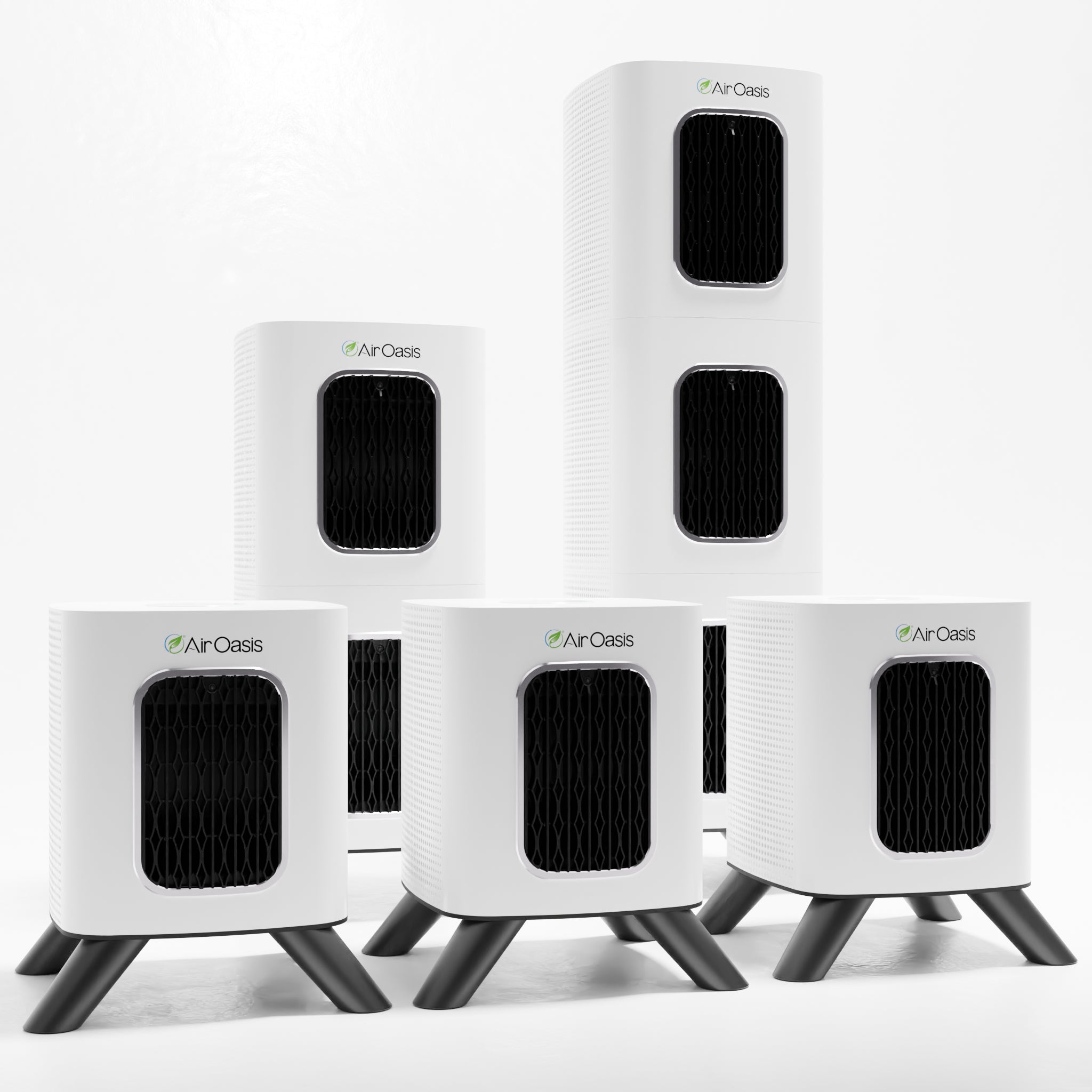
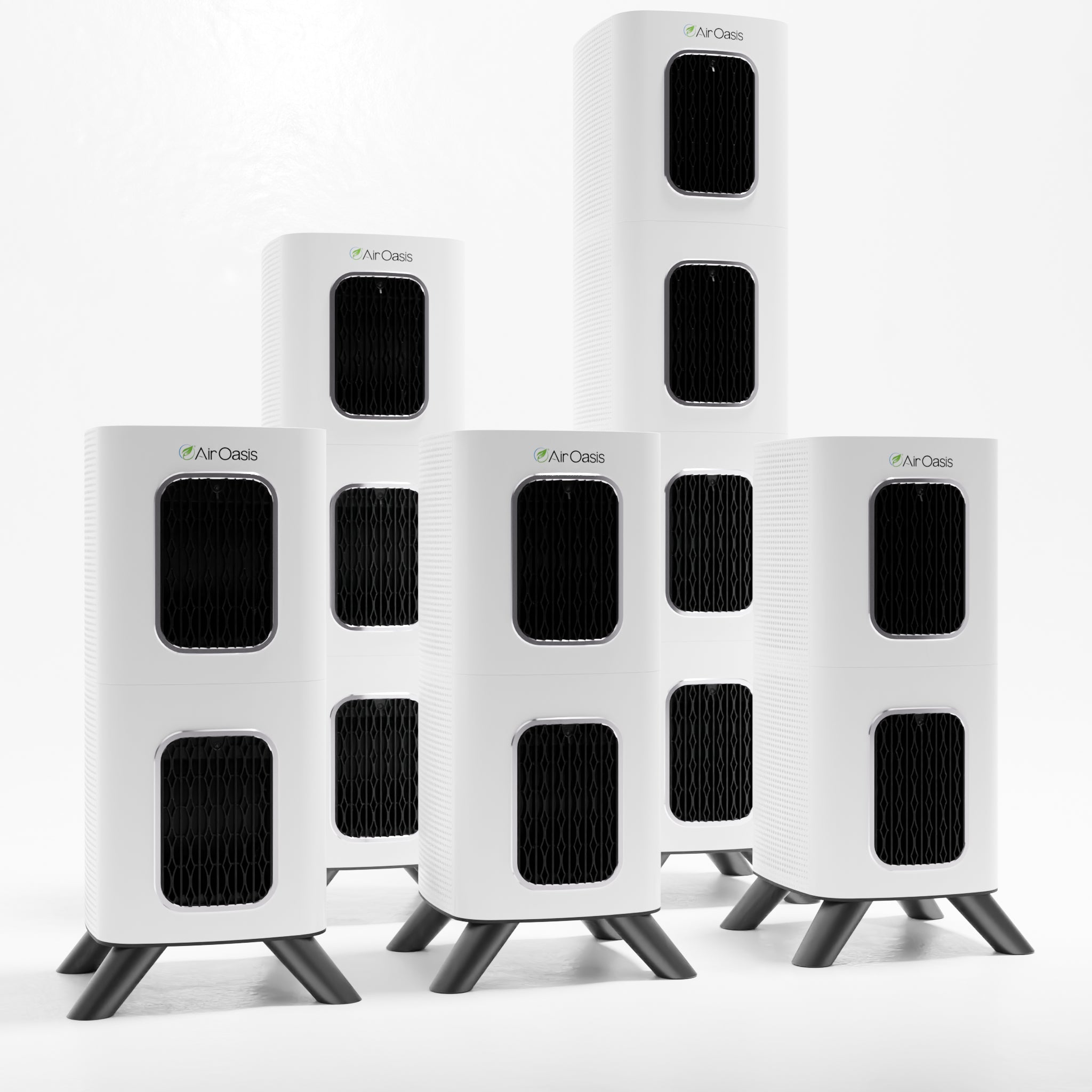
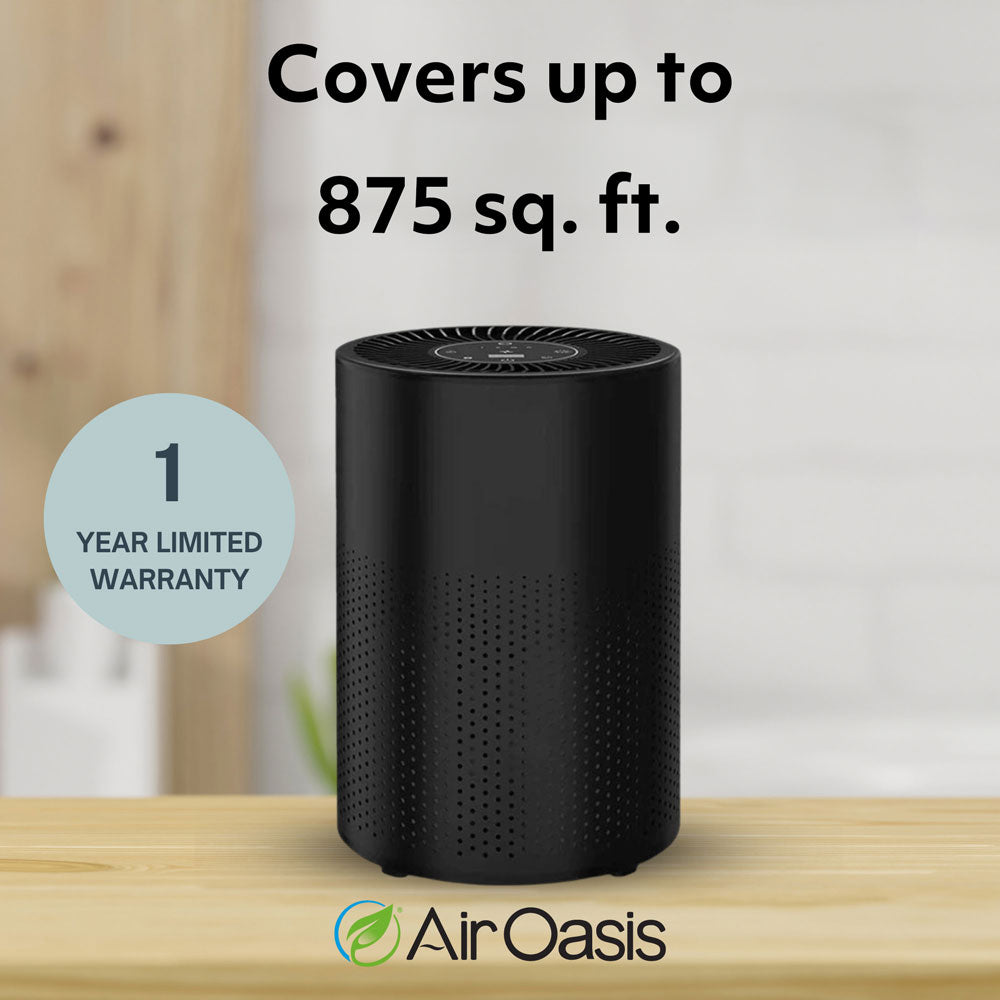
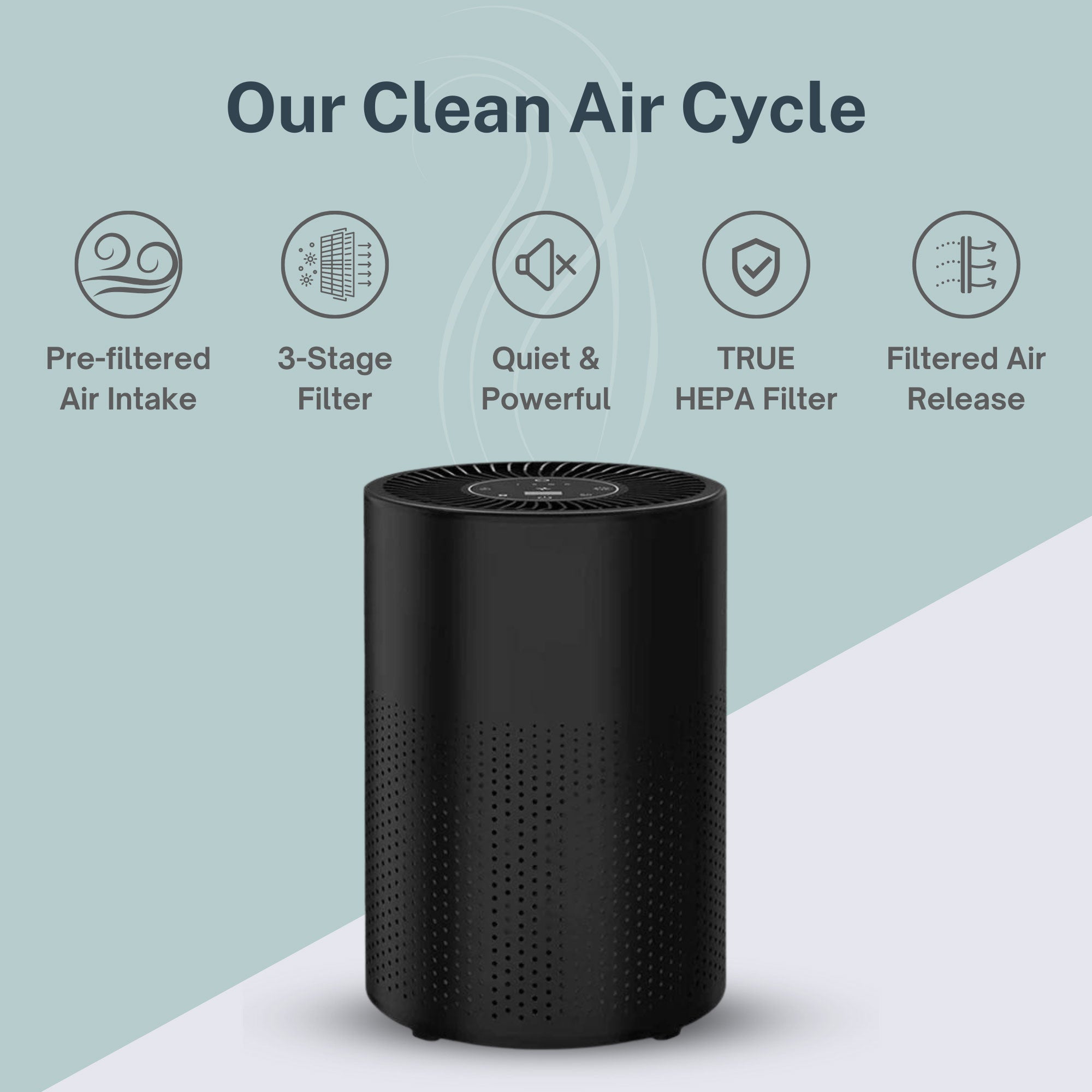
The iAdaptAir by Air Oasis uses the same multi-technology approach regardless of where you place it. Coverage ratings are based on achieving a full air cycle every 12 minutes at standard 8-foot ceiling height: the 2S covers 265 square feet, the 2M covers 530 square feet, the 2L covers 795 square feet, and the 2P covers 1,059 square feet. For most finished basements, the 2M or 2L will be the right fit — but basements with a history of high moisture, limited ventilation, or chemical storage nearby may benefit from sizing up to ensure the unit cycles air frequently enough to stay ahead of contaminant buildup.
Why Basement Air Quality Is Its Own Challenge
Below-grade spaces have air quality characteristics that are genuinely different from the rest of the home, and most of them work against you.
Moisture is the dominant factor. Basements are surrounded on three sides by soil, and ground moisture migrates through concrete over time through a process called vapor diffusion. Even a well-finished basement with sealed floors and walls can experience elevated relative humidity — particularly in spring and summer when outdoor humidity is high and temperature differentials between the warm outdoor air and the cooler below-grade space cause condensation on surfaces. The goal is to keep indoor relative humidity below 50% to inhibit mold growth. Basements frequently exceed that threshold without active humidity management.
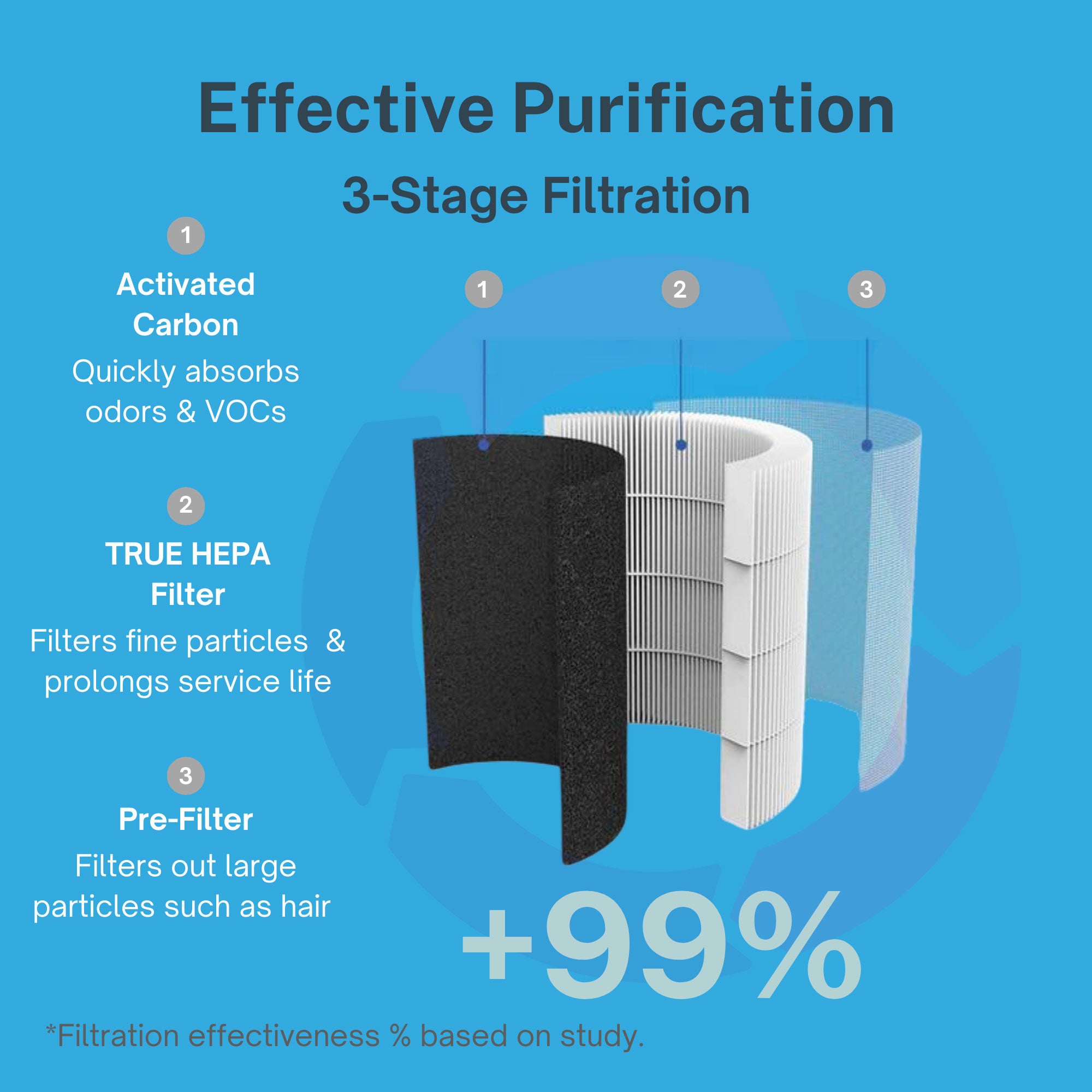
Mold follows moisture. Finished basements that experience any degree of humidity intrusion — even at levels below what causes visible water damage — can develop mold behind drywall, under carpet padding, or on the wood framing that forms interior walls. Mold continuously releases spores and volatile organic compounds (VOCs), including microbial VOCs, into the air, even at concentrations invisible to the naked eye. A True HEPA filter captures spores at 0.3 microns; activated carbon addresses the musty VOCs those colonies emit.
Limited natural ventilation compounds both problems. Most basements have few or no operable windows, and HVAC distribution to below-grade spaces is often less robust than on upper floors. Air that stagnates accumulates whatever contaminants are present — mold spores, dust, VOCs from building materials and stored products — without the dilution that natural airflow provides in above-grade rooms.
The Contaminant Profile Unique to Finished Basements
Beyond moisture and mold, finished basements often harbor contaminants that upper-floor rooms don't. Understanding the full picture helps you appreciate why an appropriately sized air purifier earns its place down there.
Radon is the most serious concern. It's a naturally occurring radioactive gas produced by the decay of uranium in soil and rock, and it enters homes through foundation cracks, gaps around pipes, and porous concrete. Radon is a leading cause of lung cancer in the United States, responsible for approximately 21,000 deaths annually, according to the EPA. Importantly, air purifiers do not remove radon gas — that requires testing, sealing entry points, and sub-slab depressurization systems if levels are elevated. What a HEPA air purifier addresses are radon decay products: the solid particles (polonium-218, lead-214, bismuth-214) that attach to airborne dust and can be inhaled deep into lung tissue. Removing fine airborne particles reduces the carrier load for these decay products.
Stored chemicals are another basement-specific concern. Many households use the basement as storage for paint, solvents, adhesives, pesticides, cleaning supplies, and similar products. These off-gas VOCs at room temperature, even when sealed. Activated carbon filtration in the iAdaptAir adsorbs these chemical gases from the air — a meaningful benefit in basements that double as utility or storage spaces.
New construction materials in a recently finished basement also off-gas significantly. Drywall compound, carpet adhesives, paint, and engineered wood products (which contain formaldehyde-based resins) all release VOCs for months to years after installation. Activated carbon handles these as well, making an air purifier particularly valuable in a newly finished space.
Sizing a Purifier for Your Finished Basement
The single most important variable in choosing an air purifier for a finished basement is getting the coverage right. An undersized unit running continuously in a space too large for its CADR rating will still cycle the air — just too slowly to maintain clean conditions. A unit sized appropriately for the room achieves a full air cycle every 12 minutes, which is the standard the iAdaptAir coverage ratings are built on.
Measure your finished basement's usable square footage and match it to the appropriate model. If your basement is open-plan — a common layout for media rooms and recreation spaces — one appropriately sized unit centrally placed with at least 4 inches of clearance around all air inlets and outlets works well. If the finished space is subdivided into multiple rooms (bedroom, bathroom, utility room), treat each enclosed space as its own zone and size accordingly.
One practical note on basements with known moisture history or active humidity issues: an air purifier is not a substitute for a dehumidifier, and the two work well together. Keeping relative humidity below 50% with a dehumidifier removes the conditions that allow mold to thrive in the first place. The air purifier then addresses the spores and VOCs already present.
Placement Matters More Than You Think
In a finished basement, placement decisions significantly affect performance. Central placement in an open space allows the unit to draw from and distribute to the full room. Avoid corners and do not push the unit against walls — all air inlets and outlets require at least 4 inches of clearance, per the iAdaptAir manual. Doors and windows should be closed during operation to prevent the unit from working against outdoor air exchange.
If your basement has a utility room housing a furnace, water heater, or stored chemicals, consider whether keeping that door closed and running a second, smaller unit in that space makes sense, given the higher contaminant load. The iAdaptAir 2S, covering up to 265 square feet, is a practical choice for a smaller utility or storage area.
Clean Air Doesn't Stop at the First Floor — Protect Every Level of Your Home
Your finished basement deserves the same attention to air quality as the rest of your home — maybe more, given the moisture, limited ventilation, and contaminant sources unique to below-grade living spaces. The technology you need is the same as upstairs. What matters is choosing the right model for the space and pairing it with good humidity control. Shop Air Oasis today and breathe better on every floor of your home.
Frequently Asked Questions About Finished Basement Air Purifiers
Here's some additional info.
Do I need a special air purifier for a basement?
No. The same air purification technology that works in above-grade rooms — True HEPA, activated carbon, UV-C, and bipolar ionization — works equally well in a finished basement. The key variable is choosing a model sized appropriately for the square footage of your specific space.
Can an air purifier remove radon from a basement?
No. Air purifiers do not remove radon gas. Radon remediation requires testing, sealing foundation entry points, and potentially installing a sub-slab depressurization system. However, a True HEPA air purifier does reduce airborne fine particles that can carry radon decay products, which is a meaningful secondary benefit.
Should I run a dehumidifier and an air purifier together in a basement?
Yes, and they complement each other well. A dehumidifier controls the moisture conditions that allow mold to grow. An air purifier addresses the mold spores, VOCs, and other contaminants already in the air. Using both together gives you more comprehensive protection than either does alone.
What size iAdaptAir do I need for a finished basement?
Match the model to your square footage. The iAdaptAir 2M covers 530 square feet and the 2L covers 795 square feet — appropriate for most finished basement spaces. If your basement exceeds 795 square feet in a single open area, the 2P covers up to 1,059 square feet. Size up if your basement has a history of moisture issues or higher-than-average contaminant sources.