You check the app. It says "Good." AQI 42, green. So you close the windows, go inside, and assume the air is fine.
It might be. Or it might not be. The AQI score you just read has almost nothing to do with the air inside your house — and understanding why that gap exists is one of the most practically useful things you can learn about indoor air quality.
What the Air Quality Index actually measures
The Air Quality Index was created by the EPA to communicate outdoor air quality in an easy-to-understand format. It consolidates readings from five major pollutants — ground-level ozone, particle pollution (PM2.5 and PM10), carbon monoxide, sulfur dioxide, and nitrogen dioxide — into a single number on a 0 to 500 scale, color-coded from green to maroon.
Those readings come from a network of monitoring stations. In the United States, there are roughly 4,000 of them. In a country of 3.8 million square miles, that's roughly one monitoring station per 950 square miles. In practice, stations are more densely placed in urban centers and sparser in rural areas, but the basic reality is the same: the AQI reading on your phone comes from a fixed instrument that is almost certainly not on your street, possibly not in your neighborhood, and very likely miles from your front door.
The number represents an averaged snapshot of outdoor ambient air quality at that station's location at that time. It is a useful tool for deciding whether to go for a run or keep children inside during a wildfire event. It was designed for those purposes.
It was not designed to tell you what you're breathing in your kitchen, bedroom, or living room. And it can't.
Why your indoor air and outdoor AQI can tell completely different stories
The EPA has consistently documented that indoor air can be two to five times more polluted than outdoor air — and sometimes considerably more. That finding surprises most people, because the intuition runs in the other direction: outside is where exhaust and smog and pollution live. Inside is where you go to get away from it.
The reality is that your home generates its own pollution, continuously and from sources that the outdoor monitoring network has no visibility into whatsoever.
Consider what's actually happening in a typical home on a day the AQI shows "Good":
Your gas stove, if you have one, releases nitrogen dioxide every time you cook. Research published in Environmental Science and Technology found that gas stove use can produce indoor NO2 concentrations that exceed EPA outdoor air quality standards — even in homes with good AQI readings outside. The AQI doesn't know your stove is on.
Your furniture, flooring, and building materials off-gas volatile organic compounds continuously. Formaldehyde from composite wood products. Terpenes from cleaning products. Acetaldehyde from paints. These are indoor-source pollutants with no nearby outdoor equivalent and no monitoring station measuring them.
Your bedroom accumulates CO2 overnight from your own breathing. By morning in a closed room, levels can exceed 1,000 ppm — enough to measurably affect cognitive performance, according to research published in Environmental Health Perspectives. The outdoor AQI doesn't include CO2 at all. It's not one of the five pollutants the index tracks.
If you have pets, their dander cycles through your air continuously. If anyone in the household has recently cleaned with commercial products, VOCs are lingering. If there's any moisture issue anywhere in the structure, mold spores may be circulating. None of this is captured by the number on your weather app.
The three things AQI structurally cannot tell you
It cannot tell you about pollutants it doesn't track. The index measures five outdoor pollutants. Your indoor air may contain formaldehyde, benzene, toluene, mold spores, radon decay products, pet allergens, dust mite particles, cleaning product residues, cooking byproducts, and dozens of other VOCs — none of which appear in an AQI reading.
It cannot account for how outdoor air changes once it enters your home. Even the outdoor pollutants AQI does track behave differently indoors. Ozone, for example, degrades rapidly when it enters a building and reacts with indoor surfaces and VOCs — sometimes forming secondary pollutants including formaldehyde in the process. PM2.5 from outdoor traffic infiltrates through gaps in the building envelope and mixes with indoor-source particles from cooking and combustion. The ratio of outdoor to indoor concentration varies widely by building age, ventilation design, and what's happening inside.
It cannot capture the hyperlocal variation that affects your actual exposure. A monitoring station three miles away in a different neighborhood, upwind, near a park, is measuring the air in a different microenvironment than the one where you live. People near highways, industrial facilities, dry cleaners, or auto body shops consistently experience higher local pollutant concentrations than nearby AQI readings suggest. The EPA's own research on near-road air quality found that PM2.5 and NO2 concentrations near major roadways can be two to three times higher than concentrations measured just a few hundred feet away.
What actually tells you about indoor air quality
The honest answer is that measuring your actual indoor air requires different tools than an outdoor AQI app.
Consumer-grade indoor air quality monitors have become considerably more capable and affordable over the past several years. A good monitor tracks PM2.5 in real time, CO2 levels, and often total VOC concentration, temperature, and humidity. Watching those numbers in your specific rooms tells you things the AQI never could: that your bedroom air quality drops significantly overnight when the door is closed, that cooking dinner spikes PM2.5 to several times its resting level for an hour afterward, that CO2 climbs noticeably in your home office by mid-afternoon.
That kind of data is actionable. Green on an app is not.
Beyond monitoring, paying attention to patterns matters. If you feel better when windows are open, that's information about your indoor air. If symptoms improve when you travel and worsen when you return home, that's information. If a specific room consistently feels stuffy or leaves you more congested, that's information worth acting on.
Where air purification fits — and what it addresses that AQI monitoring doesn't
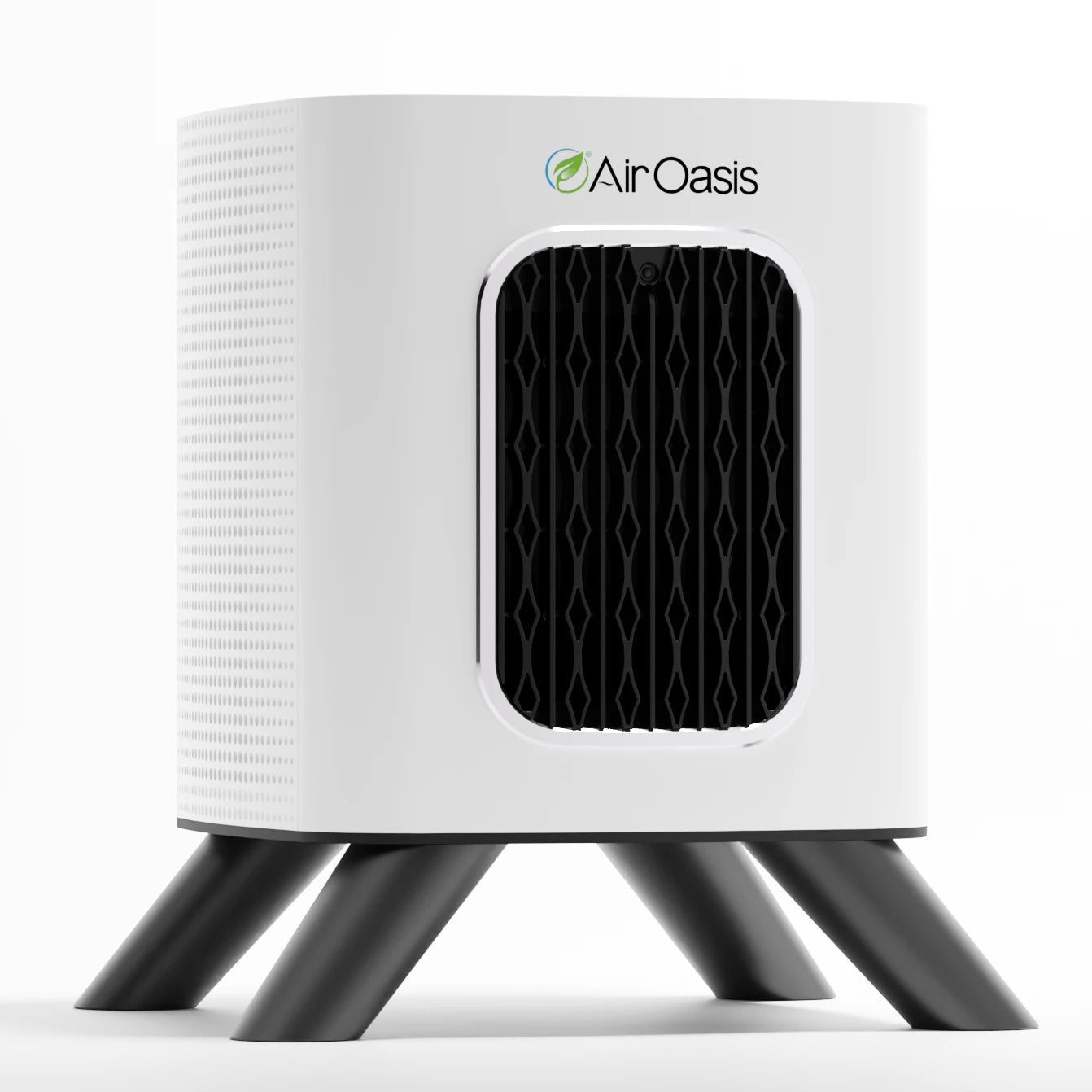
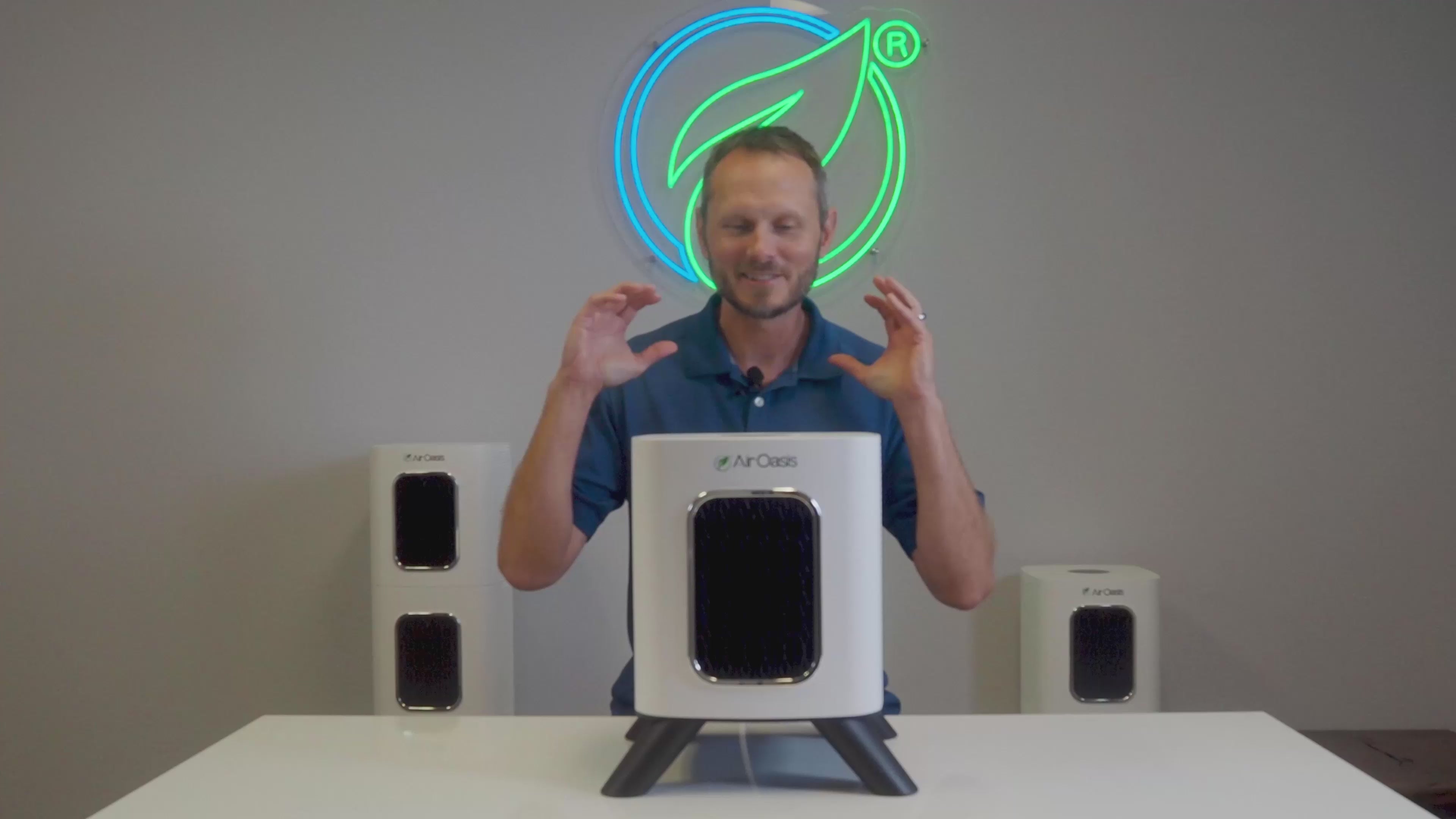
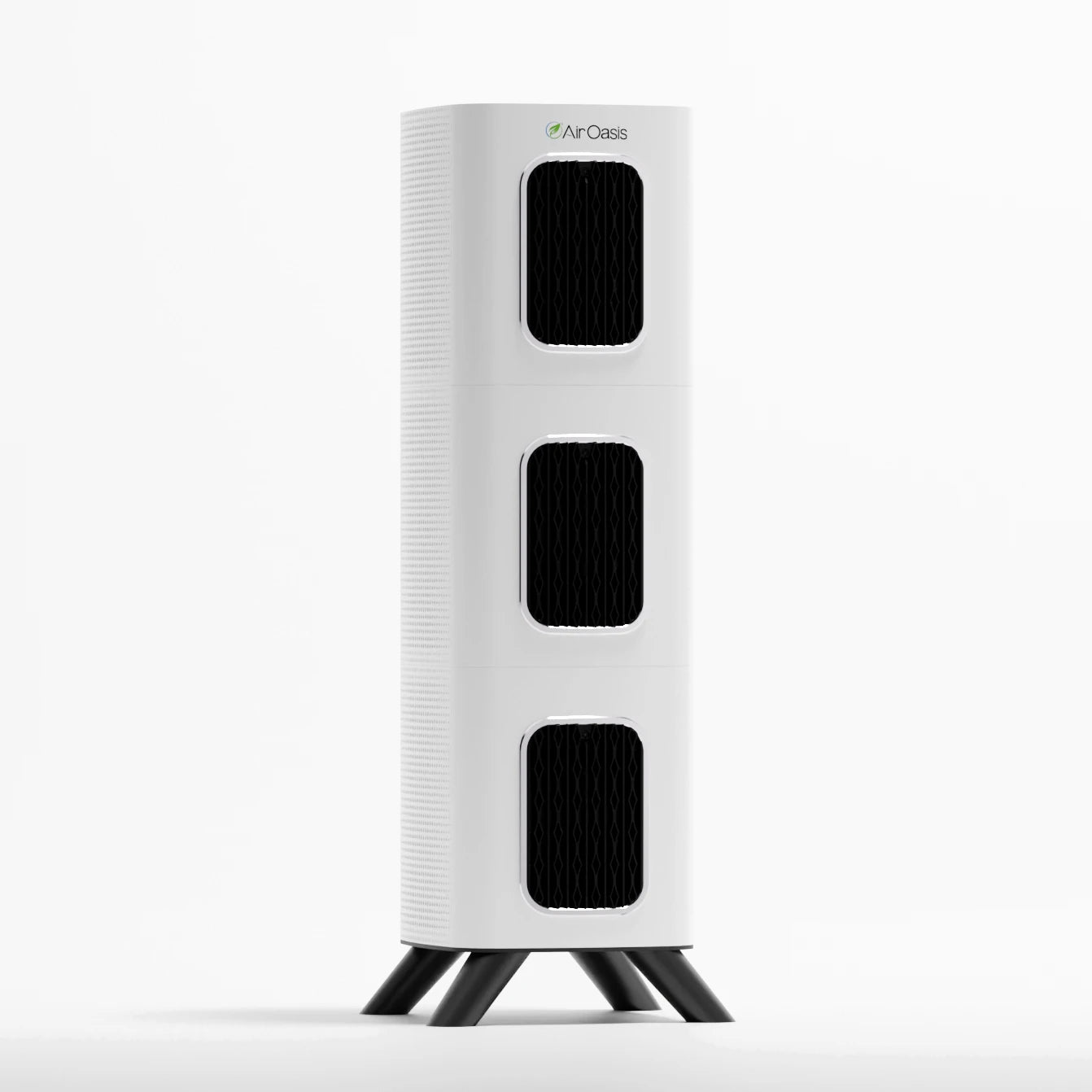
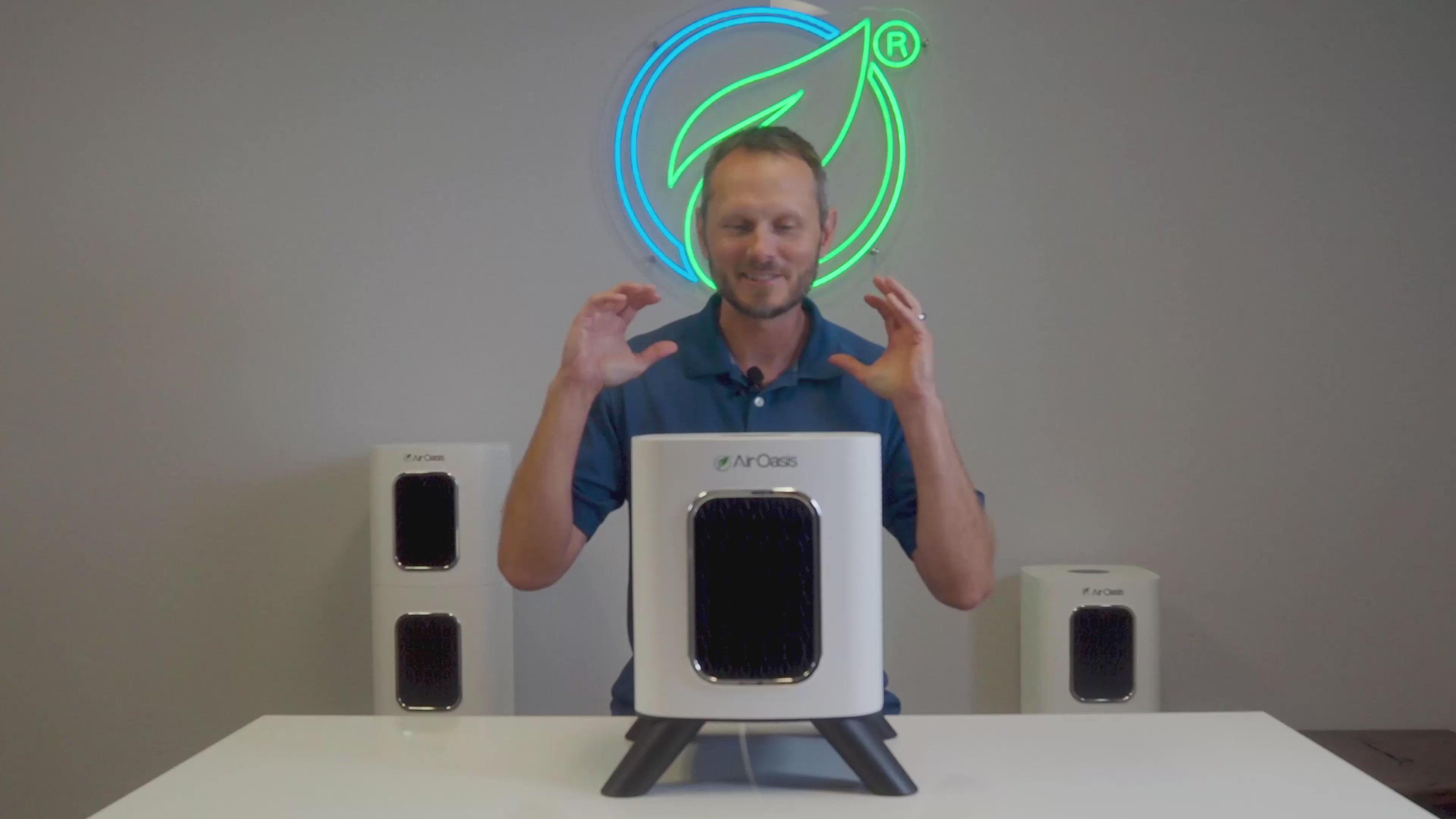
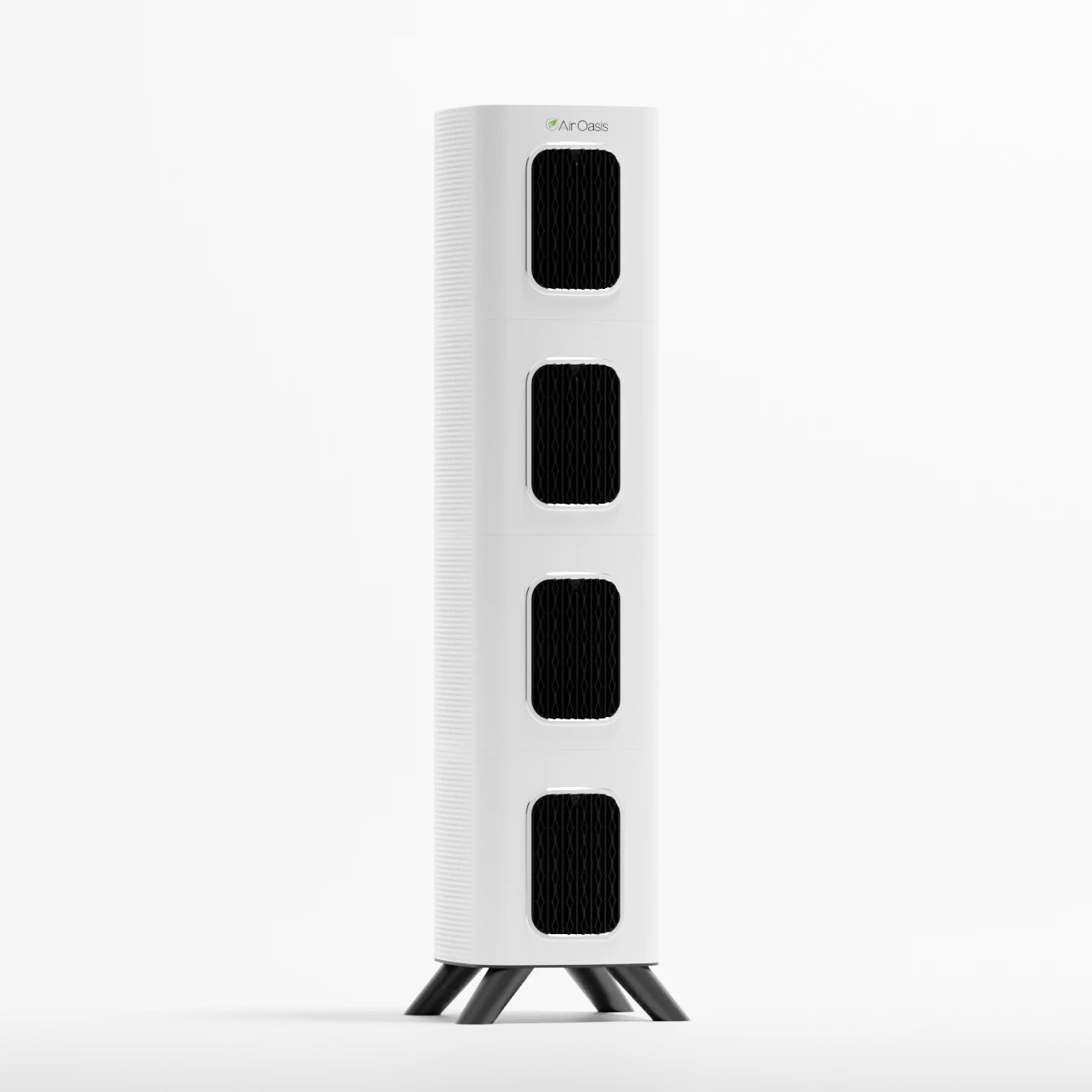
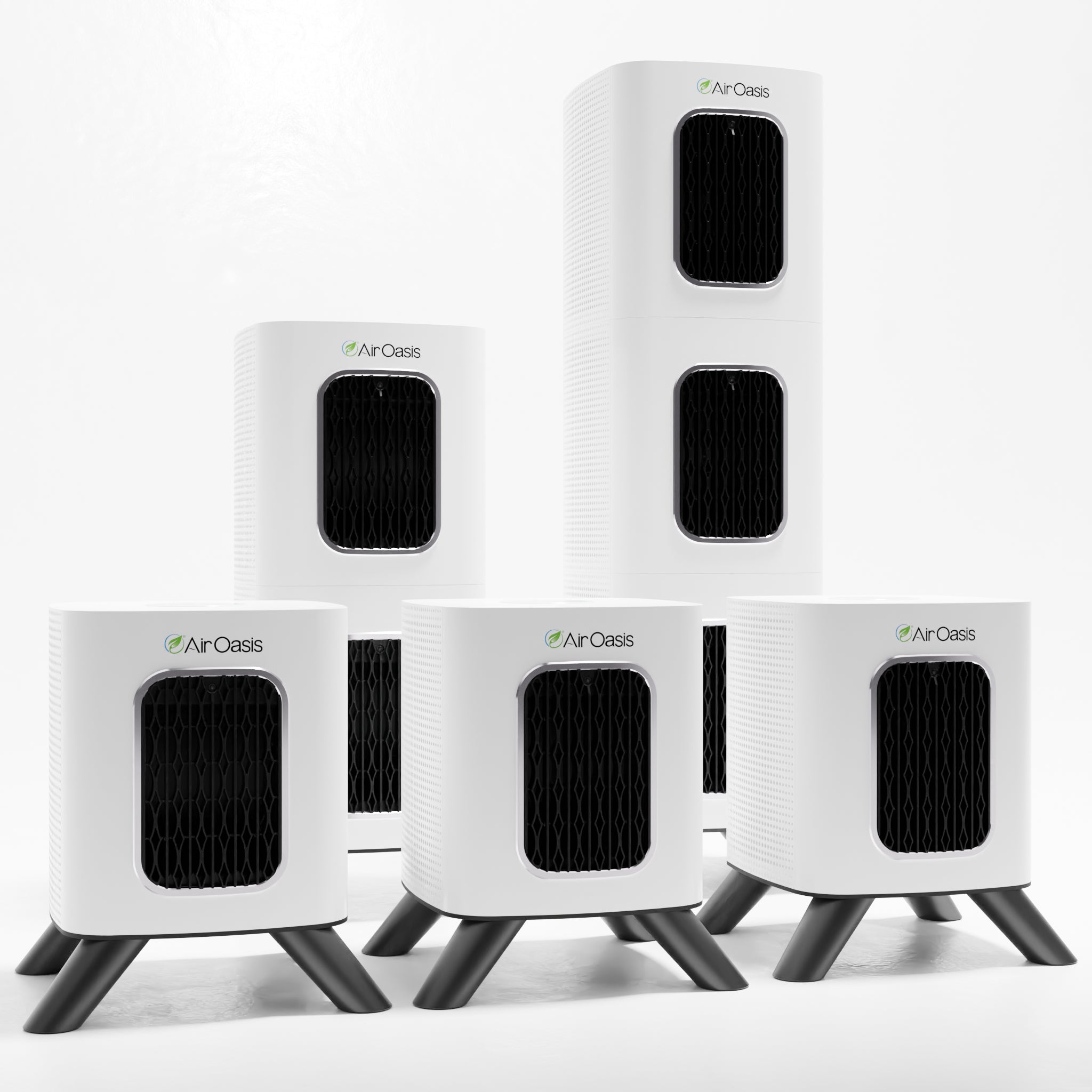
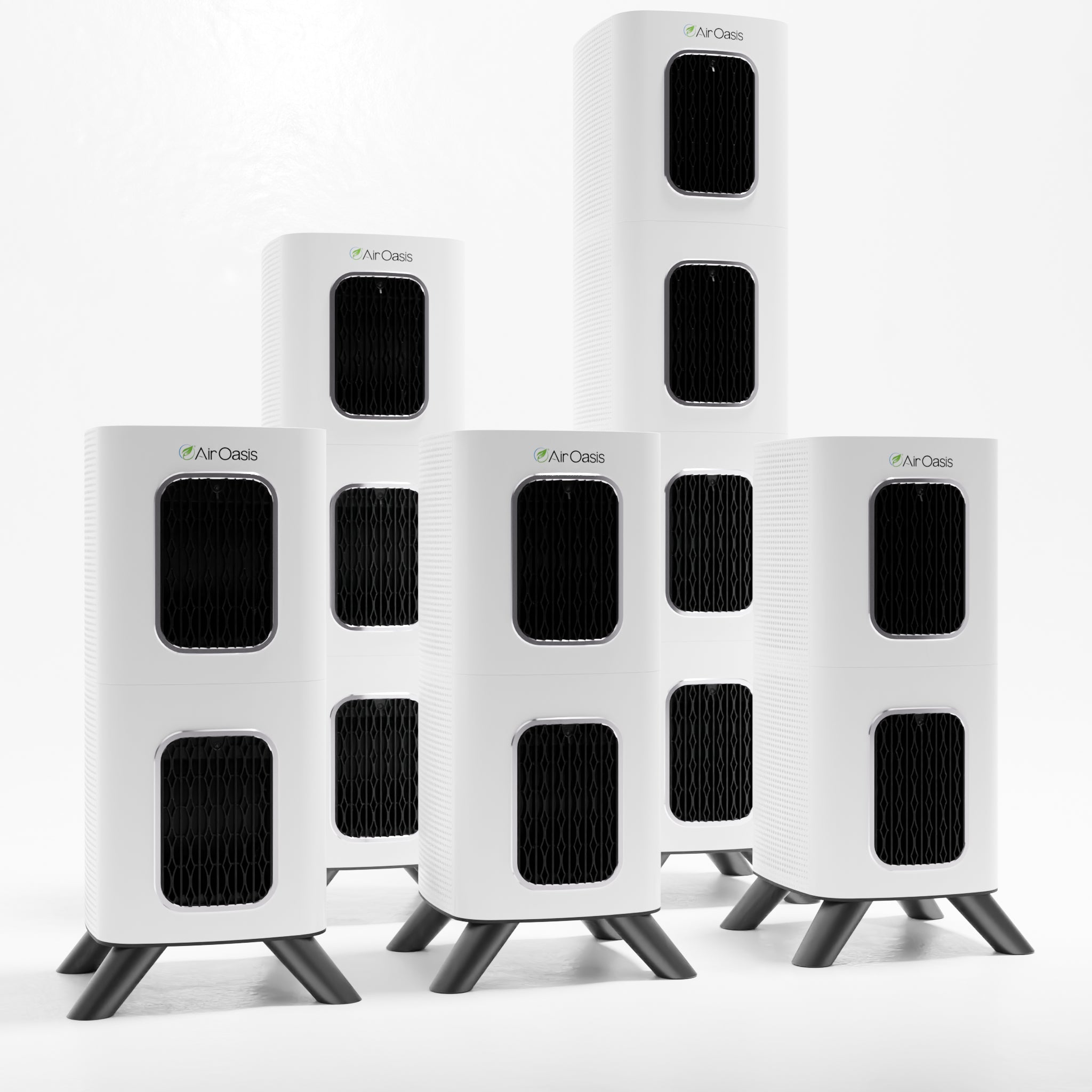
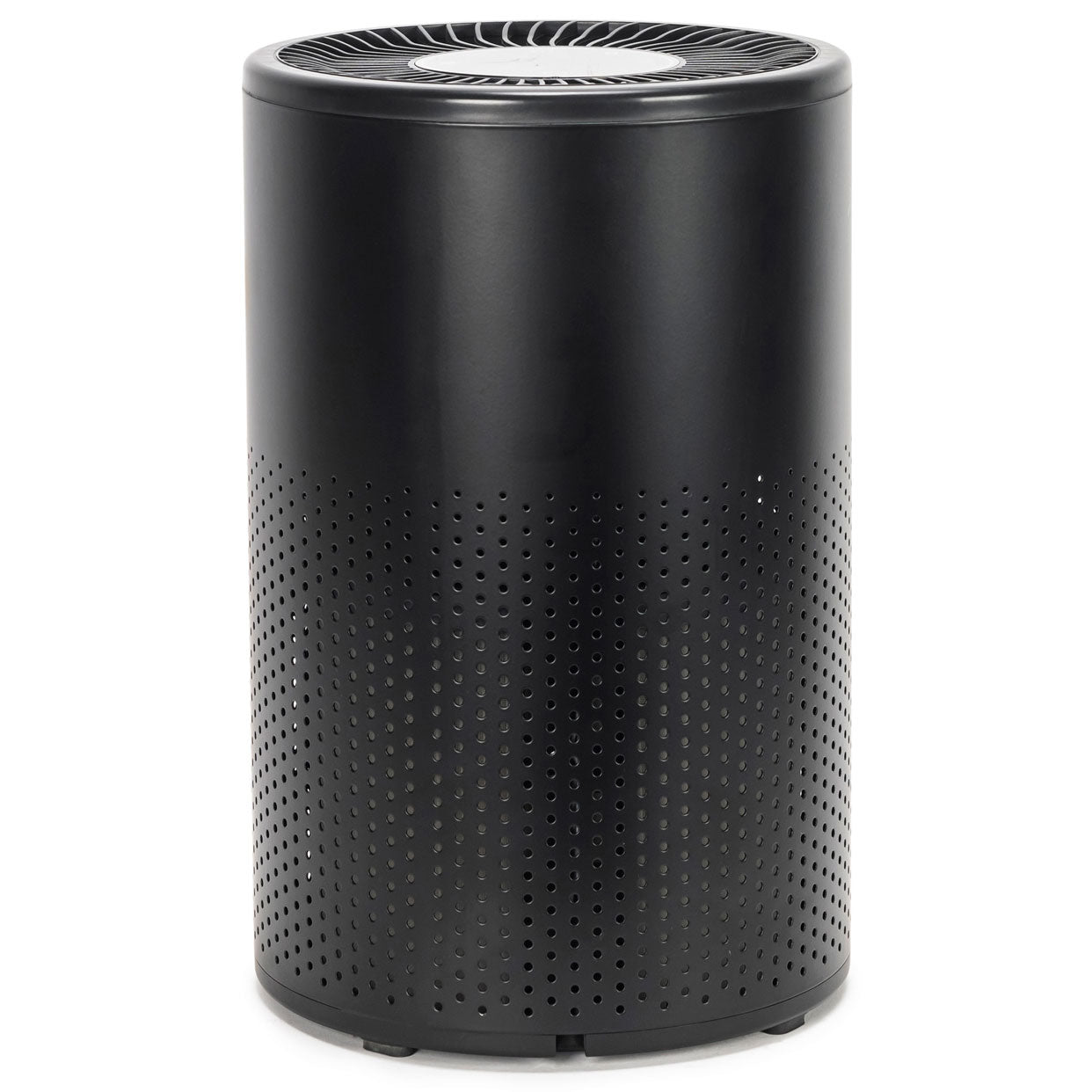
The AQI's outdoor focus is also why an air purifier's value isn't captured by checking the weather app. The iAdaptAir isn't protecting you from the ambient outdoor ozone that AQI tracks. It's protecting you from what's already in your home and what's continuously being generated inside it.
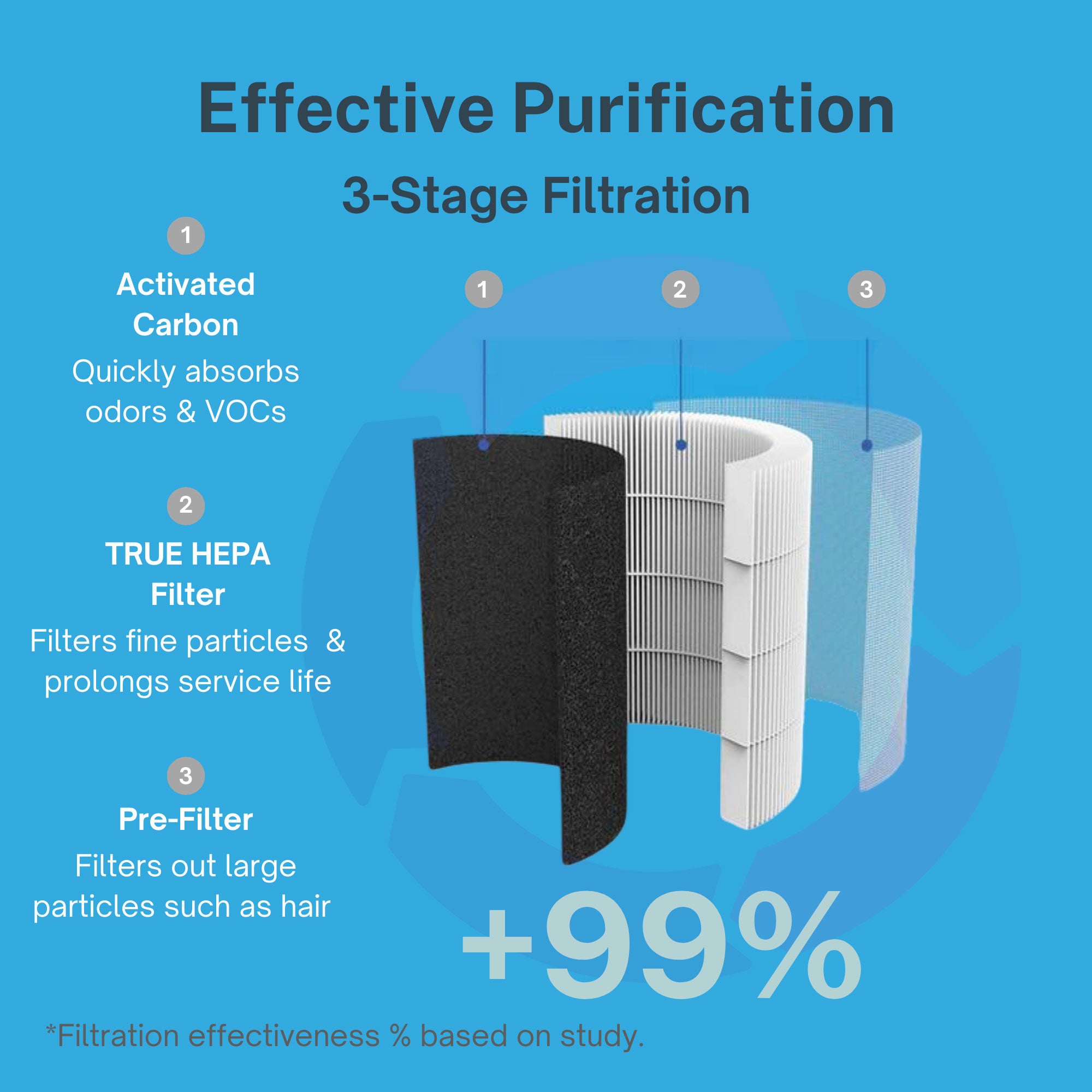
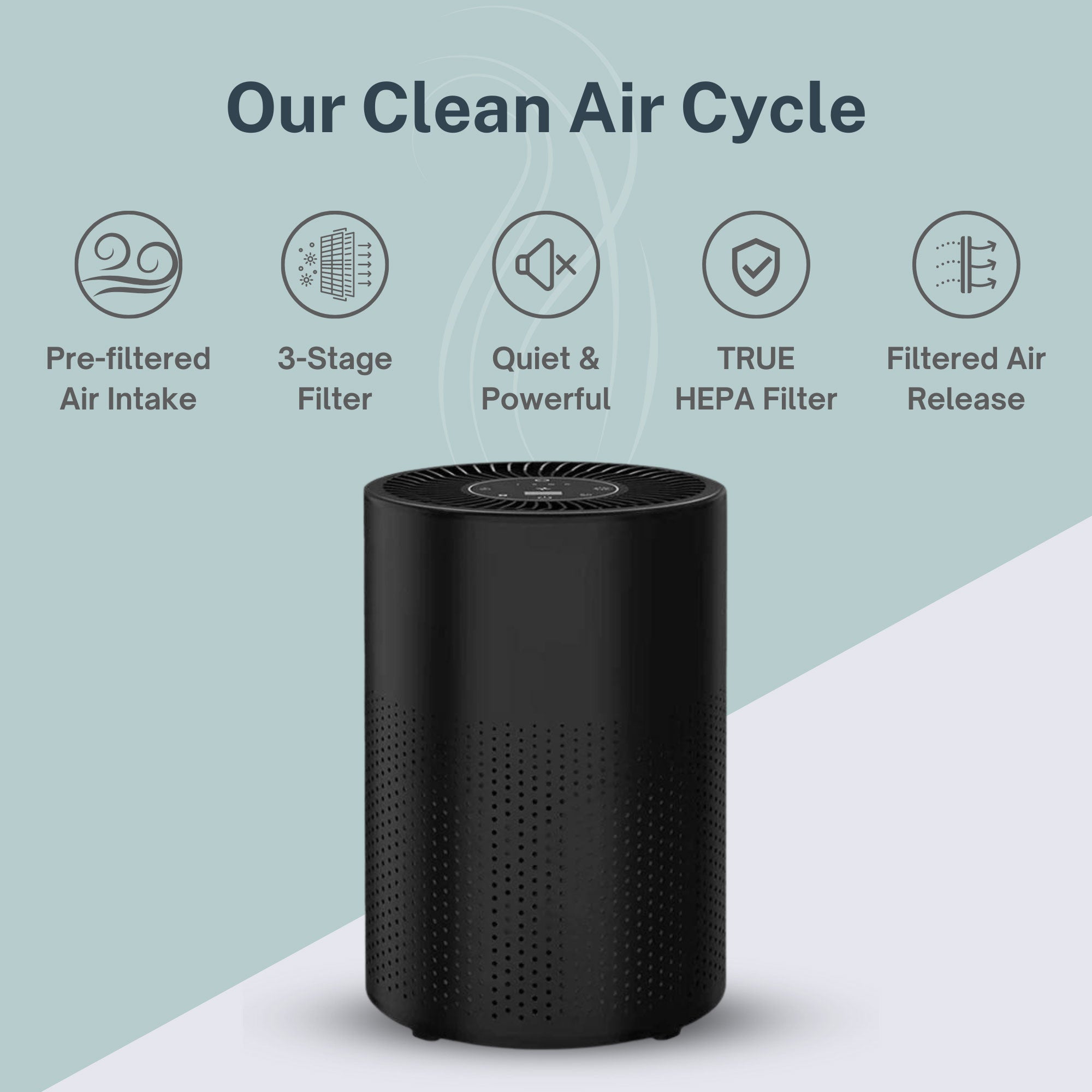
True HEPA filtration captures fine particulate matter down to 0.3 microns — the PM2.5 that infiltrates from outdoor sources, the particles from cooking and combustion, the biological material including mold spores and pet dander that cycles through your rooms. Activated carbon addresses the gas-phase pollutants that AQI doesn't measure at all: the VOCs from furniture and flooring, the nitrogen dioxide from gas appliances, the chemical residues from cleaning products. UV-C light and bipolar ionization provide additional protection against biological material in the air.
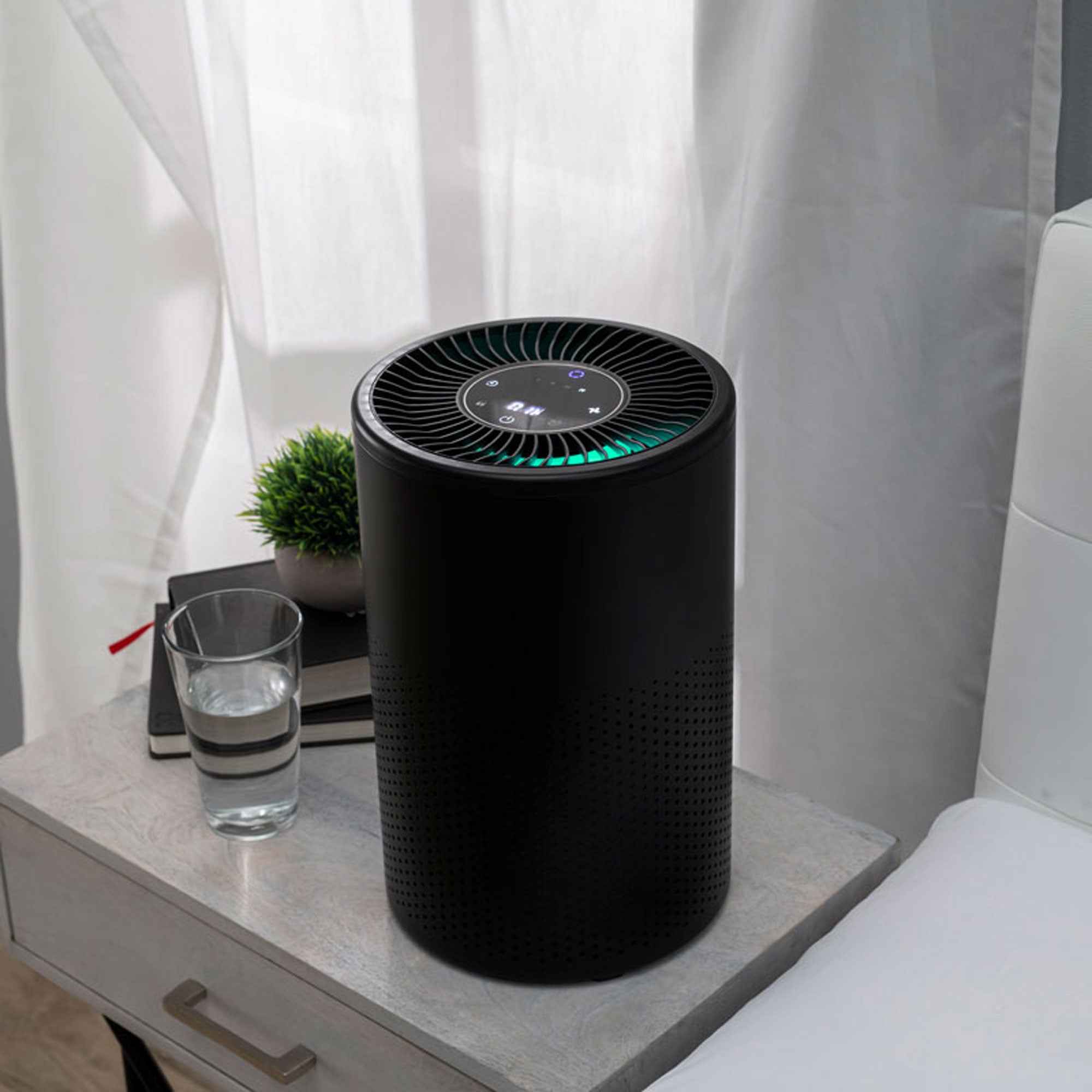
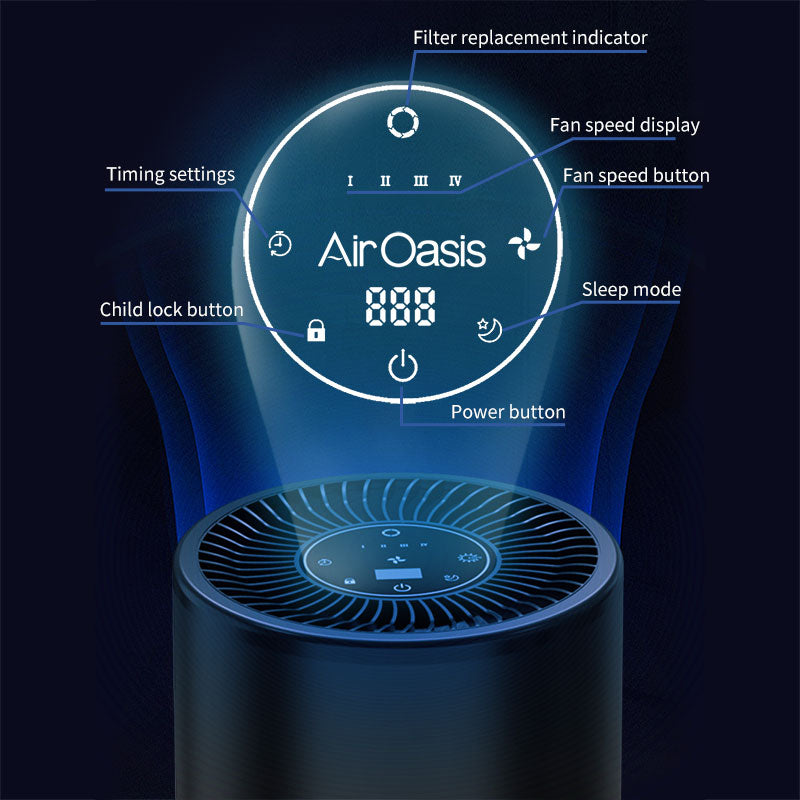
The iAdaptAir also gives you real-time feedback through its built-in particle sensor and air quality indicator ring. Green means particle concentrations are low (0–75 μg/m³). Orange means moderate (76–150 μg/m³). Red means the air quality in that room, right now, is poor (above 150 μg/m³). That information is specific to your room, your home, and this moment — not a reading from a monitoring station miles away averaged over the past hour.
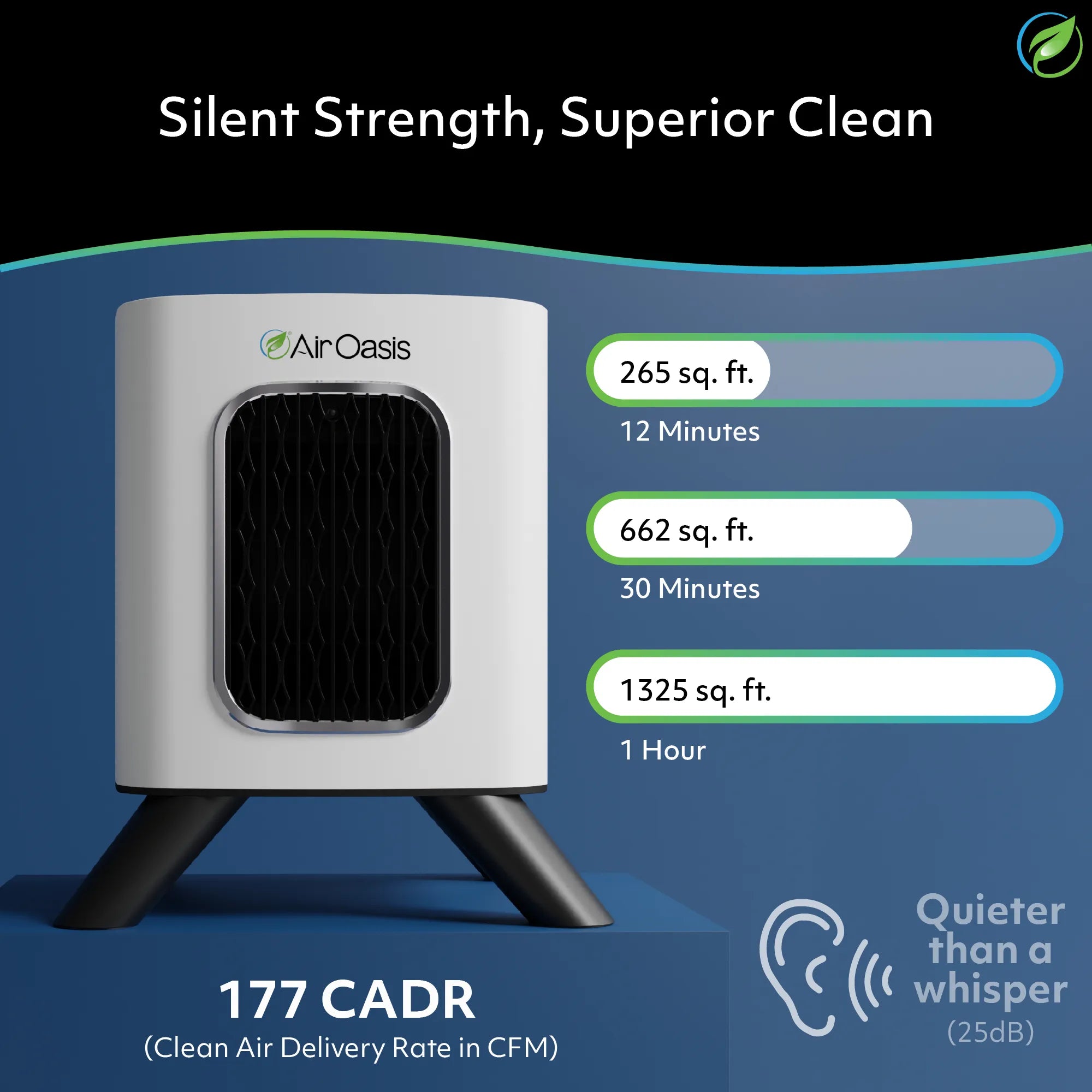
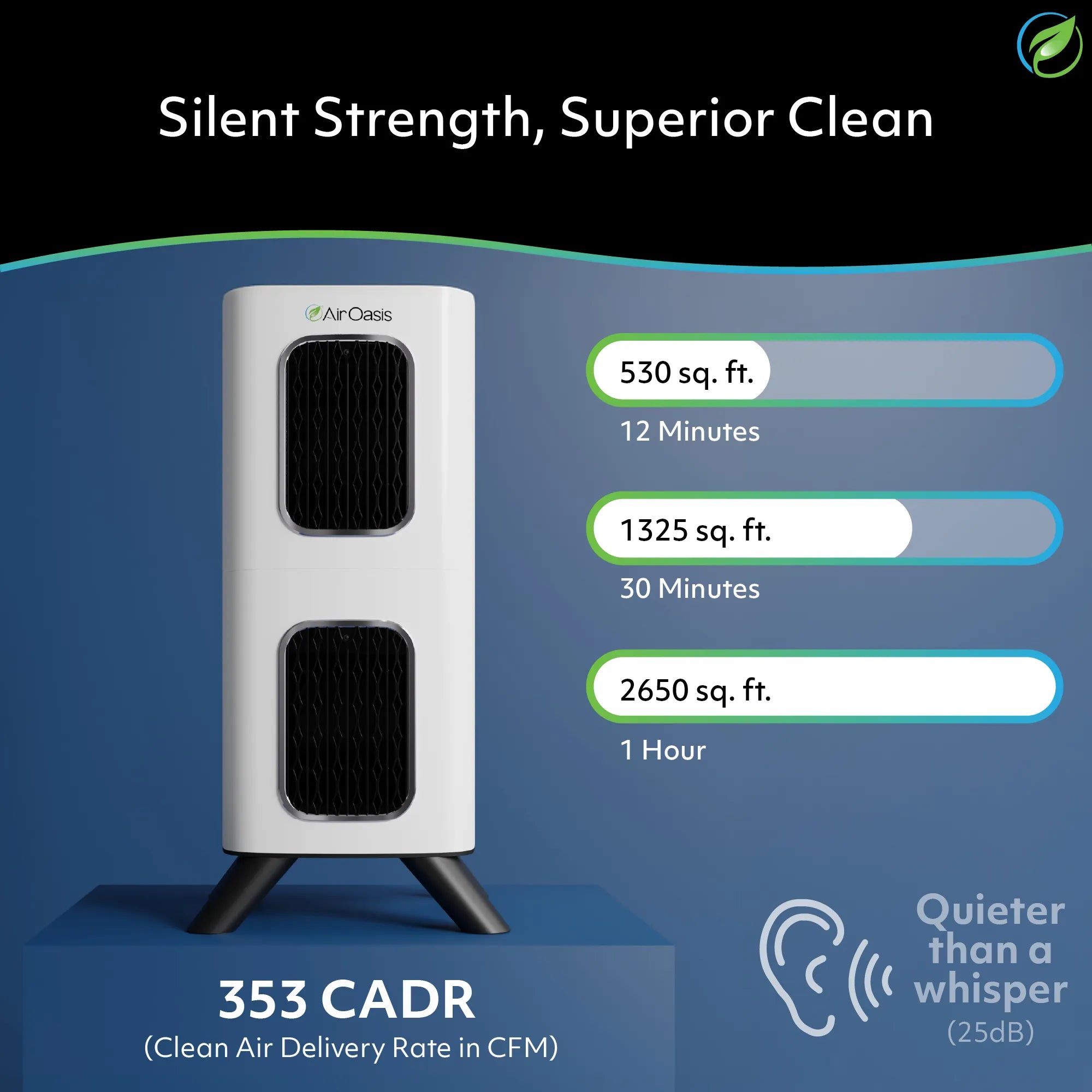
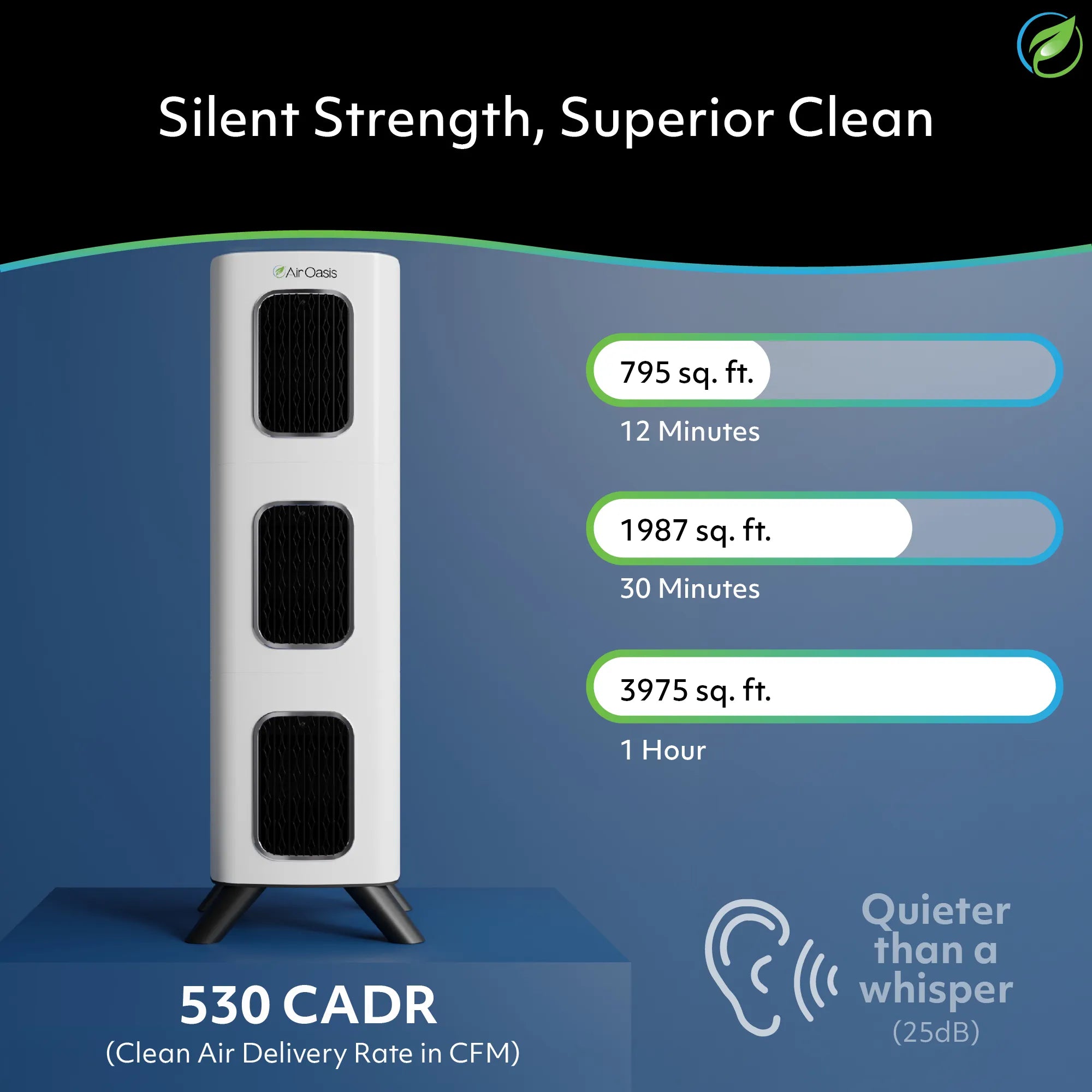
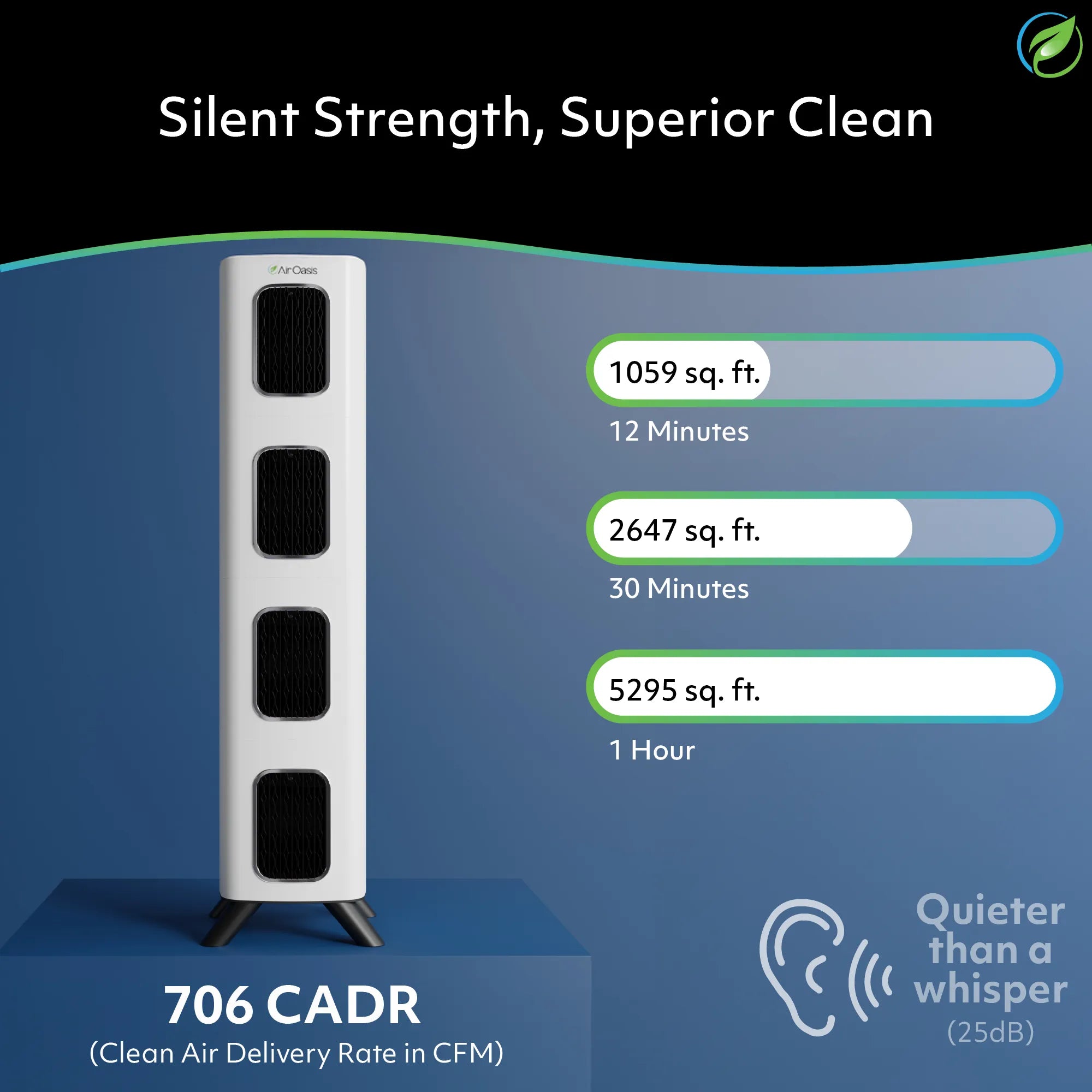
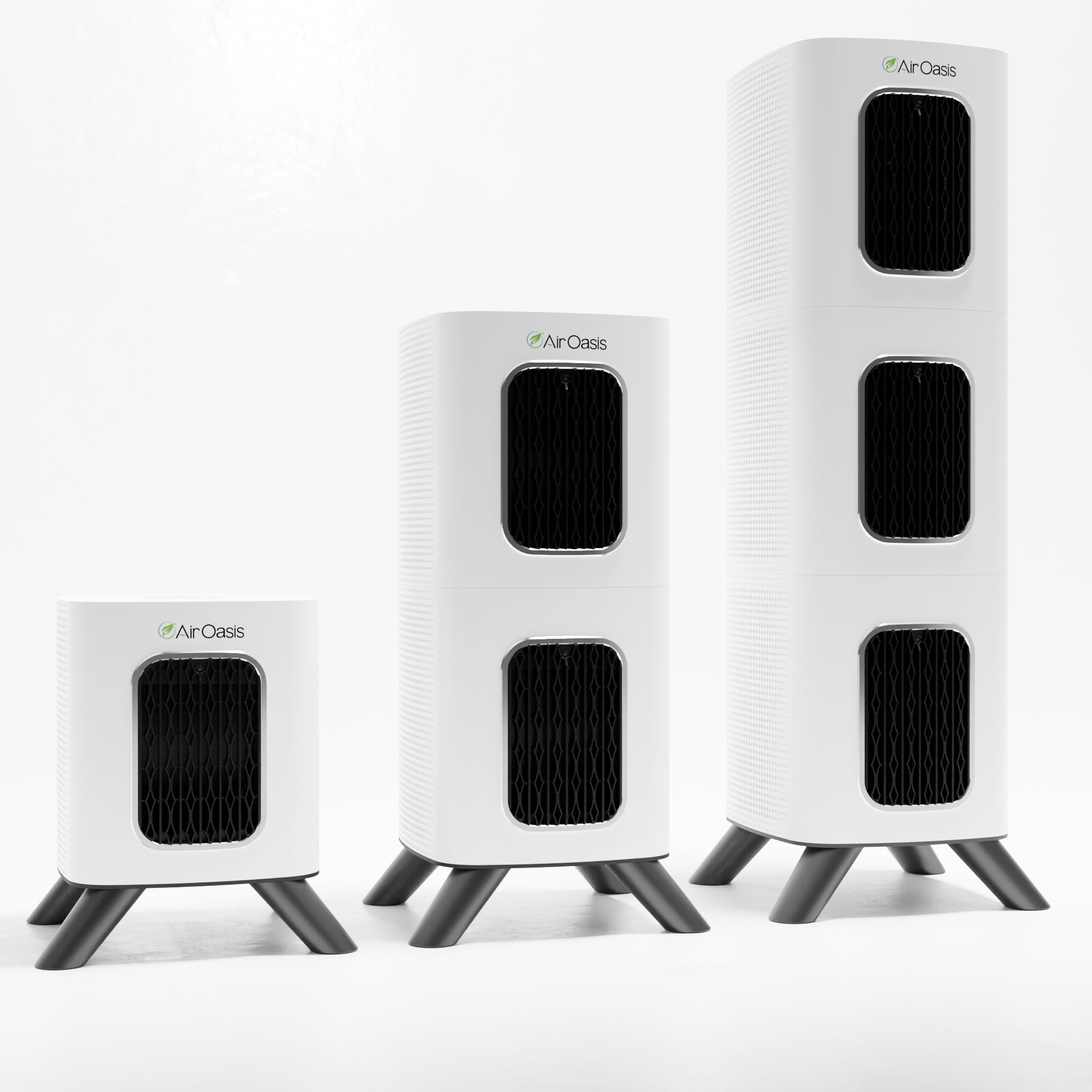
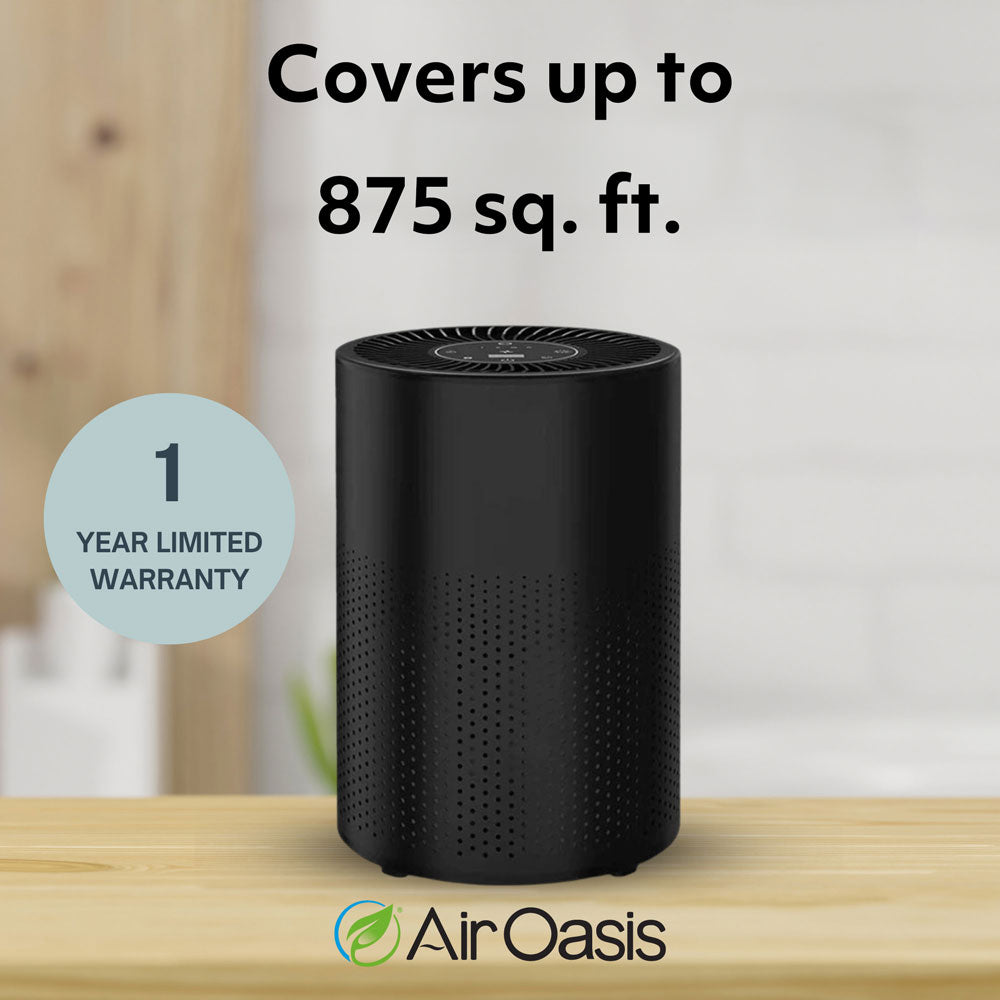
Size the unit to the room where you need it most. The iAdaptAir 2S covers up to 265 square feet, the 2M handles up to 530, the 2L covers up to 795, and the 2P covers up to 1,059 square feet.
The AQI is a useful tool — just not for indoor decisions
None of this means the Air Quality Index is useless. It's valuable for what it was built to do: help you decide whether to exercise outdoors, whether to keep windows closed during a wildfire event, whether vulnerable family members should limit time outside. It does those things well.
But if you're trying to understand the air you breathe for the 90 percent of your time spent indoors, the AQI is looking at the wrong environment, with the wrong sensors, measuring the wrong pollutants, in a different location than the one that actually affects you.
Your home has its own air quality story. It's worth knowing what that story actually says.
Shop Air Oasis and find the iAdaptAir sized for your space. Breathe Better, Live Better.