Most homeowners think about their chimney once a year — maybe before the first fire of the season. But your chimney is working against you the rest of the year too, quietly collecting moisture, organic debris, and the exact conditions mold needs to thrive. If you've noticed a musty smell near your fireplace, that's not just old ash. It may be mold.
Why Chimneys Are a Prime Breeding Ground for Mold
A chimney is essentially a vertical tunnel that connects the outside environment to the inside of your home. That means rain, humidity, and outside air move through it constantly. When a chimney cap is missing, damaged, or improperly fitted, rainwater enters directly. Even with a cap in place, humid air condenses on the flue lining's cooler interior surfaces.
Creosote — the dark, tar-like residue that builds up from burning wood — is porous and absorbs moisture readily. Once it's wet, it becomes a food source for mold. Add organic debris like leaves, twigs, or even nesting material from birds or squirrels, and you have everything mold needs to establish itself deep inside the chimney structure.
Mold only requires moisture, a surface to grow on, and temperatures between roughly 40°F and 100°F. A chimney interior checks every box for most of the year.
The Hidden Pathway Into Your Living Space
Here's what makes chimney mold a genuine indoor air quality concern: spores don't stay in the chimney. When the damper is open — or even when it's partially closed with an older, worn seal — air from the chimney flows into your living room. That air carries mold spores.
Homes with fireplaces that aren't used regularly are especially vulnerable. A chimney that sits closed and unused through spring and summer traps moisture inside with no airflow to dry it out. By fall, when you open the damper for the first fire of the season, a flush of mold-laden air enters your home.
Homeowners often don't connect the musty smell in their living room to the chimney because they can't see inside it.
What Chimney Mold Looks and Smells Like
You rarely see chimney mold directly unless you're a trained inspector with a camera system. But there are signs you can recognize. A persistent earthy or musty smell near the fireplace — especially after rain or on humid days — is one of the most reliable indicators. Dark staining around the firebox opening, on the damper plate, or on the upper interior of the firebox itself can also suggest mold growth.
In some cases, efflorescence — the white, chalky mineral deposits that appear on masonry — signals ongoing moisture intrusion, which in turn creates favorable conditions for mold. If you see that on your chimney's exterior or interior, moisture is getting in and staying in.
Water stains on the ceiling or wall near the fireplace are another red flag. These often point to a compromised flashing seal at the chimney's roof connection — a gap that lets rain in and keeps moisture trapped inside the structure.
The Health Impact of Breathing Chimney Air
Mold spores from a chimney enter your living space just like any other airborne contaminant. They circulate through your home's air and get inhaled. For most people, low-level exposure causes irritation — nasal congestion, coughing, sneezing, or itchy eyes. For people with asthma, allergies, or respiratory sensitivities, the reaction can be more significant.
Mold exposure can worsen asthma symptoms and trigger allergic responses even in otherwise healthy individuals. Children and older adults tend to be more sensitive. When mold exposure is ongoing and unaddressed — as it often is with chimney mold — the cumulative effect on respiratory health is real.
What makes this particularly problematic is that people rarely associate their symptoms with the fireplace. They treat the congestion, use the inhaler, and never identify the source.
How to Address Chimney Mold Properly
The first step is a professional chimney inspection. A Chimney Safety Institute of America–certified sweep can perform a camera inspection of the flue and identify moisture intrusion, mold growth, and structural damage that isn't visible from the firebox opening. An annual inspection is generally recommended before the burning season begins.
If mold is found, professional remediation of the chimney interior is warranted. This involves cleaning the flue, treating affected surfaces, and addressing the moisture source — whether that's a missing cap, damaged crown, cracked flue liner, or failed flashing. Treating the mold without fixing the moisture problem guarantees it will return.
After remediation, a few prevention steps matter. Installing a properly fitted chimney cap keeps rain and wildlife out. A chimney crown — the concrete or mortar cap at the very top of the masonry — should be inspected for cracks and sealed if needed. Keeping the damper fully closed when the fireplace isn't in use reduces the amount of humid outside air entering the flue.
Protecting Your Indoor Air After Chimney Work
Even after professional chimney cleaning and mold remediation, spores that have already entered your home's air don't disappear on their own. They circulate until something removes them. This is where air purification plays a meaningful role.
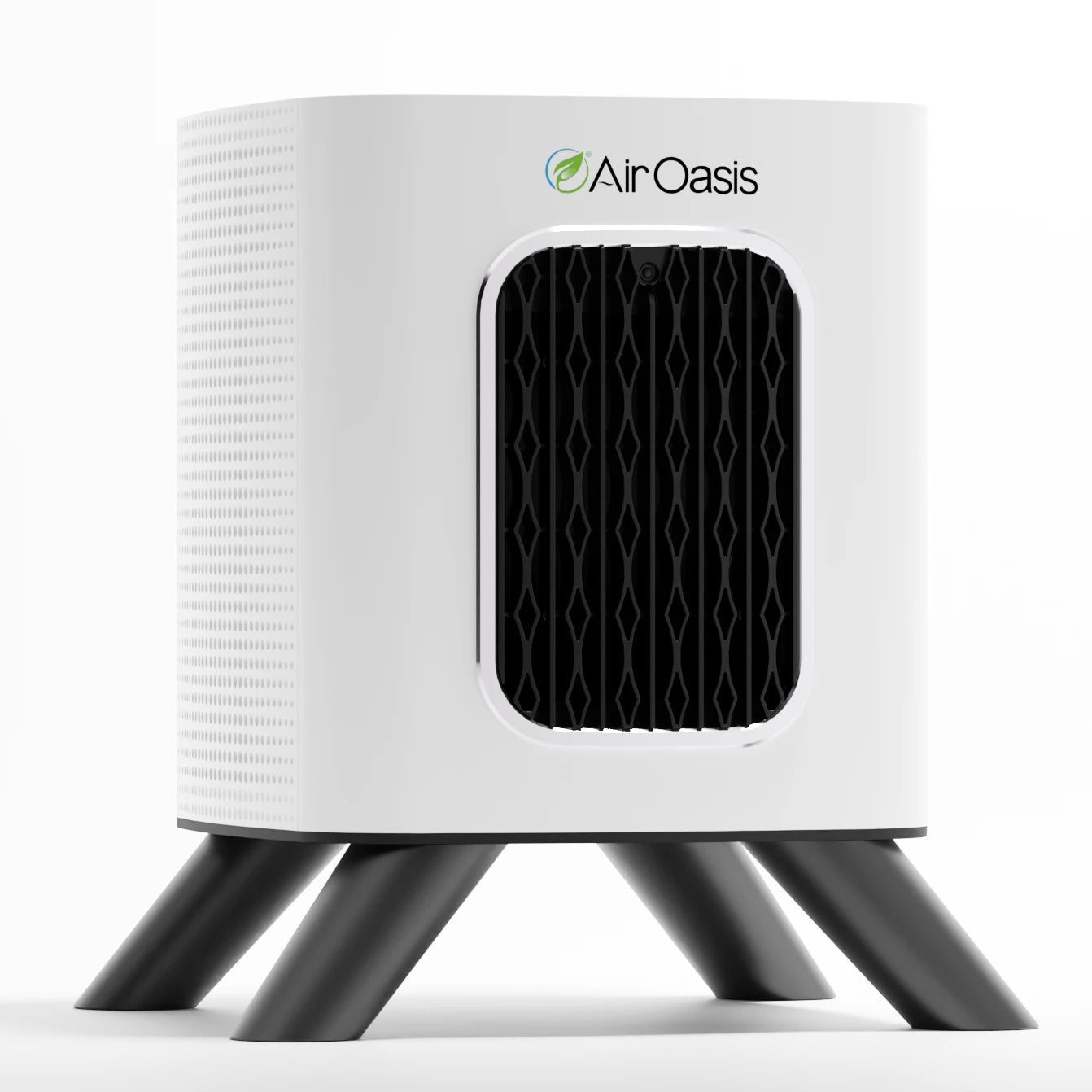
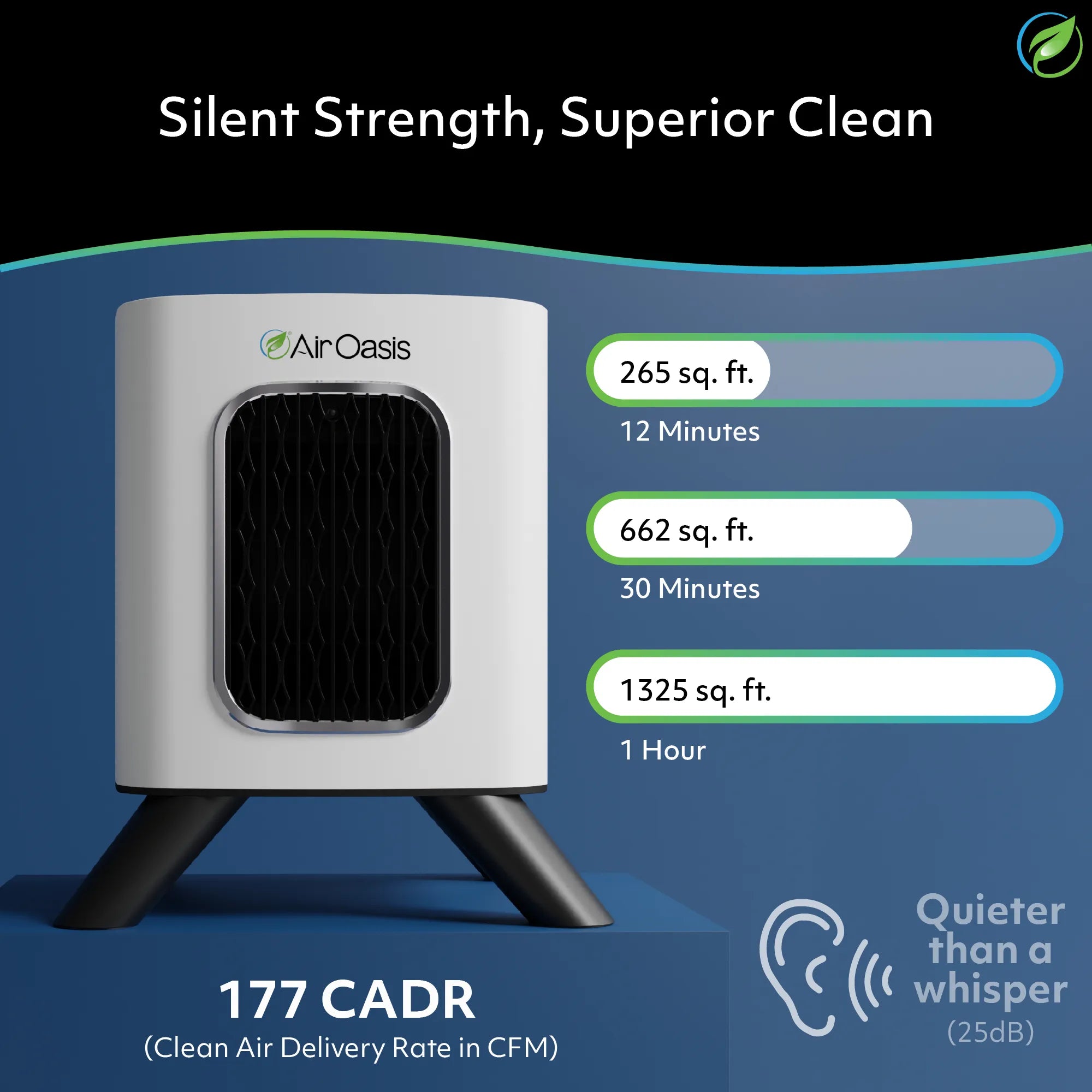
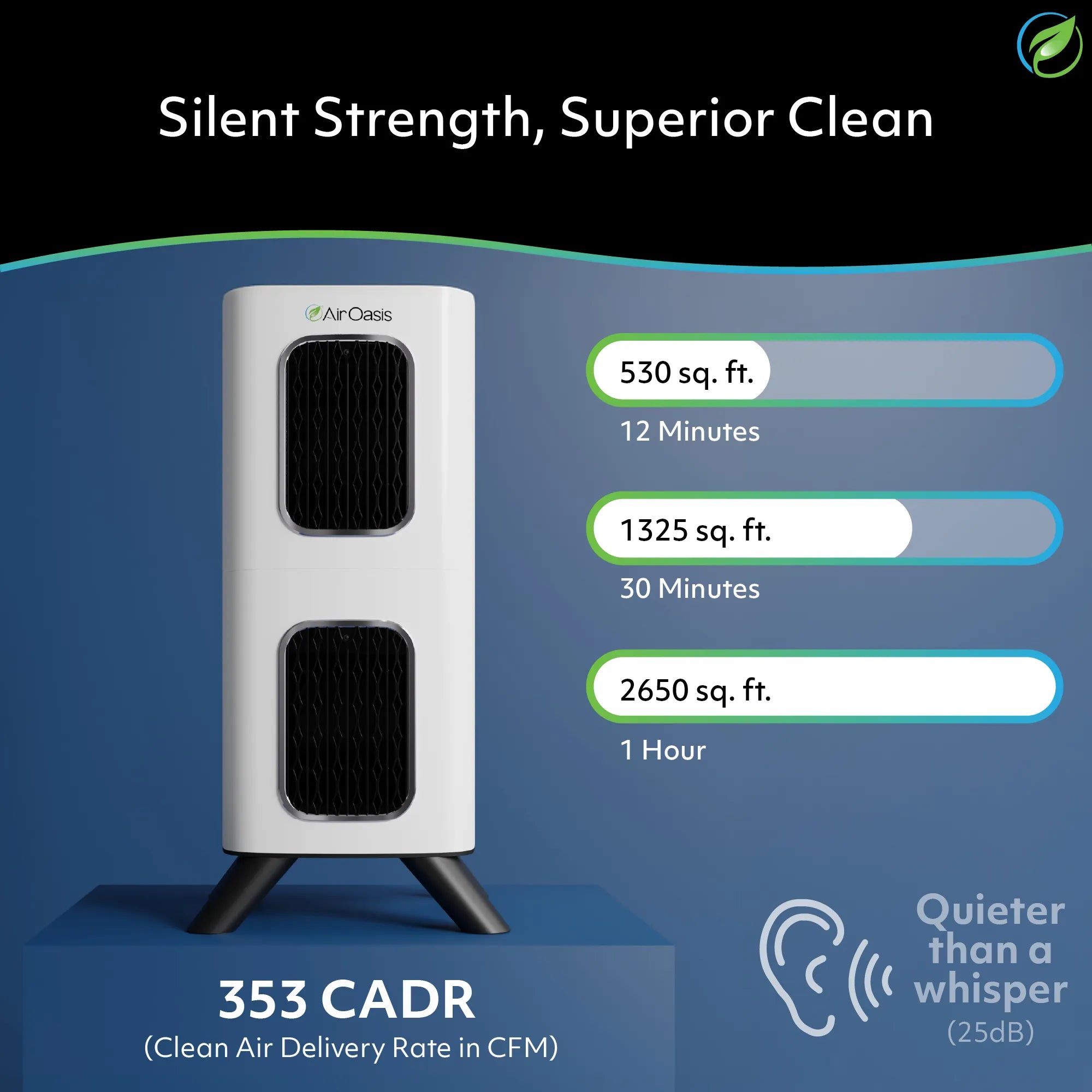
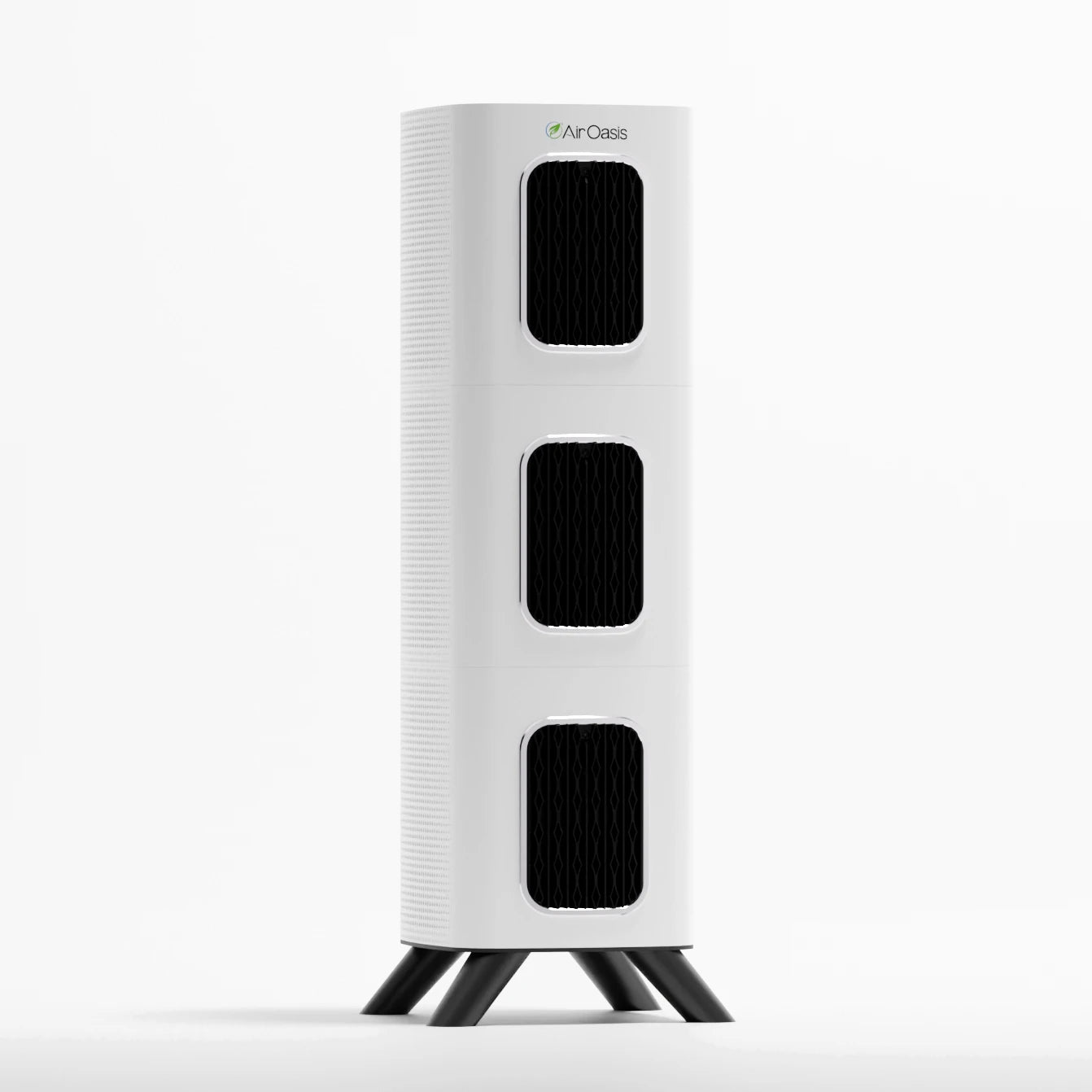
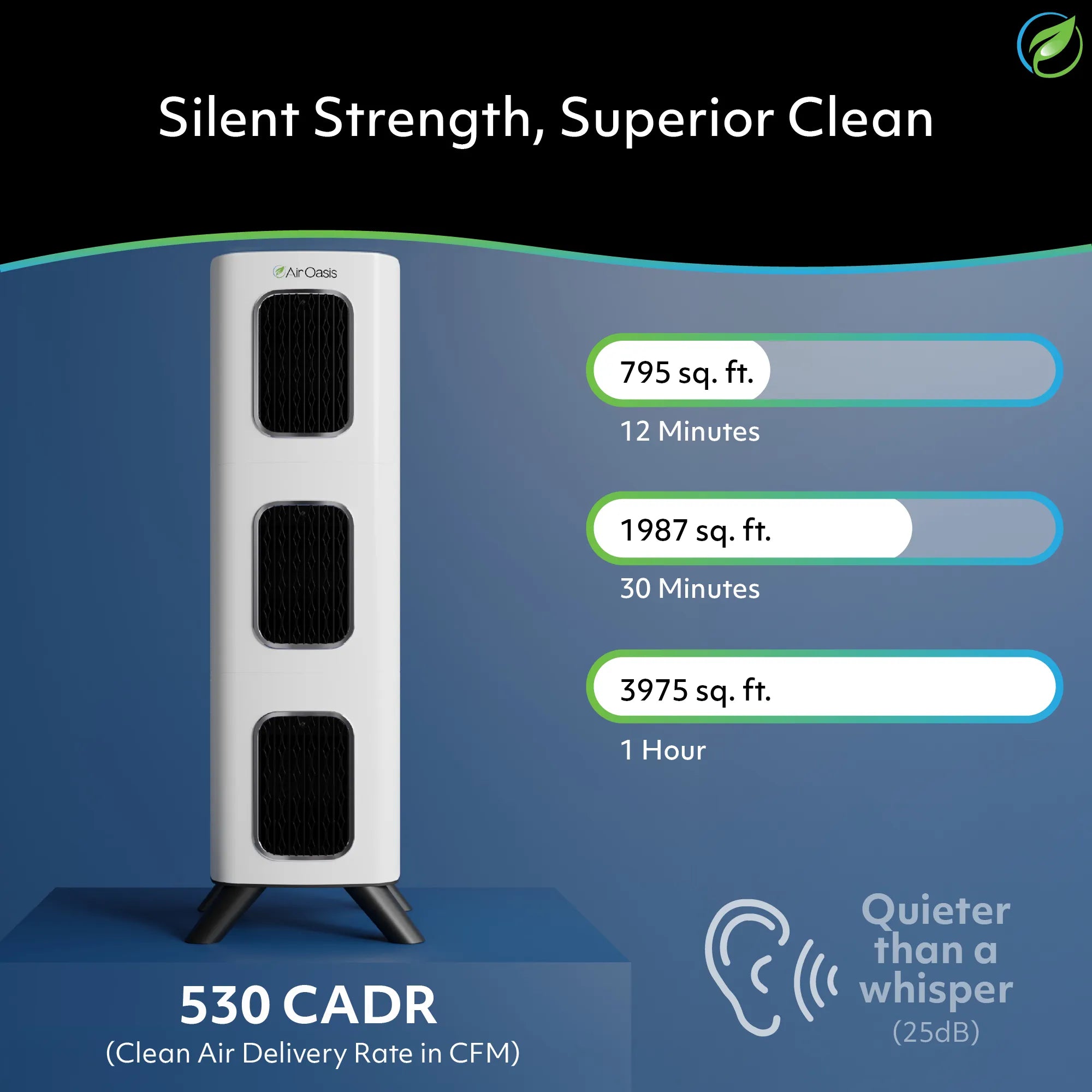
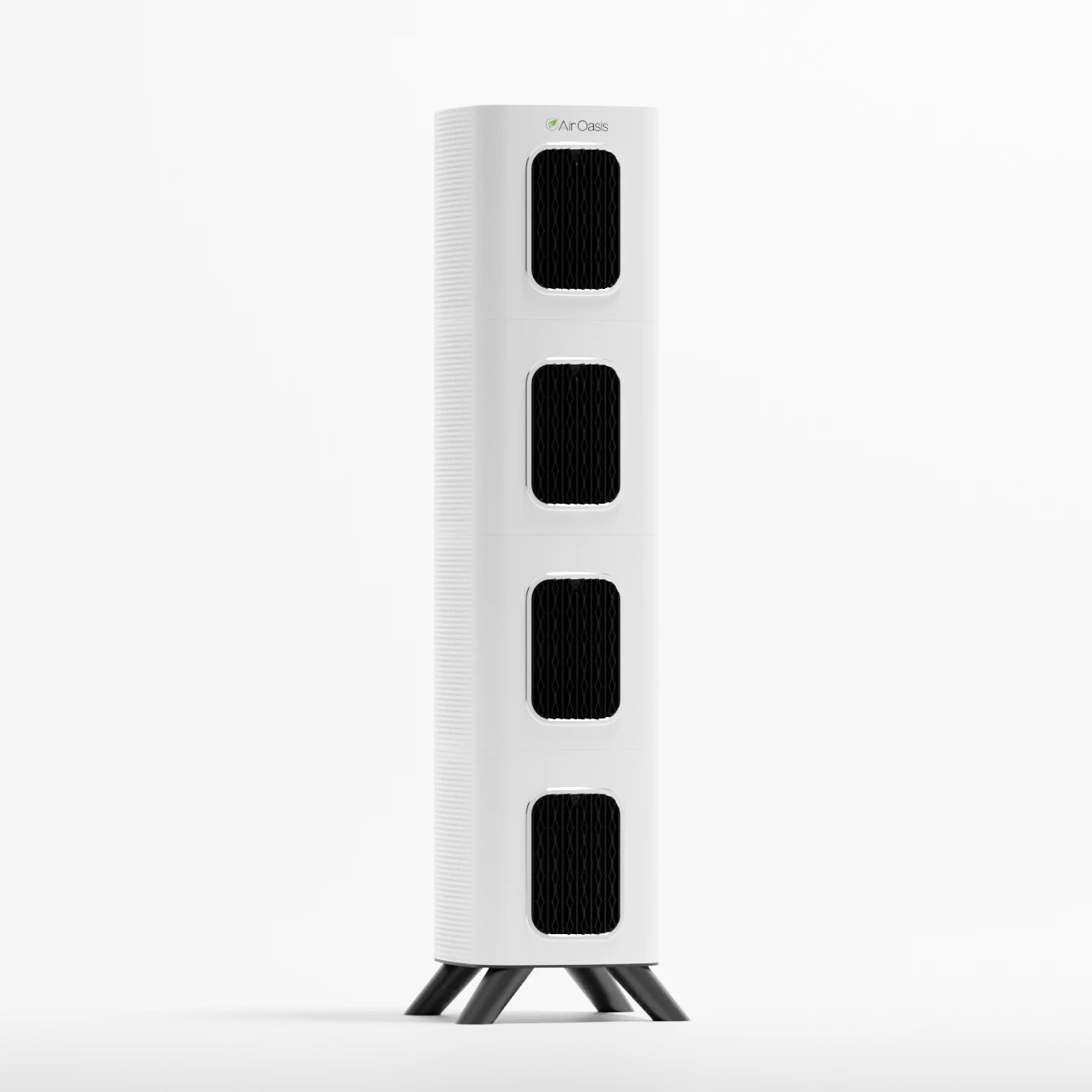
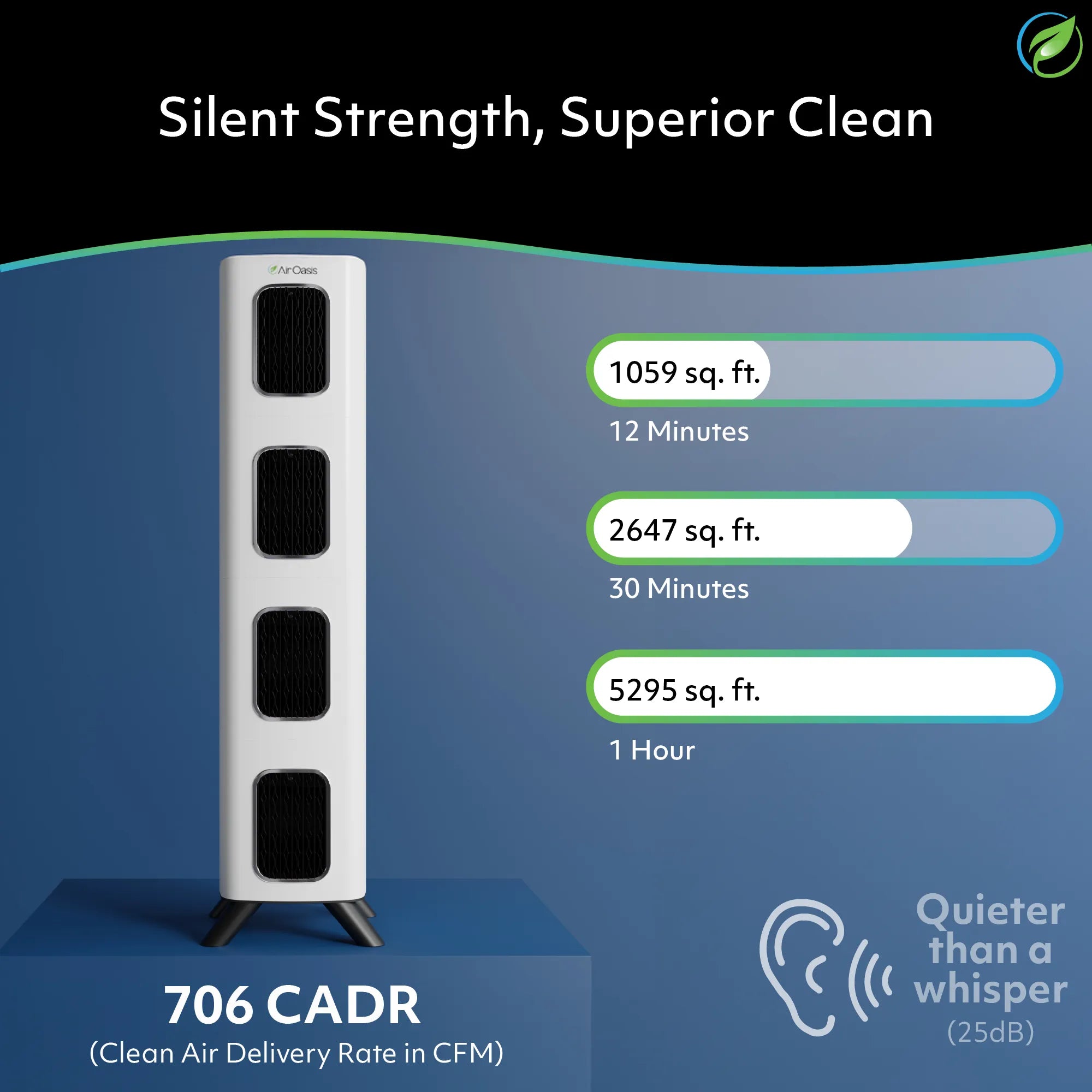
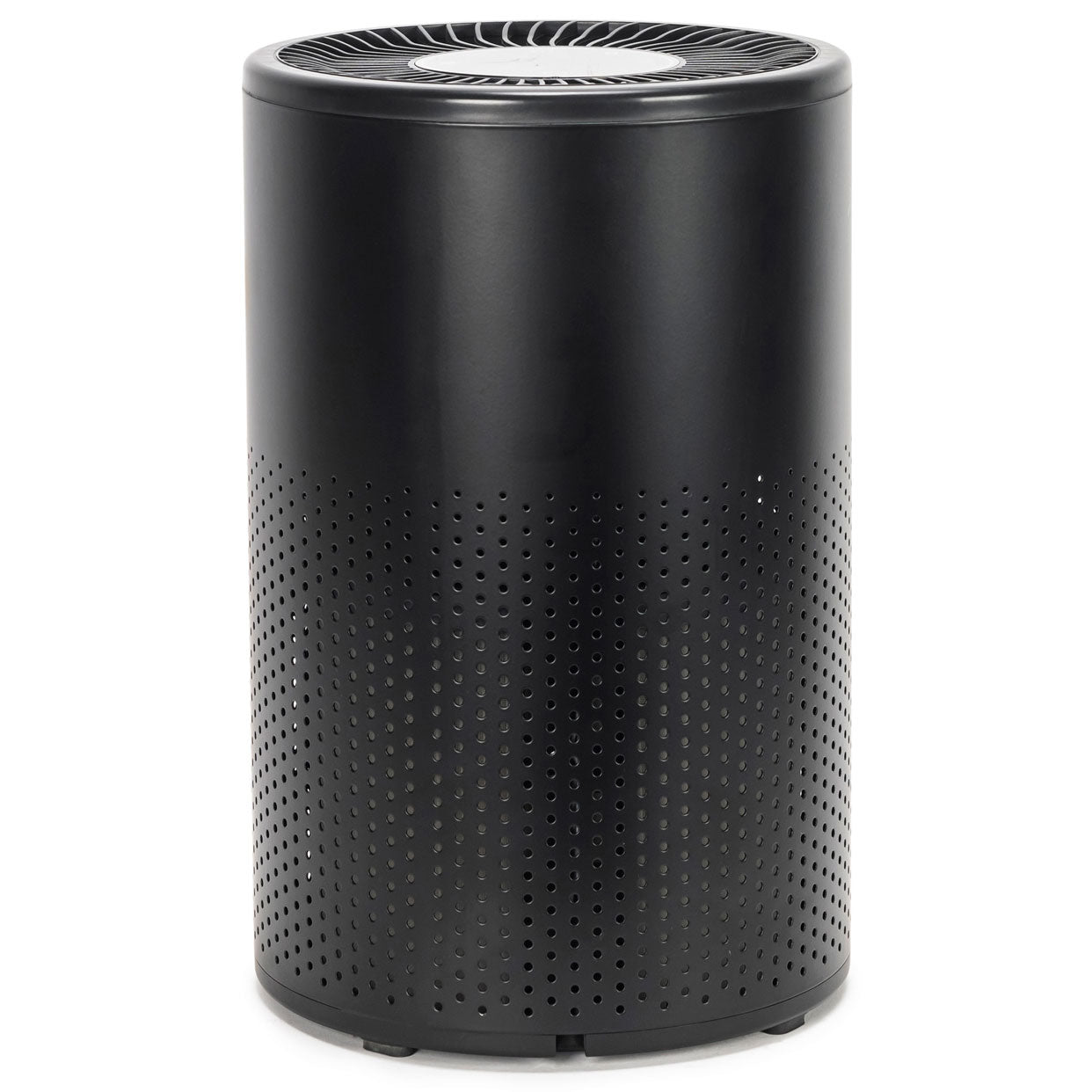
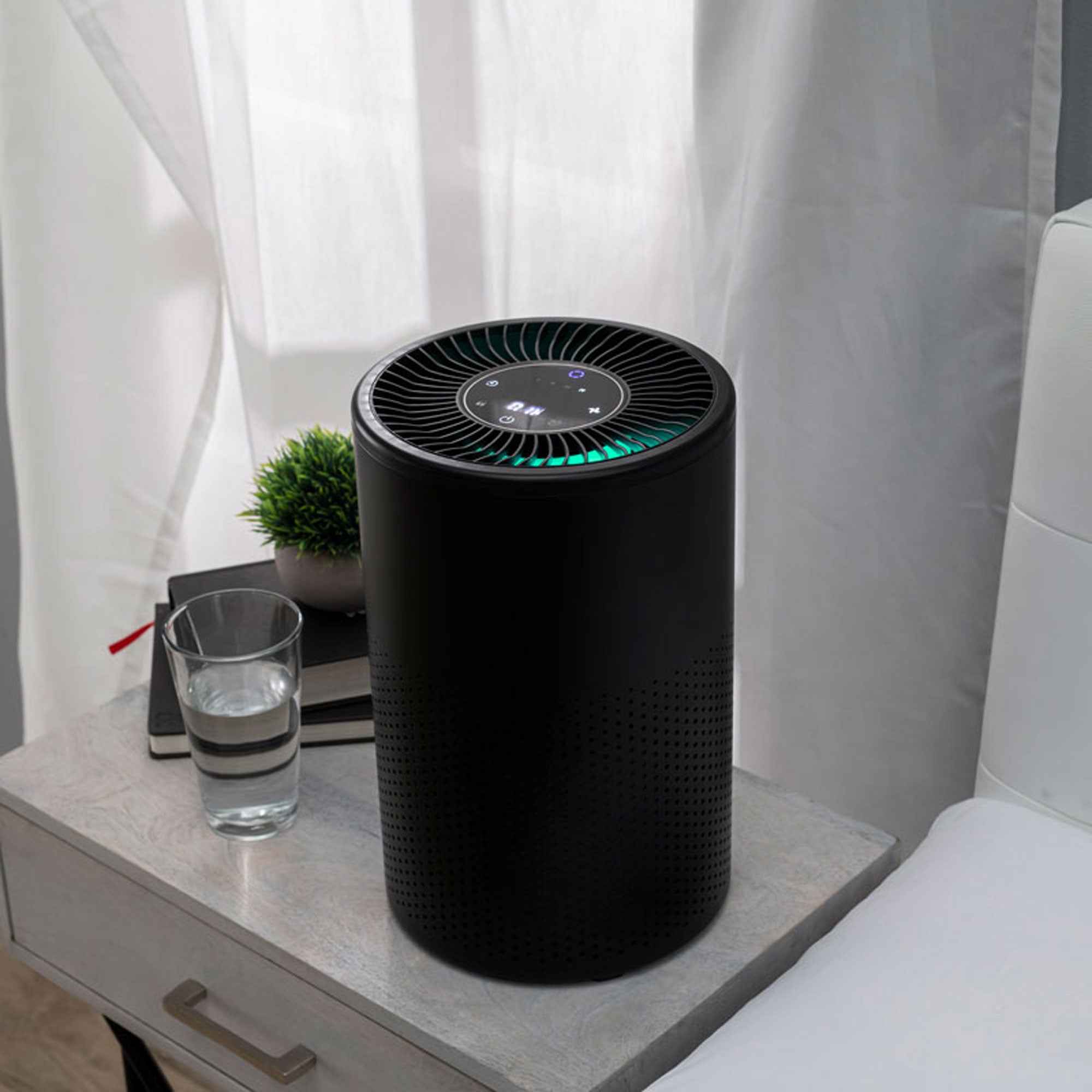
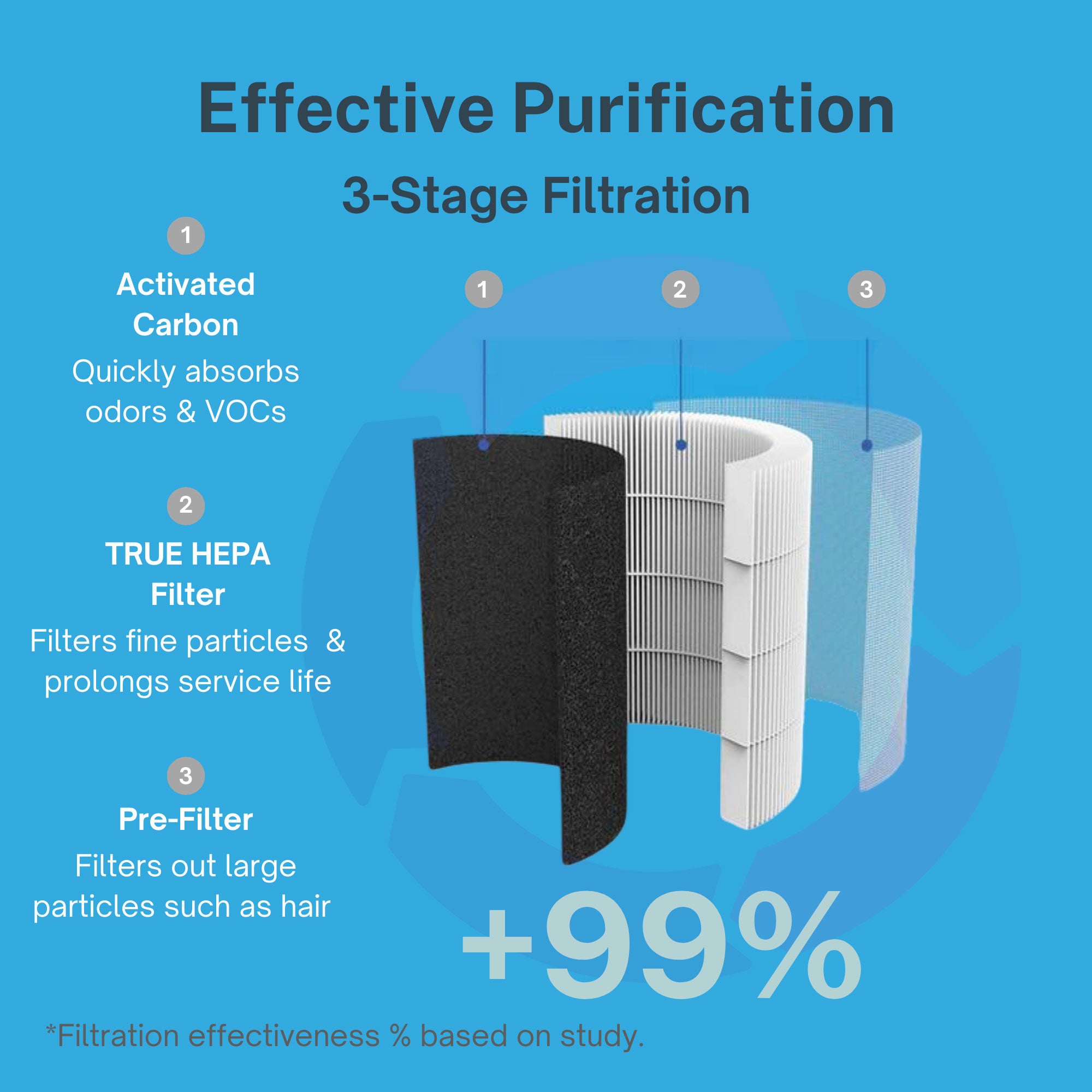
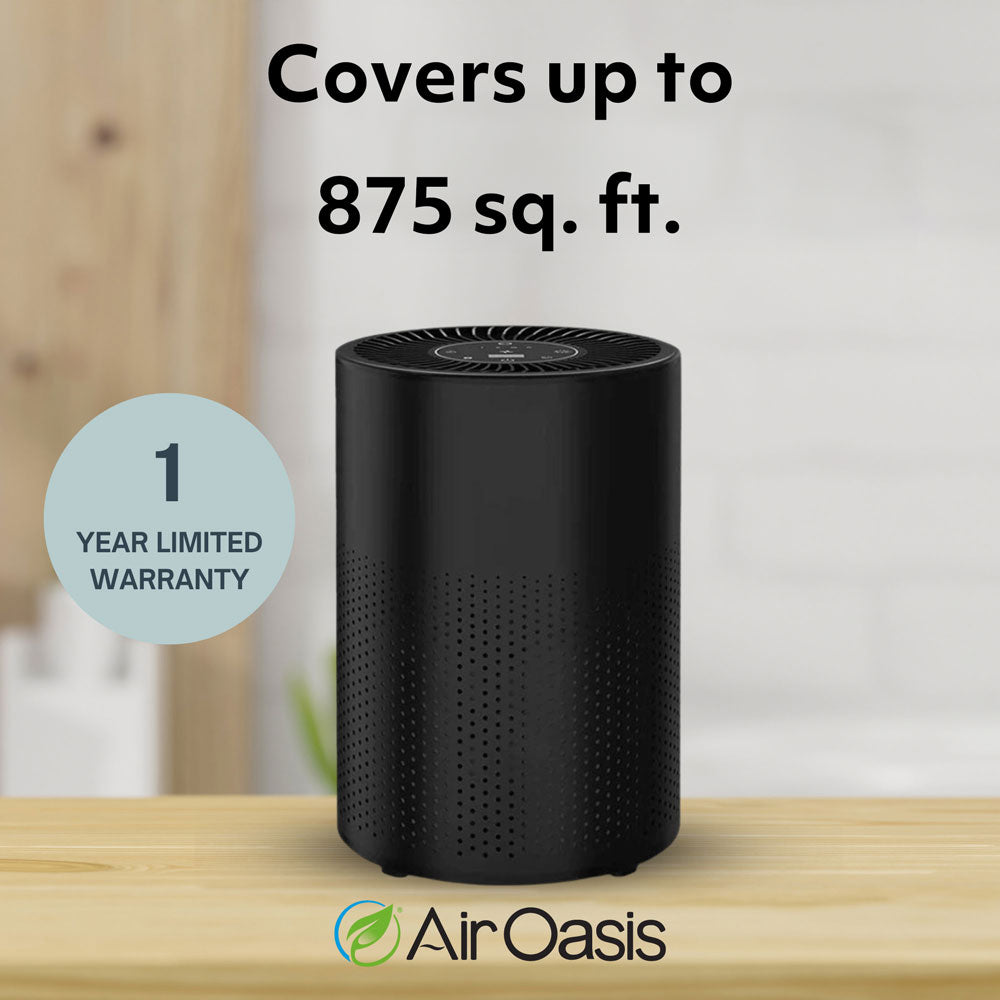
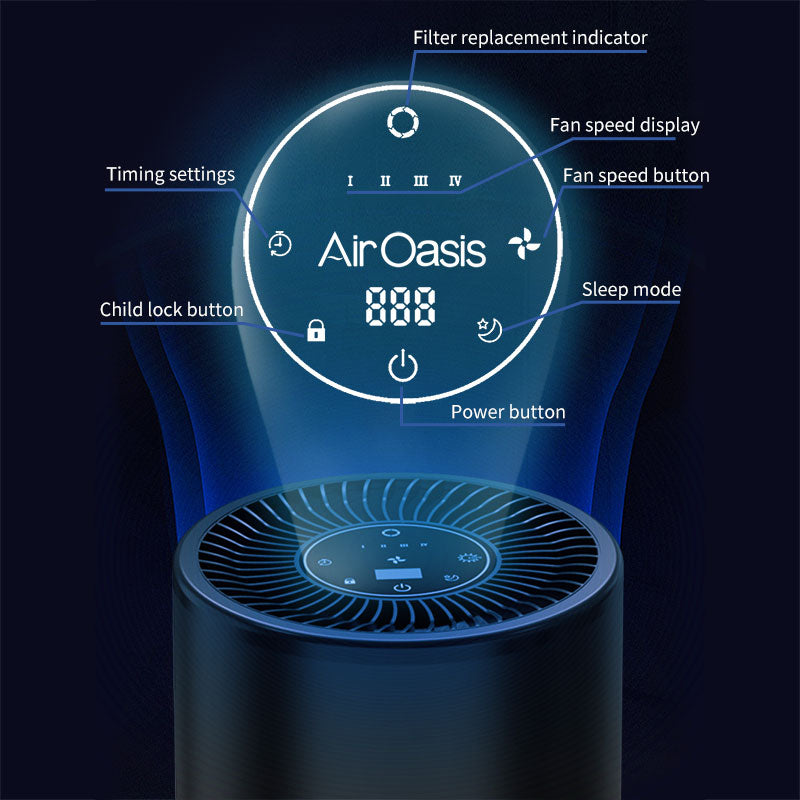
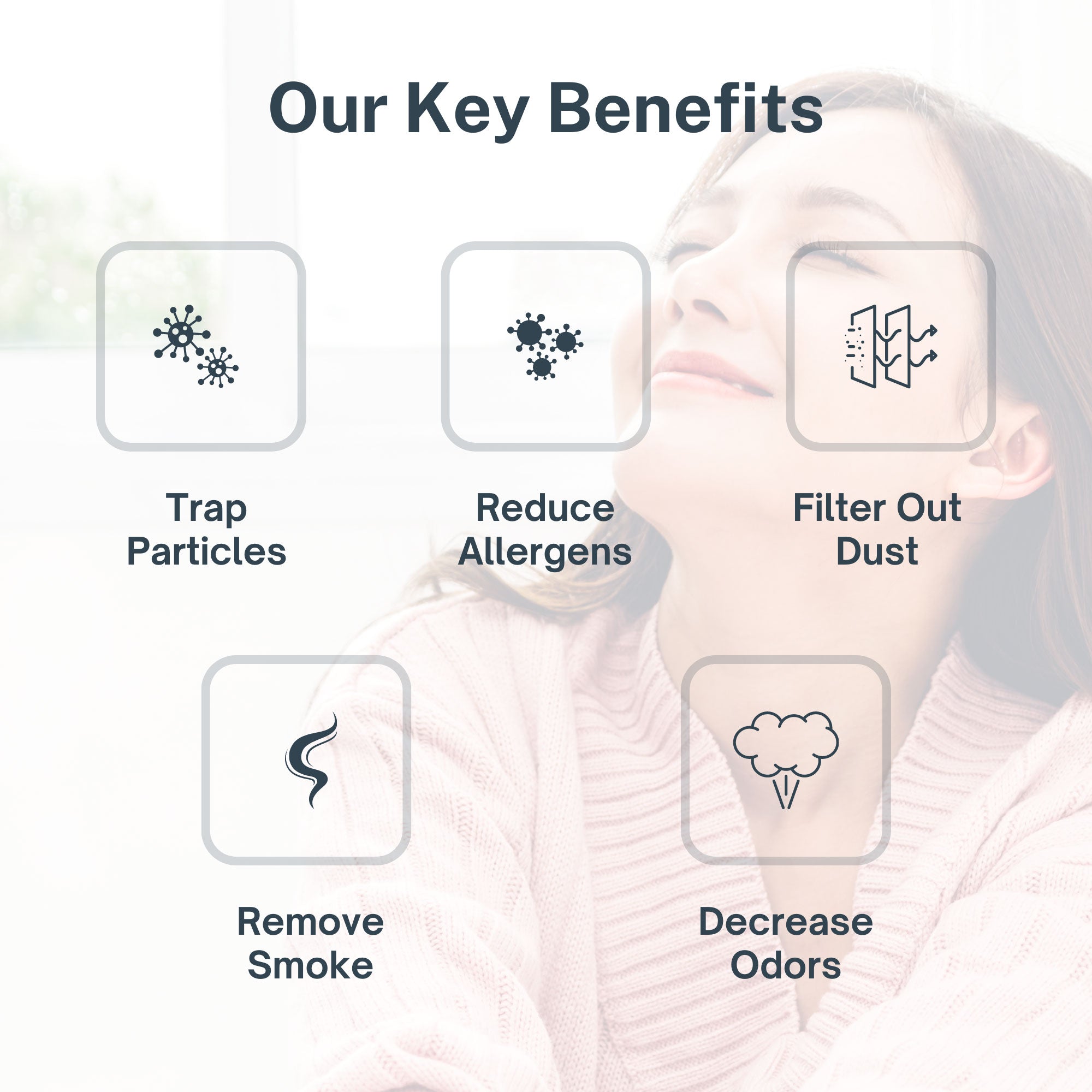
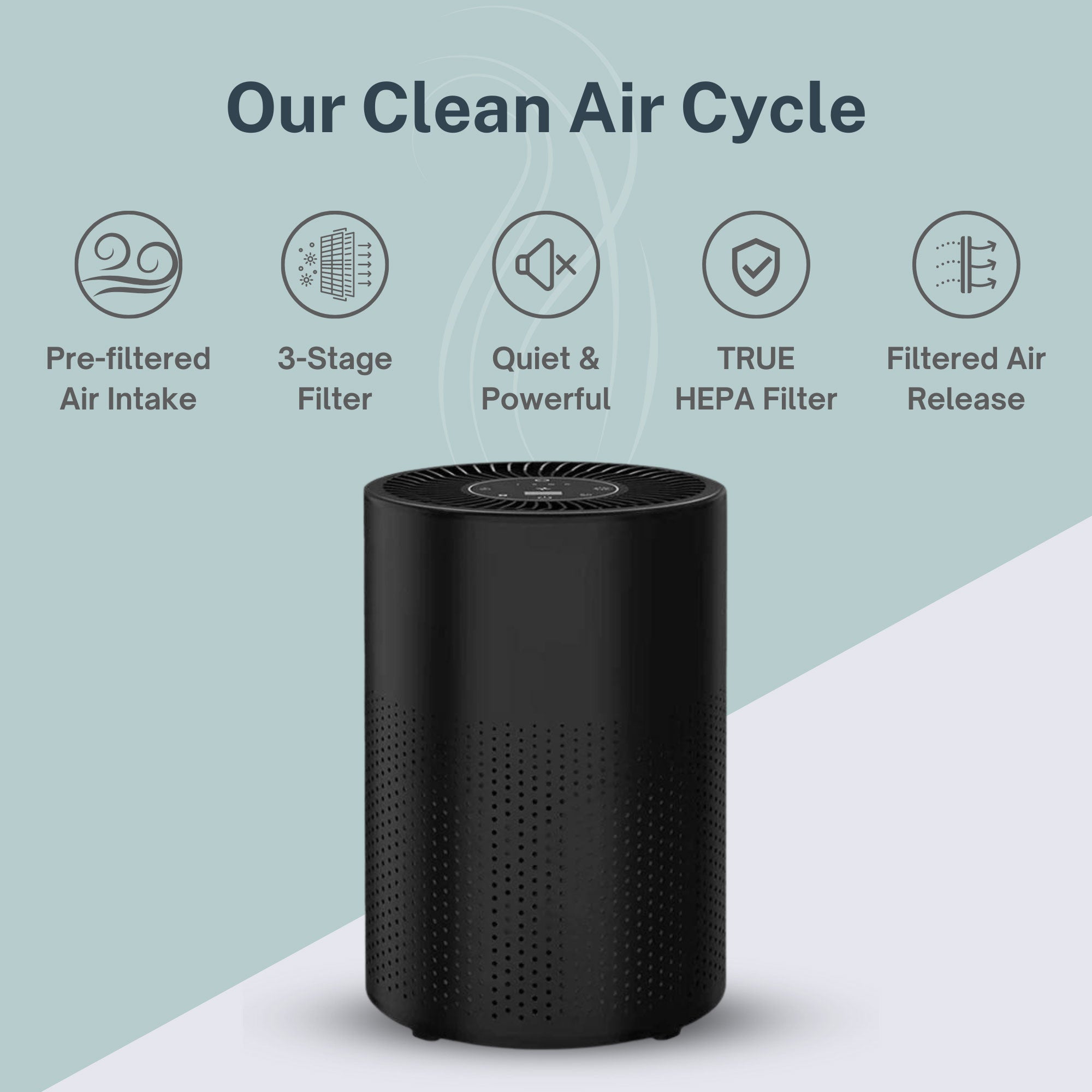
The iAdaptAir by Air Oasis uses True HEPA filtration, which captures particles as small as 0.3 microns — well within the size range of mold spores. Its UV-C light component neutralizes spores at the cellular level, reducing their ability to reproduce. Activated carbon filtration addresses the musty odors that often accompany mold exposure. Running the iAdaptAir in your living room during and after chimney season provides a consistent layer of protection for the air your family breathes every day.
An air purifier is not a substitute for addressing the chimney itself. But it is a practical, meaningful safeguard that reduces your daily exposure while structural repairs are made — and long after.
A Fireplace Should Add Comfort, Not Compromise Your Air
Your chimney is designed to carry smoke out. When it's compromised by moisture and mold, it starts to bring in contaminants. An annual inspection, a properly fitted cap, and attention to the signs of moisture intrusion go a long way toward keeping chimney mold from becoming a chronic problem in your home.
If you want to breathe easier this season and beyond, protect your indoor air at the source. Shop Air Oasis today and give your home the clean air it deserves.