Moving into a brand-new home feels like a fresh start. Everything is clean, nothing has been lived in yet, and the air should be the best it's ever going to be.
In reality, the opposite is often true. A new-construction home can have among the highest indoor air pollutant concentrations of any residential environment. Not because something went wrong. Because of how new homes are built, and what every single new material in them is doing to the air.
Why new homes have worse air quality than you'd expect
The intuition that a new home means clean air makes sense on the surface. But it misses two things that work directly against it.
The first is that every material in a new construction home is off-gassing simultaneously. Paint, flooring adhesives, carpet, cabinetry, composite wood subfloors, caulks, sealants, insulation, HVAC ductwork — all new, all at peak off-gassing rates. In an older home, most of those materials have been releasing their volatile organic compounds (VOCs) for years and are largely spent. In a new home, the chemical emission curve starts at its highest point on the day you move in.
The second is that modern new construction is built to be airtight. Energy codes have progressively tightened standards for building envelope performance. A well-built new home today has dramatically less air infiltration than homes built in previous decades. That's good for energy efficiency. It means the air inside has fewer natural routes out — and the VOCs, CO2, and other pollutants that accumulate have nowhere to go unless active ventilation moves them.
Research from Lawrence Berkeley National Laboratory has documented that formaldehyde concentrations in newly constructed or renovated spaces frequently exceed reference levels recommended for chronic exposure, particularly in the first several months of occupancy. And formaldehyde is just one compound among dozens present in typical new construction.
The VOC sources unique to brand-new construction
In a renovation, you're dealing with some new materials in an otherwise established space. In new construction, every surface and material contributes simultaneously in a sealed box.
The primary sources include:
- Engineered wood products — plywood, OSB sheathing, particleboard, and MDF used in subfloors, cabinets, and built-ins contain urea-formaldehyde resins that off-gas for months to years
- Flooring adhesives and finishes — whether hardwood, laminate, or luxury vinyl, the adhesives and coatings applied during installation release significant VOC loads early in their life
- Paint — latex paint releases most of its VOCs in the first week or two, but oil-based products and specialty finishes off-gas for longer; even low-VOC formulas are not zero-emission
- Carpet and carpet backing — treated with stain-resistant finishes, antimicrobial coatings, and bonded with adhesive compounds that can take weeks to months to stabilize
- Caulks, sealants, and spray foam insulation — applied extensively in new construction to meet air-sealing requirements; most off-gas during the cure period
- HVAC ductwork — brand-new metal ductwork and insulated flex duct contain coatings and adhesives that contribute to VOC load, particularly when first brought up to operating temperature
These sources don't operate in isolation. They compound each other. A bedroom where the subfloor, flooring adhesive, carpet, paint, and cabinetry are all at peak off-gassing rates simultaneously creates a cumulative VOC burden that no single source would produce on its own.
What a tight building envelope does to those emissions
Before modern energy codes, homes leaked air through gaps around windows, electrical outlets, plumbing penetrations, and the general looseness of older construction methods. That leakage was inefficient for heating and cooling, but it also provided passive dilution of indoor pollutants.
A new home built to current standards may have an air leakage rate three to five times lower than a home built in the 1970s or 1980s. That's a genuine environmental and financial benefit over the life of the home. But it also means the VOCs released by all those new materials stay inside unless something actively moves them out.
Most new homes address this through mechanical ventilation — typically an HRV (heat recovery ventilator) or ERV (energy recovery ventilator) that exchanges indoor and outdoor air while recovering most of the thermal energy. These systems are required by building codes in many jurisdictions precisely because tight envelopes need mechanical ventilation to remain livable. ASHRAE Standard 62.2, which governs residential ventilation, establishes minimum whole-home ventilation rates based on floor area and number of bedrooms.
The practical reality is that minimum code ventilation keeps CO2 and basic moisture under control. It does not dilute VOC concentrations to negligible levels during the period when off-gassing rates are highest. You're still living inside a chemical-rich environment in the first weeks and months of occupancy.
What symptoms new home occupants sometimes notice
People who move into new construction and begin experiencing eye irritation, headaches, throat dryness, or a persistent low-grade respiratory irritation are not imagining things. These are documented responses to elevated VOC concentrations, particularly formaldehyde, in sensitive individuals.
The EPA's own guidance on indoor air quality notes that eye, nose, and throat irritation are among the most common health effects associated with VOC exposure at concentrations found in real residential settings. Symptoms are typically more pronounced in the first weeks, may worsen in warmer weather when off-gassing rates increase with temperature, and tend to improve over time as materials stabilize — though this process can take longer than most people expect.
Not everyone will notice symptoms. Individual sensitivity varies considerably. But for households with young children, pregnant women, people with asthma, or anyone with chemical sensitivities, the new construction environment warrants particular attention.
Practical steps to improve air quality in a new home
Here are some steps you can take to mitigate the impacts of bad air quality in a newly constructed home:
Ventilate aggressively in the first weeks
Open windows when outdoor conditions allow, even in a brand-new home, to flush out the highest initial VOC concentrations. If your new home has an HRV or ERV, confirm it's commissioned and operating correctly — some systems are installed but not properly activated at move-in.
Raise the temperature before occupying if possible
Higher temperatures accelerate off-gassing. Running the heat for a few days in an unoccupied new home and then ventilating thoroughly can help advance the curve before your family moves in. This strategy is most practical if you have access to the home before occupancy.
Choose furnishings thoughtfully
If everything in the home is new — furniture, mattresses, curtains, rugs — you're adding additional off-gassing sources on top of what's already present. Staggering major purchases, or choosing GREENGUARD Gold certified products where available, reduces the cumulative load.
Take VOC exposure seriously if you have sensitive household members
For families with infants, young children, or anyone with asthma or chemical sensitivities, the new construction period is not the time to assume the air is fine. It almost certainly isn't, for the first several months.
Where air purification fits in a new construction home
Ventilation handles CO2 and dilutes VOC concentrations. Air purification addresses what ventilation leaves behind.
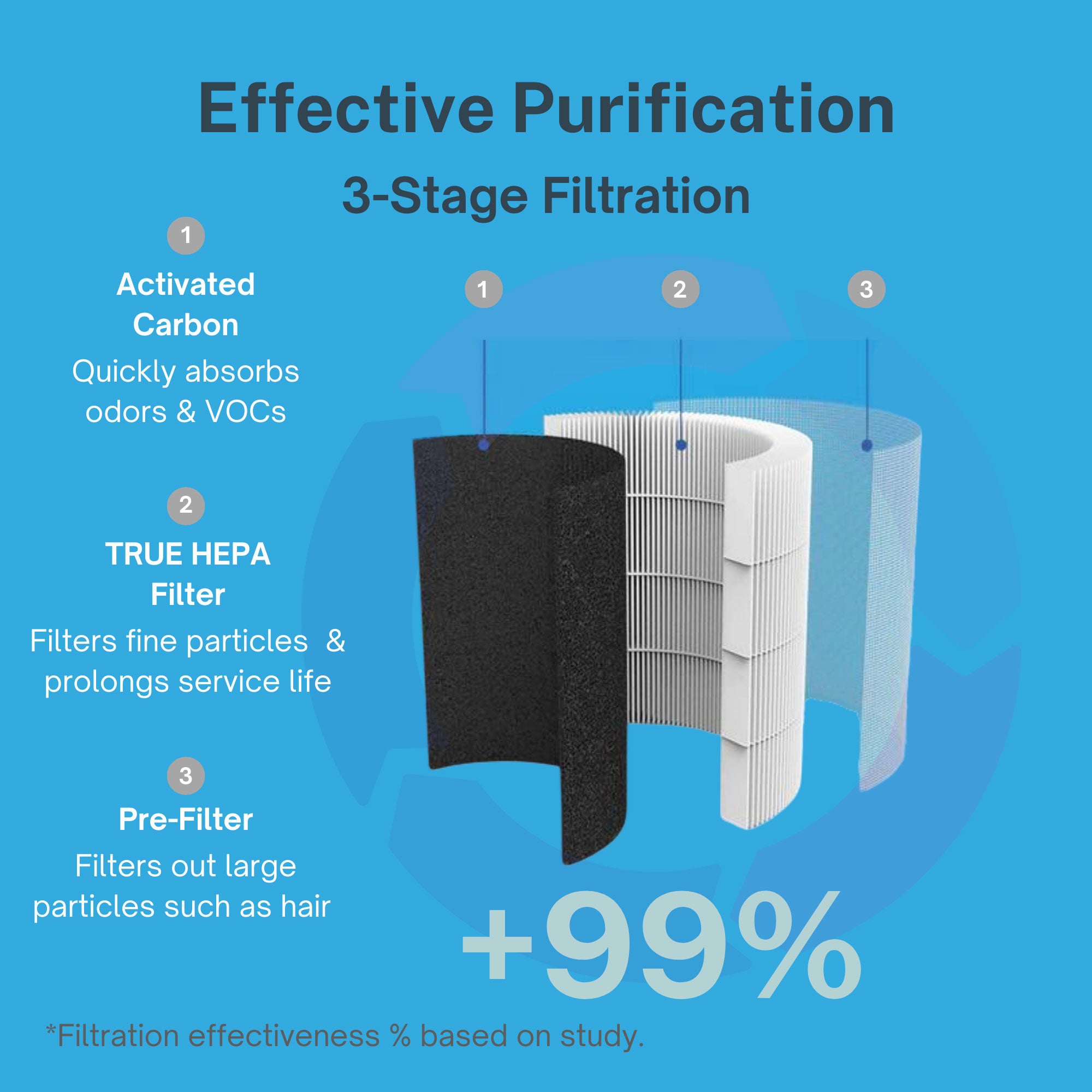
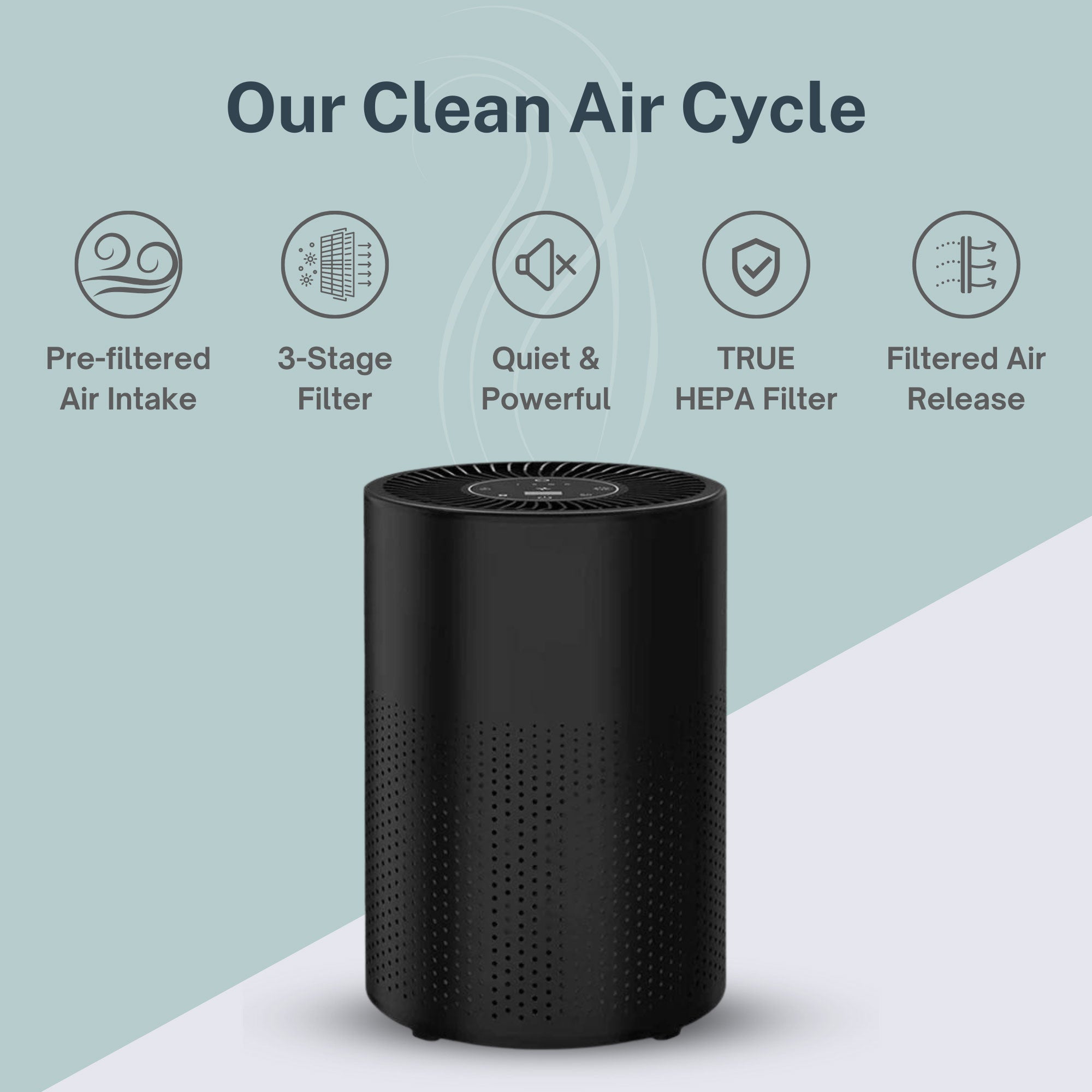
For a new construction home, the filtration technology that matters most is activated carbon. True HEPA filtration captures particles — dust, dander, pollen, mold spores — but VOCs are gases, and they pass through a HEPA filter without being captured. Activated carbon works through adsorption: gas molecules bind to the carbon's vast porous surface and are permanently removed from circulation. This is the technology doing the meaningful work against formaldehyde, adhesive off-gases, paint compounds, and other VOCs that fill a new home's air.
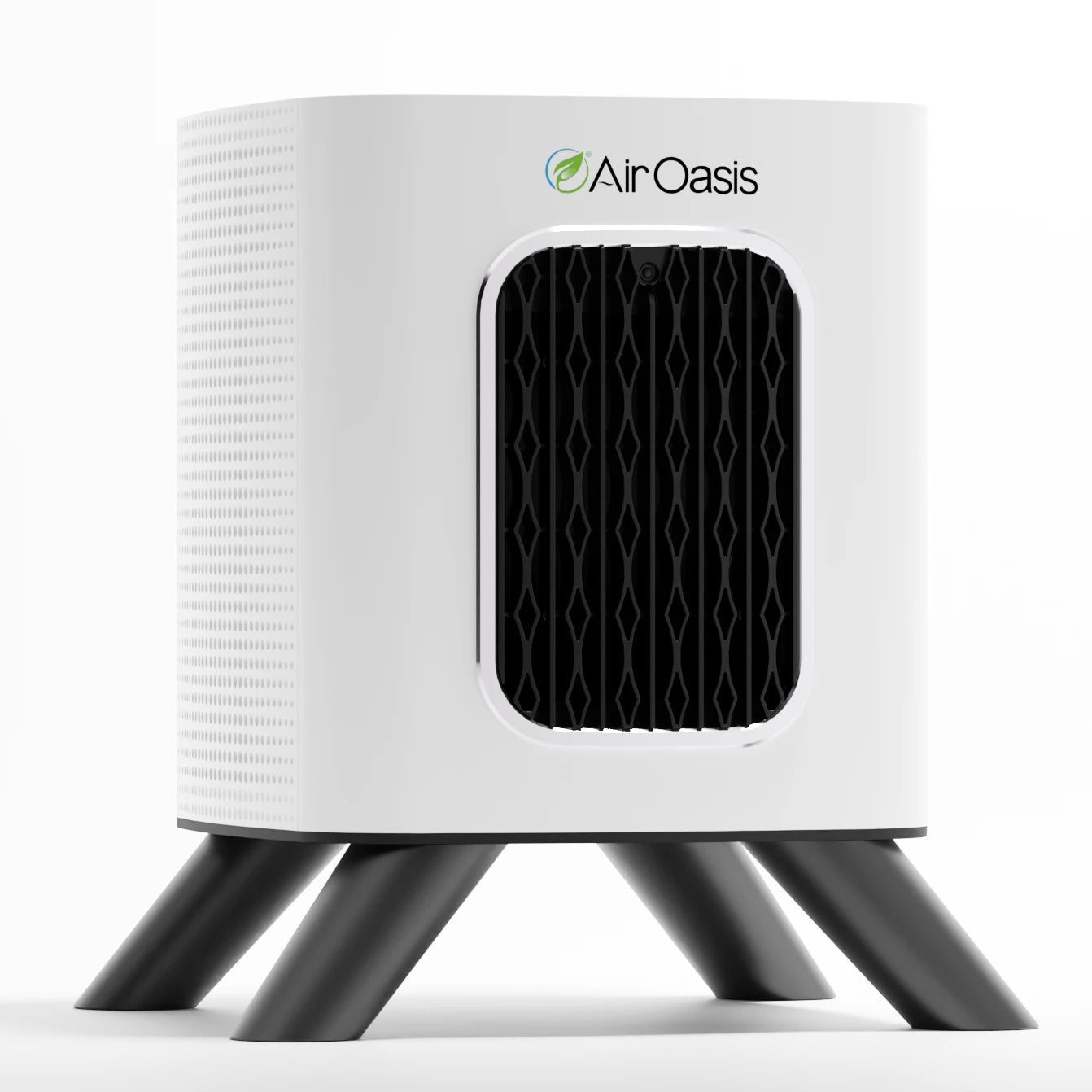
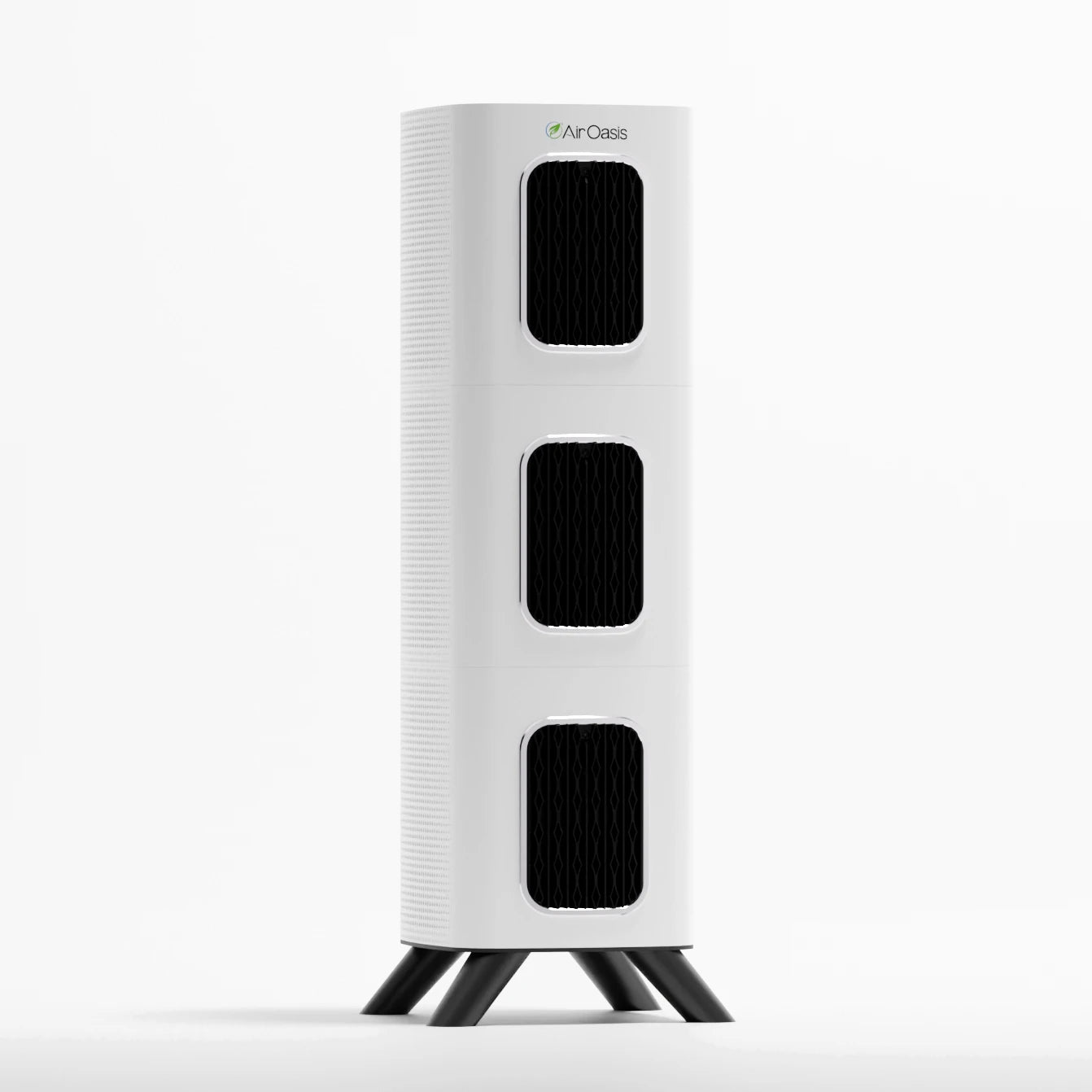
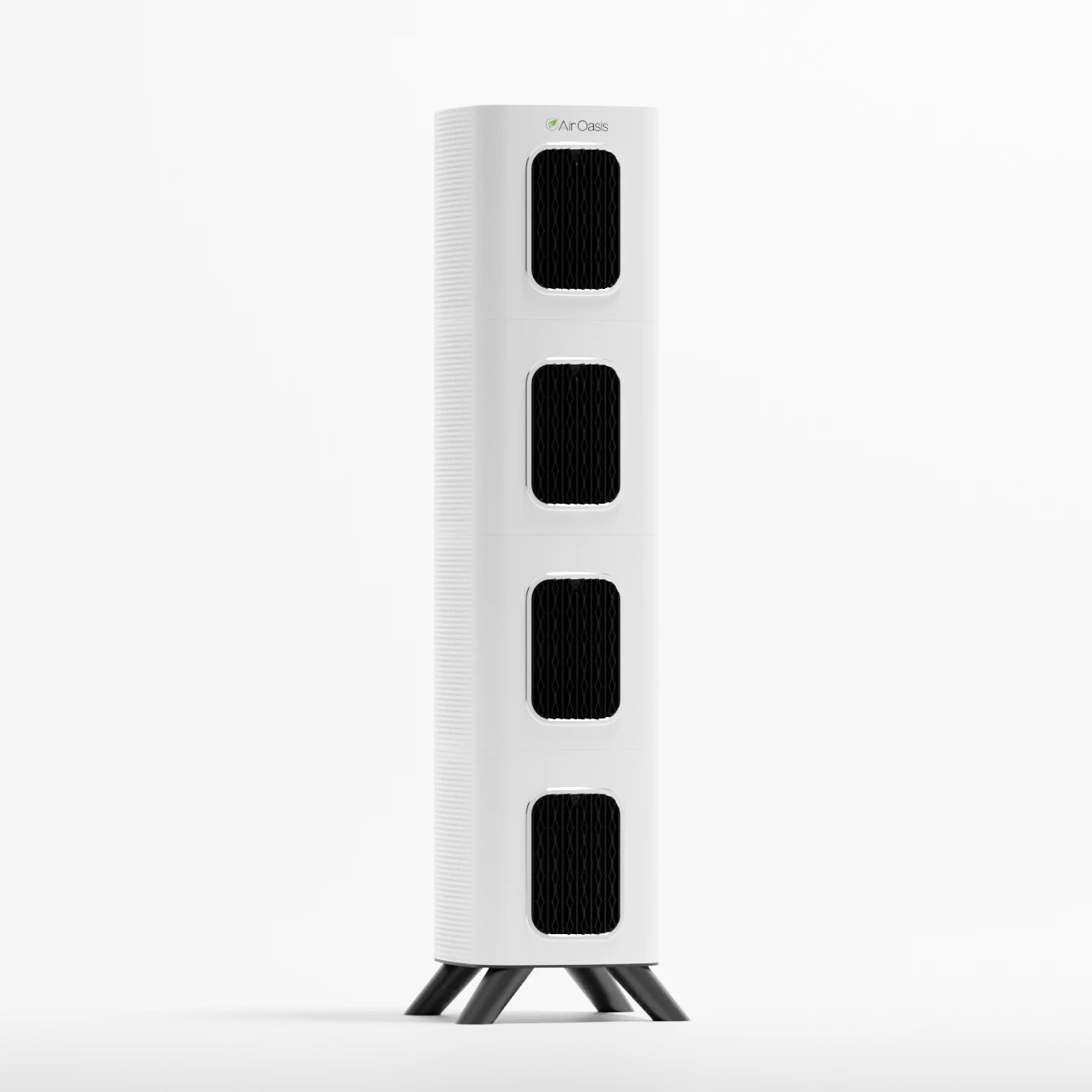
The iAdaptAir combines both. True HEPA filtration handles the particle side — construction dust, any outdoor allergens entering through ventilation, biological material — while the activated carbon layer continuously pulls gas-phase pollutants out of the air cycle by cycle. UV-C light and bipolar ionization provide protection against biological contaminants that may enter through the mechanical ventilation system or be introduced by occupants.
One important note for new construction specifically: a home where every room is off-gassing simultaneously needs coverage in multiple rooms, not just one. A single purifier in the living room is not cleaning the air in the bedrooms where your family sleeps for eight hours a night. The bedrooms are often the most important spaces to protect, because that's where total daily exposure hours are highest.
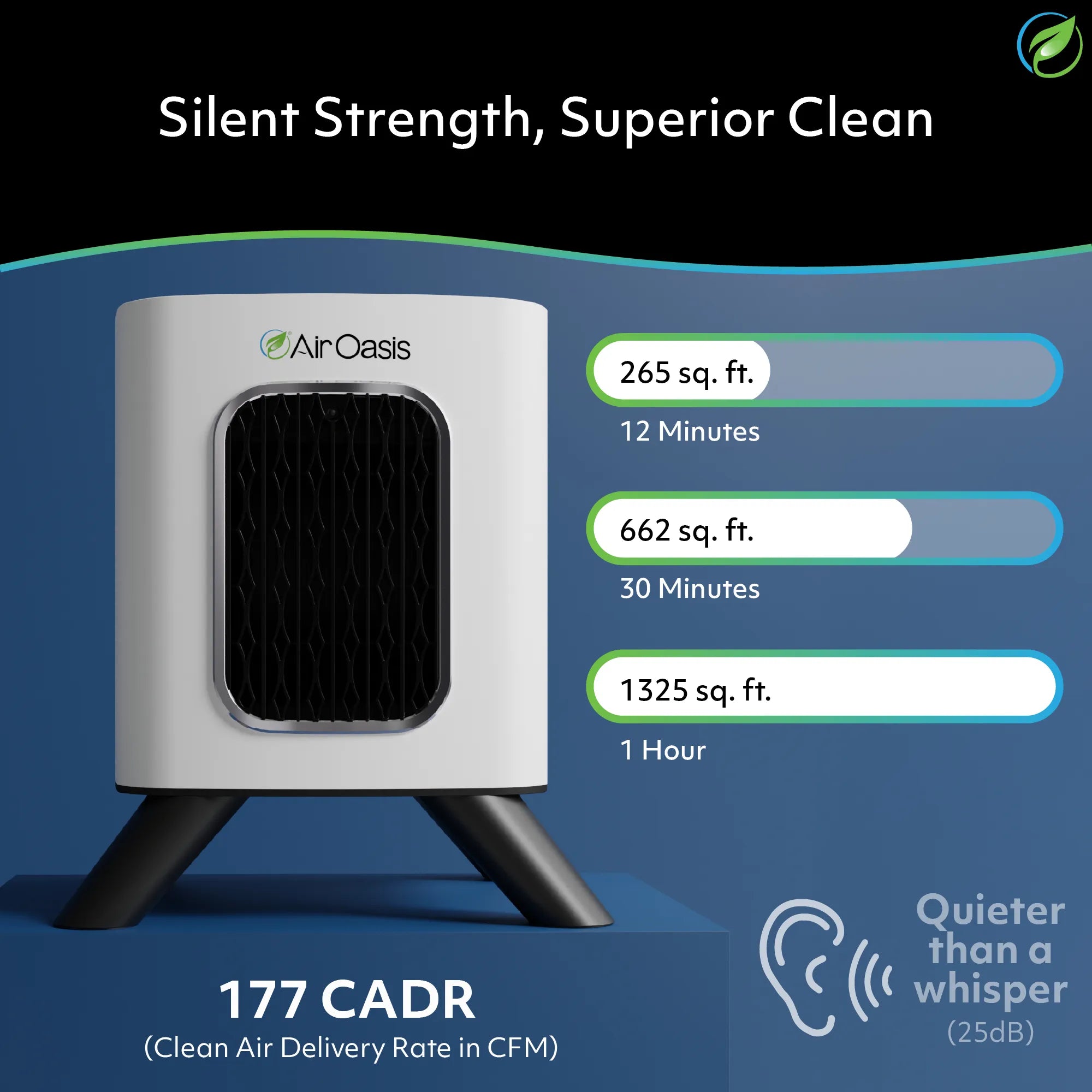
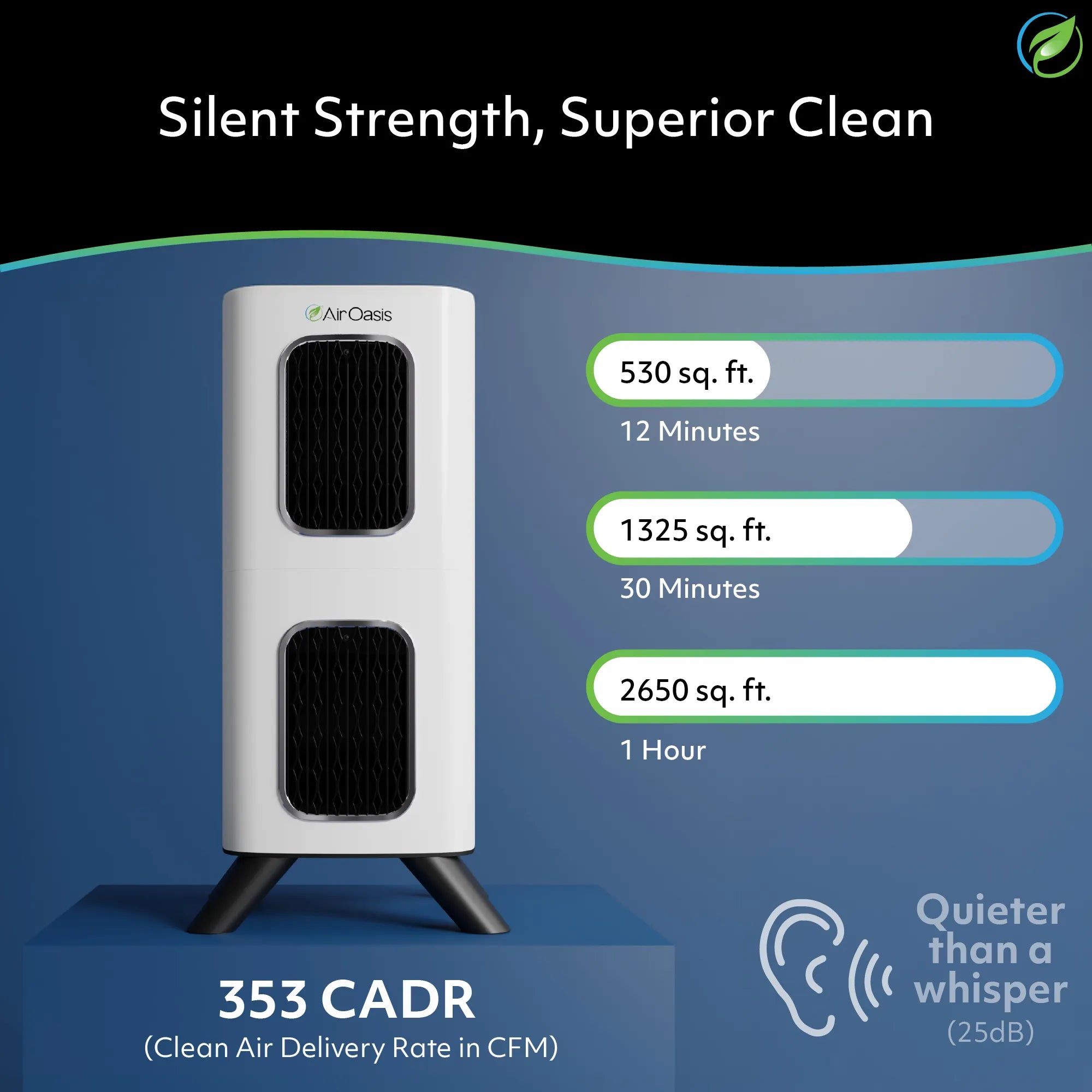
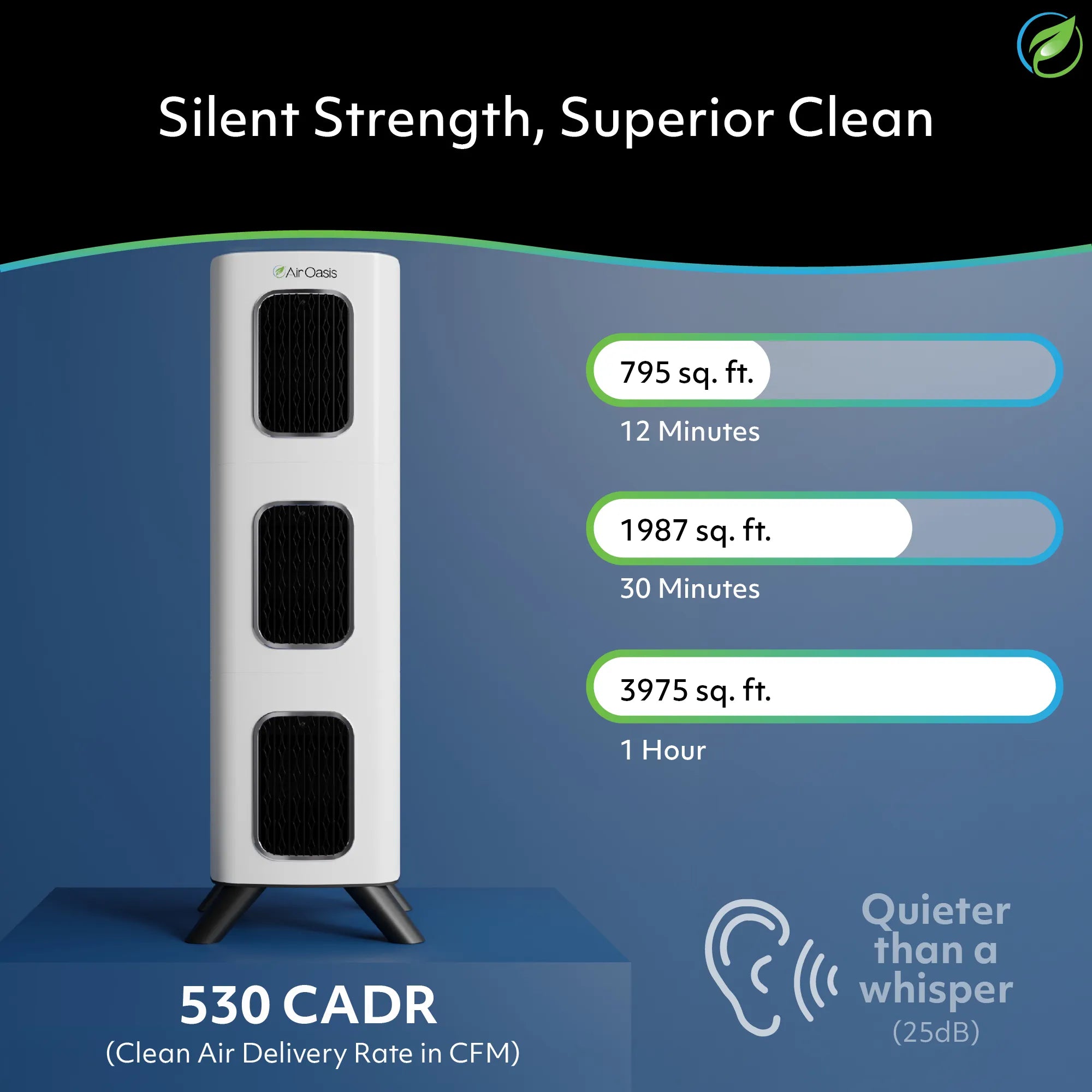
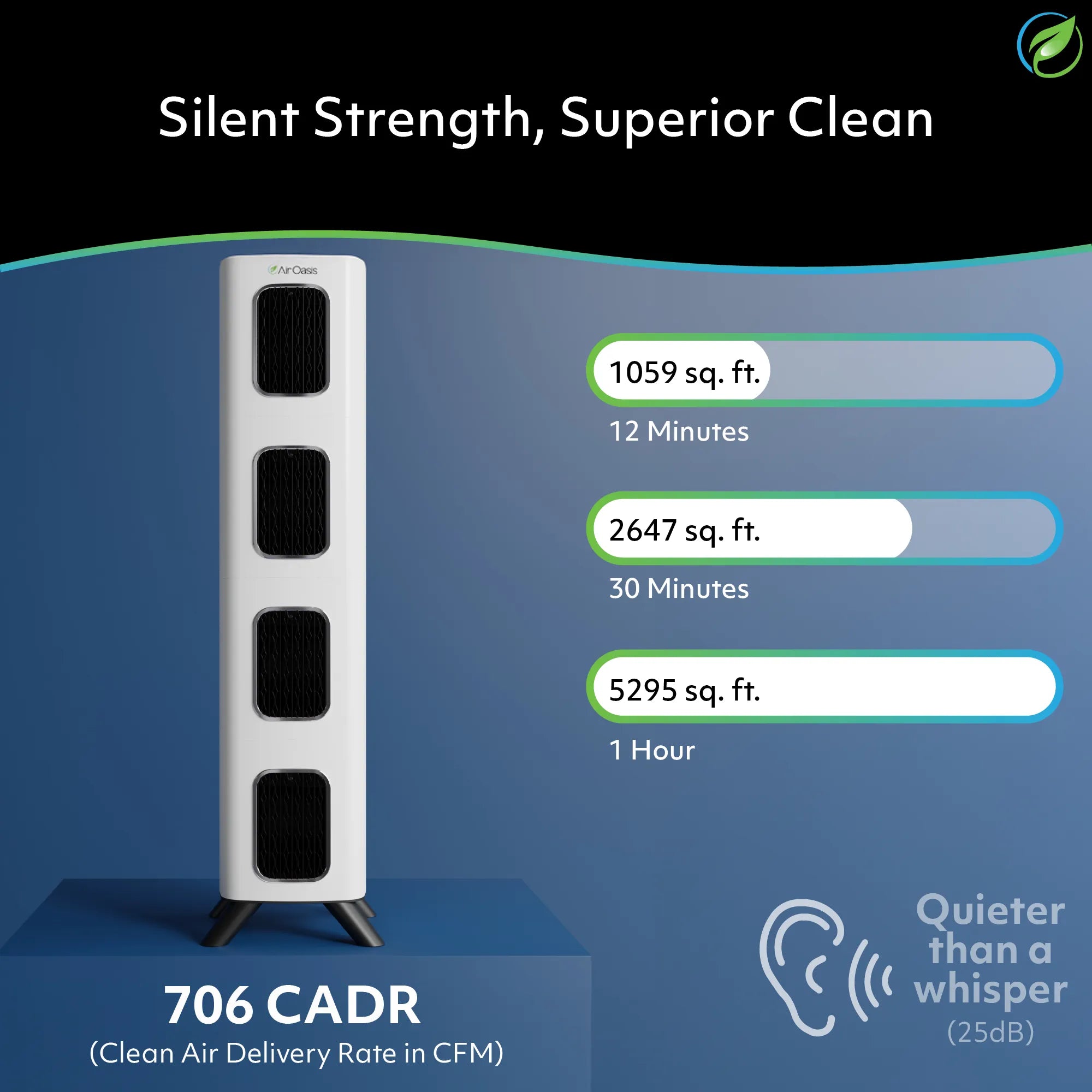
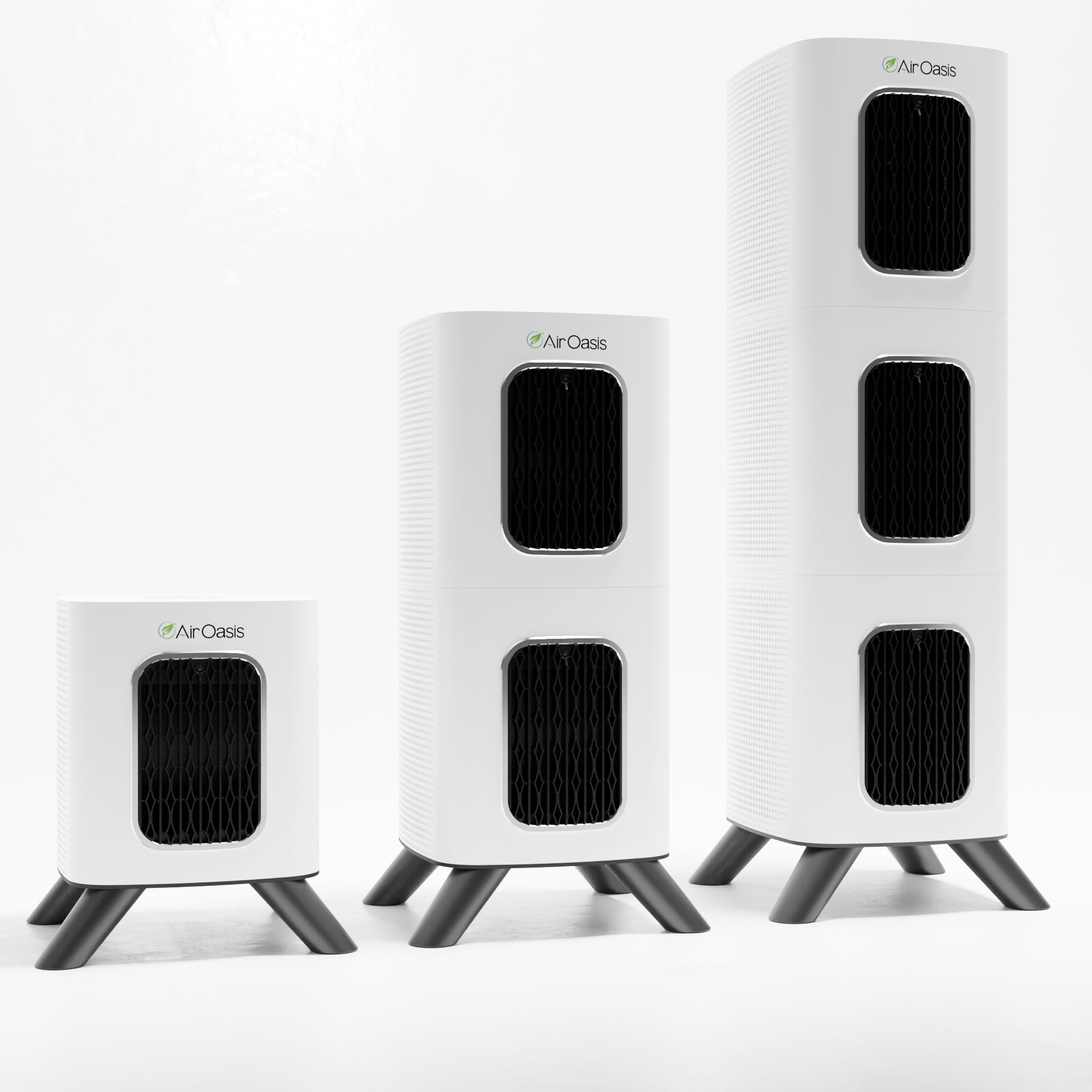
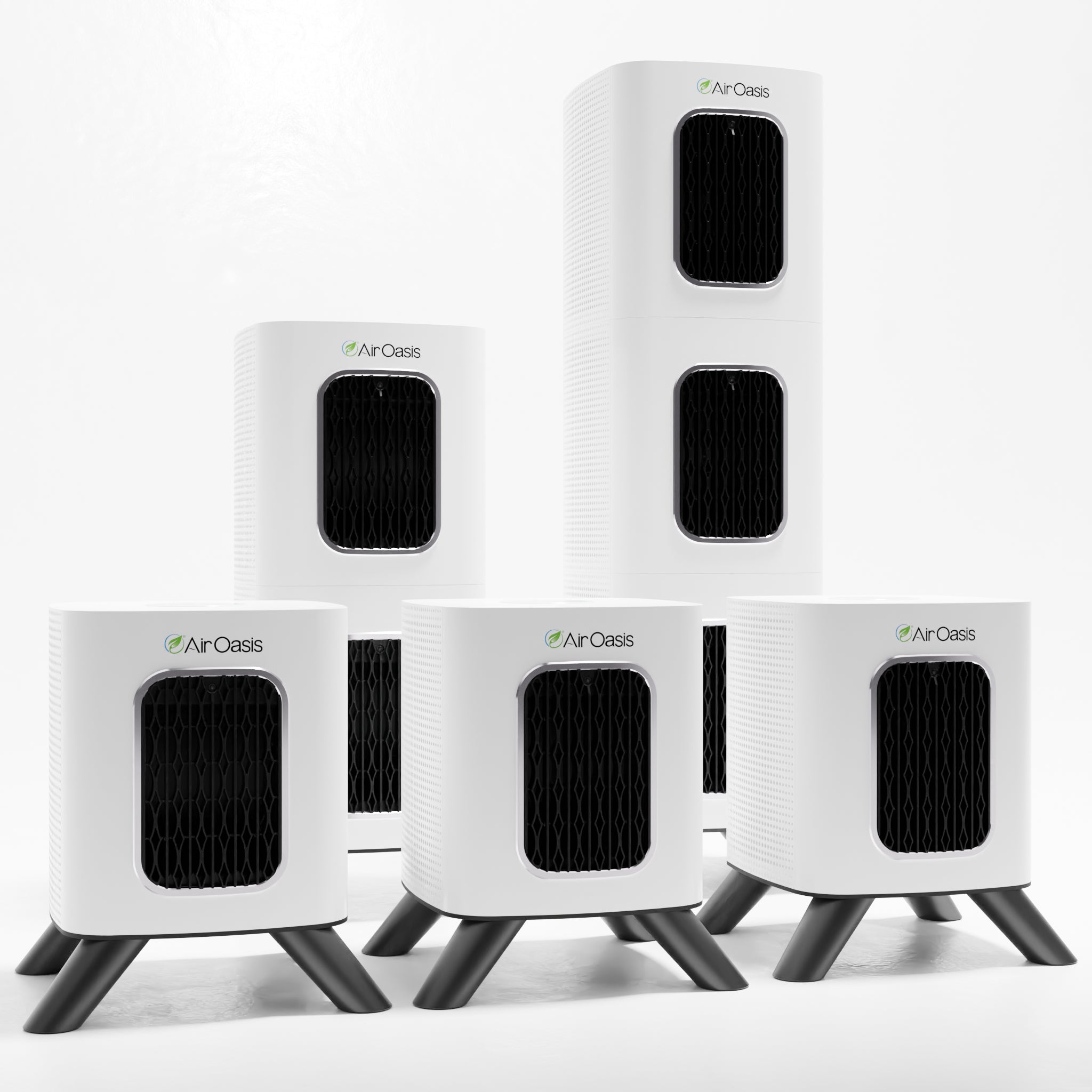
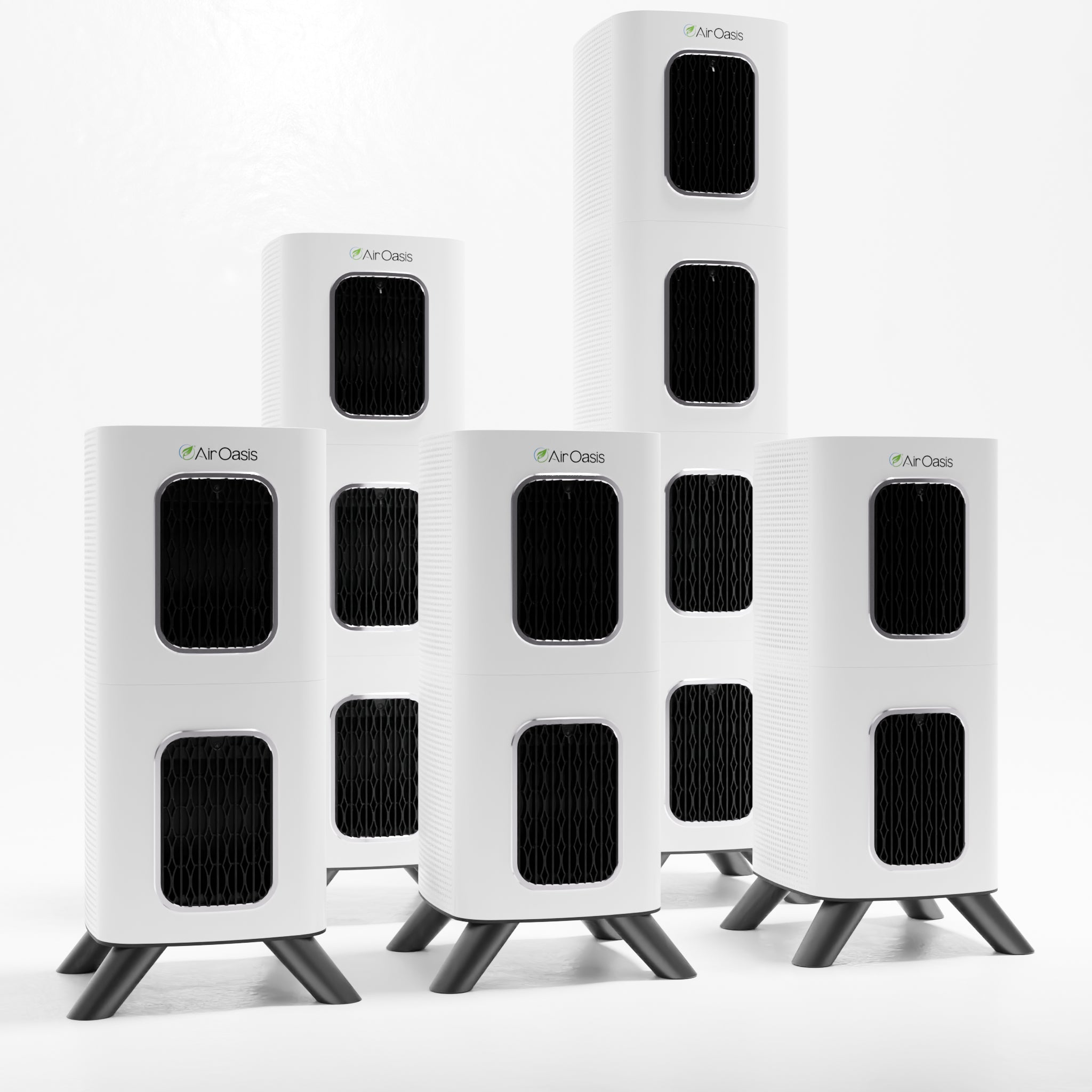
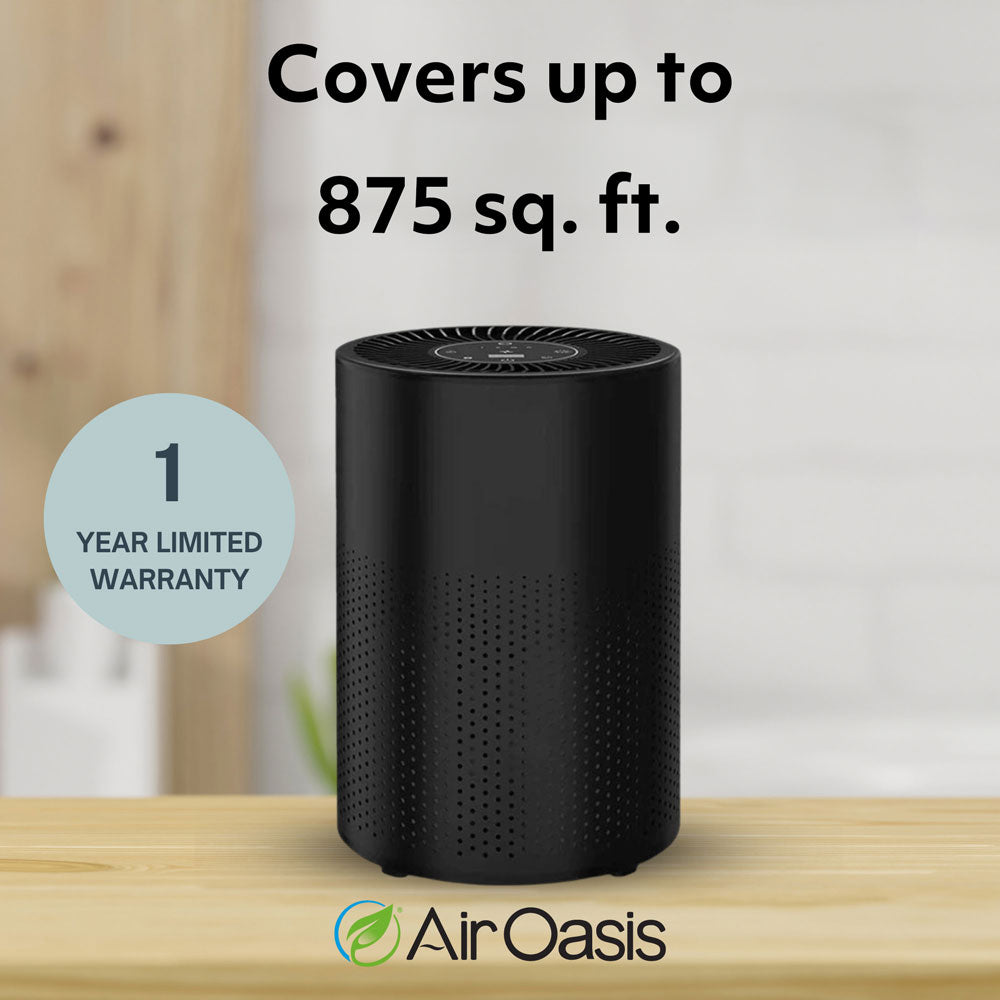
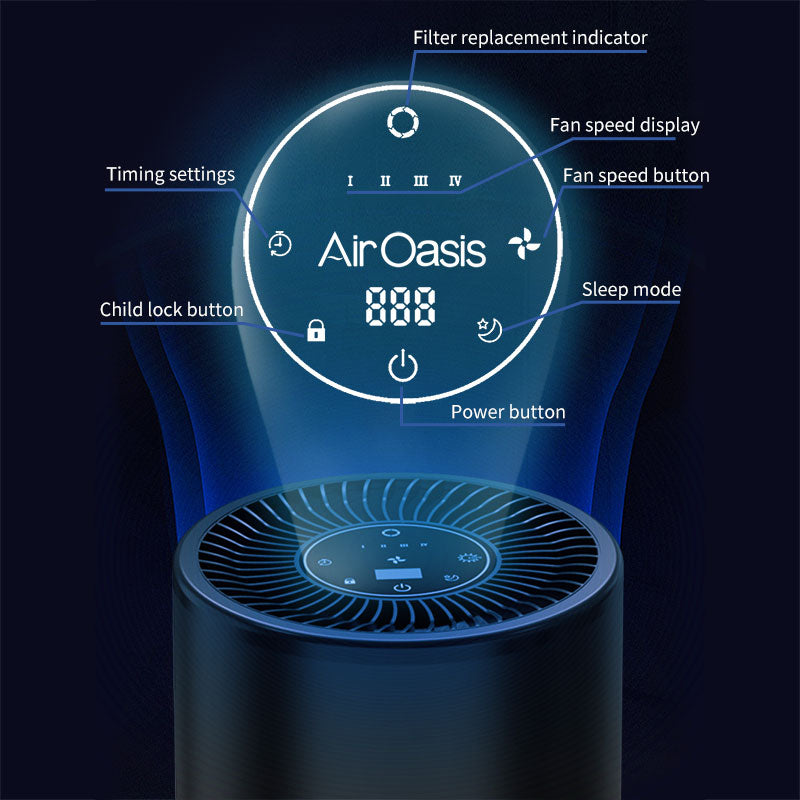
The iAdaptAir 2S covers up to 265 square feet — appropriate for most bedrooms. The 2M handles up to 530 square feet for larger rooms or open spaces. The 2L covers up to 795 square feet, and the 2P covers up to 1,059 square feet for large open-plan areas. For new construction, the carbon layer will work harder than in an established home, so monitor your filter life indicator and replace on time — a saturated carbon filter continues moving air but stops capturing VOCs.
The good news about new construction air quality
This gets better on its own. Off-gassing is highest early and declines over time as materials stabilize. Most of the acute VOC burden in a new home resolves meaningfully within the first year, with formaldehyde from engineered wood taking the longest to taper. By year two, a well-ventilated new home is typically a very healthy indoor environment.
The goal is to manage the first phase well — not to be alarmed about moving into a new home, but to understand what's happening in the air during that period and take straightforward steps to protect your family while the chemistry settles.
Shop Air Oasis and find the iAdaptAir model sized for your space. Breathe Better, Live Better.