You've checked the bathroom. You've looked under the sink. You've peered into the basement corners and sniffed around the washing machine. Nothing. No visible growth, no obvious water damage, no black spots anywhere you can see.
And yet the smell is there. That damp, earthy, faintly stale quality that you can't scrub away and can't get used to.
Here's the thing: musty smell and visible mold are not the same problem. You can absolutely have one without the other. Understanding what's actually causing the odor is the first step toward getting rid of it.
What musty smell actually is — and where it comes from
The musty odor most people associate with mold comes from a class of compounds called microbial volatile organic compounds, or MVOCs. These are gases produced by microorganisms — mold, bacteria, and other biological material — as they grow and metabolize. The specific combination of compounds varies by organism, but many share that recognizable earthy, damp quality.
The important nuance is that MVOCs can be present in your air even when the source is not visible to you. Mold doesn't have to be covering a wall to produce odor-causing gases. A small colony behind drywall, inside an HVAC system, under carpet padding, or in a crawl space can produce enough MVOCs to make your entire house smell musty. You may have looked carefully and genuinely found no mold — because you were looking in the wrong places, or the colony is too small and hidden to see.
But mold isn't the only explanation. Several other sources produce a similar smell, and some of them have nothing to do with mold at all.
Six common causes of a musty house smell that aren't obvious mold
Here's a breakdown of what to investigate:
Dust accumulation on soft surfaces
Old dust — particularly in carpets, upholstered furniture, curtains, and mattresses — carries bacteria and decomposed organic matter that develops its own earthy odor over time. The smell intensifies in warm, humid conditions and is often most noticeable in rooms that don't get used or aired out regularly.
HVAC ducts and air handling equipment
Your heating and cooling system distributes air throughout your entire home. If there's any biological growth inside the ductwork, on the evaporator coil, or in the air handler, it's spreading those MVOCs to every room continuously. People often notice a musty smell that appears specifically when the HVAC turns on — a clear signal the odor source is in the system, not in the room.
Crawl spaces and subfloors
Even if your living spaces look clean, the air entering your home from below can carry musty odors. Crawl spaces with inadequate vapor barriers, soil moisture, or limited ventilation are common sources of ground-level odor that migrates upward through gaps in flooring and around plumbing penetrations.
Old building materials and accumulated grime
Older homes can develop a characteristic smell from decades of accumulated dust, grease, and organic material in wall cavities, behind radiators, and in ceiling voids. This isn't always mold — it can be bacterial activity in aged organic matter, or simply the odor profile of old materials that have absorbed and slowly off-gassed for years.
Damp textiles
Bath mats, dish towels, gym clothes, and any fabric that gets wet and doesn't dry quickly enough begins producing that same MVOC-driven odor. A pile of slightly damp laundry in a closed hamper in a warm bedroom can generate a noticeable musty smell that seems to come from nowhere.
Condensation in hidden spaces
Warm, moisture-laden air meeting a cool surface creates condensation. Behind refrigerators, inside exterior walls in climates with significant temperature differentials, or under bathroom exhaust fans that vent into attic spaces rather than outdoors — these are spots where condensation accumulates quietly, creating conditions where bacterial and fungal activity produces odor without ever becoming a visible mold colony.
Why humidity is the common thread
Almost every source of musty smell is amplified by humidity. Relative humidity above 60 percent creates conditions where microorganisms grow faster, organic material breaks down more quickly, and volatile compounds off-gas more readily.
Many homes run humid in summer, in basements year-round, and in bathrooms and kitchens that aren't well-ventilated. You may not have a mold problem in the clinical sense — but you may have a humidity problem that is producing mold-adjacent odor from bacterial activity, dust decomposition, and damp materials.
According to the EPA, keeping indoor relative humidity between 30 and 50 percent is the single most effective prevention measure for mold and mold-related odors. A basic hygrometer, available for under $20 at any hardware store, tells you where you actually stand.
What to investigate when you can't find the source
If the smell is diffuse and doesn't seem to come from one specific location, start with the HVAC system. Schedule a professional inspection of the coil, air handler, and ductwork, particularly if you notice the smell appears or intensifies when the system runs. This is among the most commonly overlooked odor sources in homes that otherwise appear clean.
Check areas you may not have thought to inspect:
- Inside the cabinet under kitchen and bathroom sinks, including the wall behind the drain pipe where condensation often collects
- Behind and beneath the washing machine and dishwasher
- Attic and crawl space ventilation — look for moisture staining or discoloration on framing
- Window tracks and the sills beneath them, where condensation pools and organic material accumulates
- Carpet near exterior walls, where temperatures are cooler and condensation is more likely
If humidity is elevated in specific rooms or throughout the house, address it directly with a dehumidifier, improved use of exhaust fans during cooking and bathing, and any sources of moisture intrusion — even minor roof or window leaks.
How air purification addresses musty odors at the source
Identifying and fixing the underlying source is always the priority. But while you're working on it — and after you've addressed it — air purification effectively addresses the airborne dimension of musty odor.
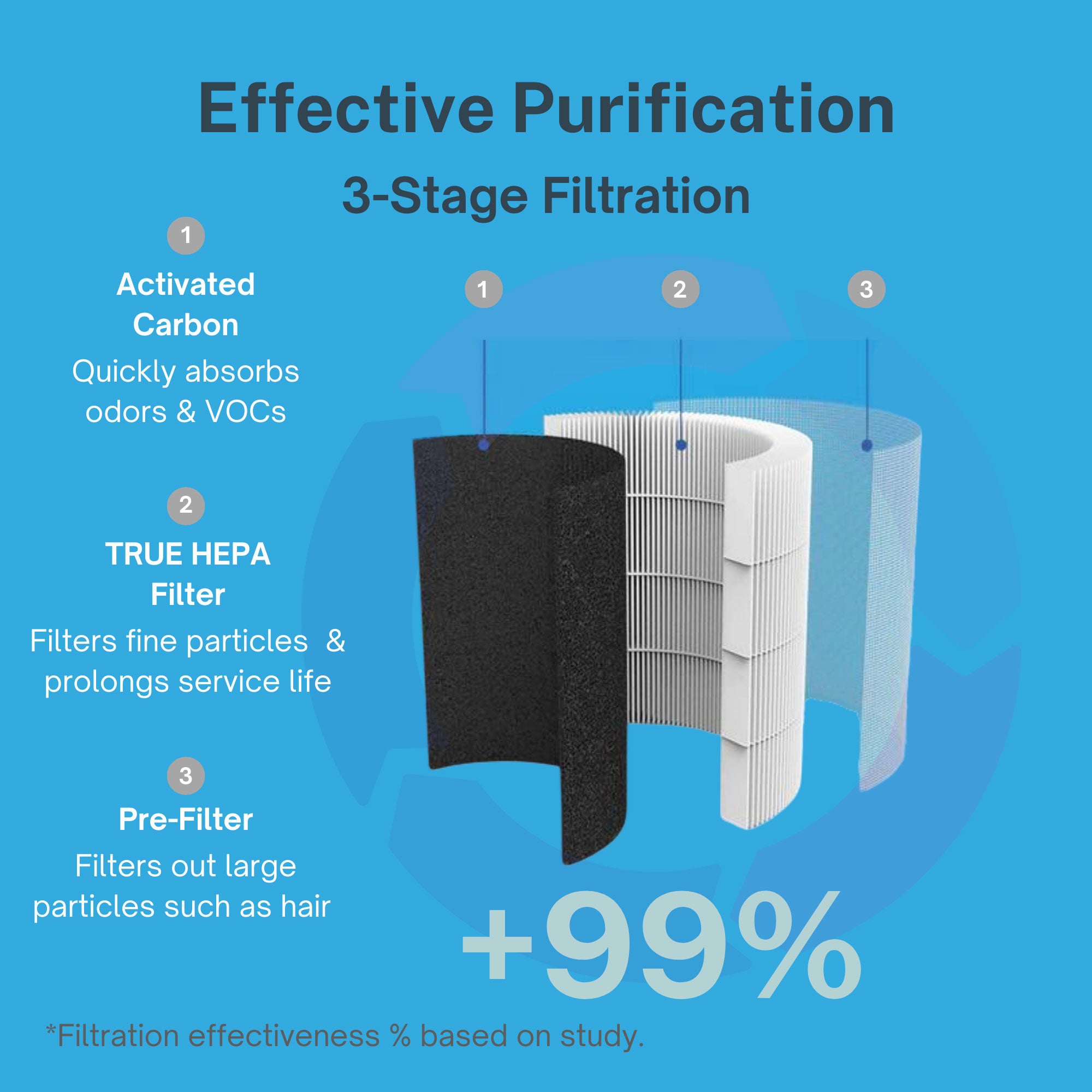
The musty smell you're breathing is a gas-phase problem, which means it requires the right filtration technology. True HEPA filtration captures particles exceptionally well, including mold spores and bacteria, but it doesn't capture gases. For MVOCs and other odor compounds, activated carbon is the essential technology. It works through adsorption: gas molecules bind to the porous carbon surface and are removed from circulation permanently rather than masked.
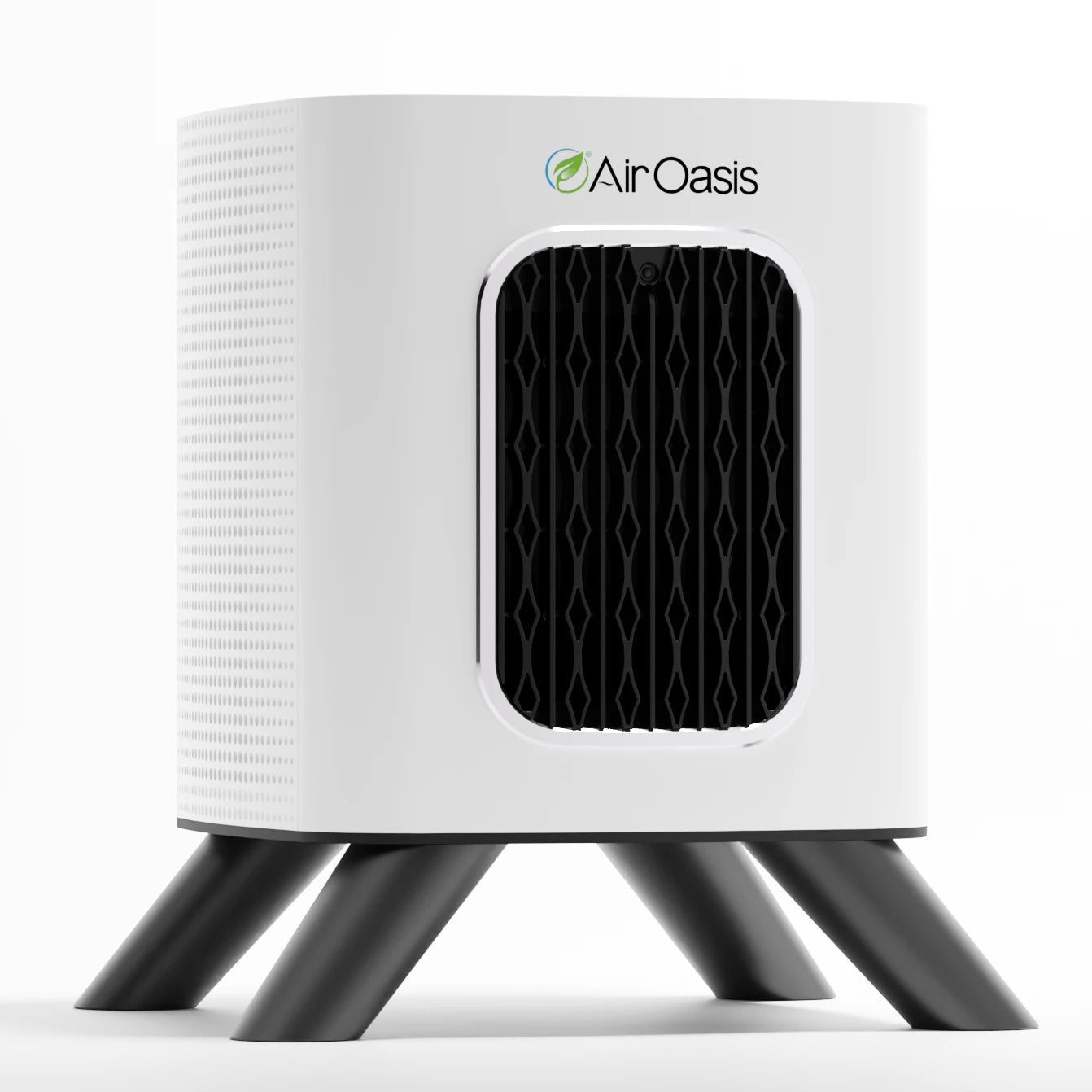
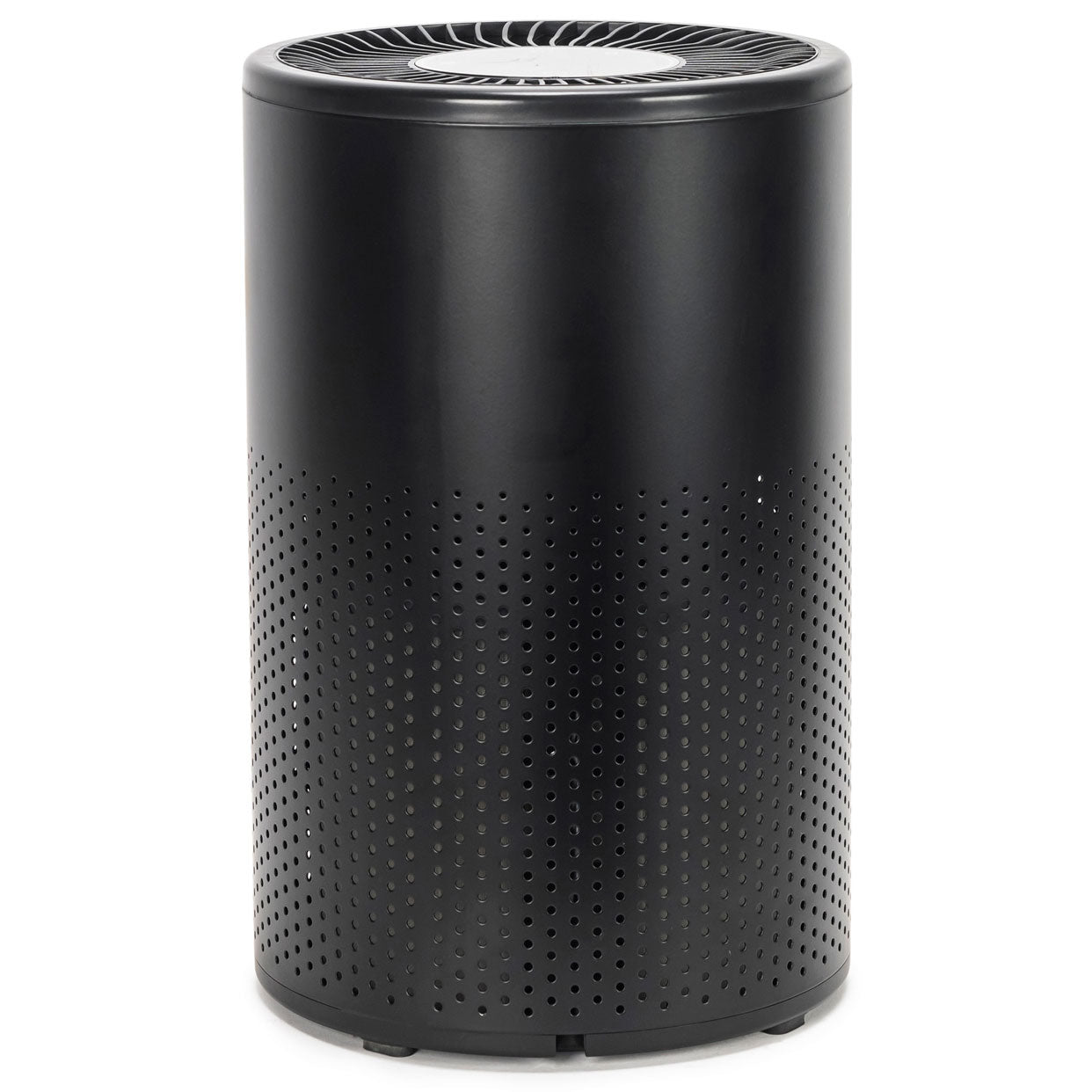
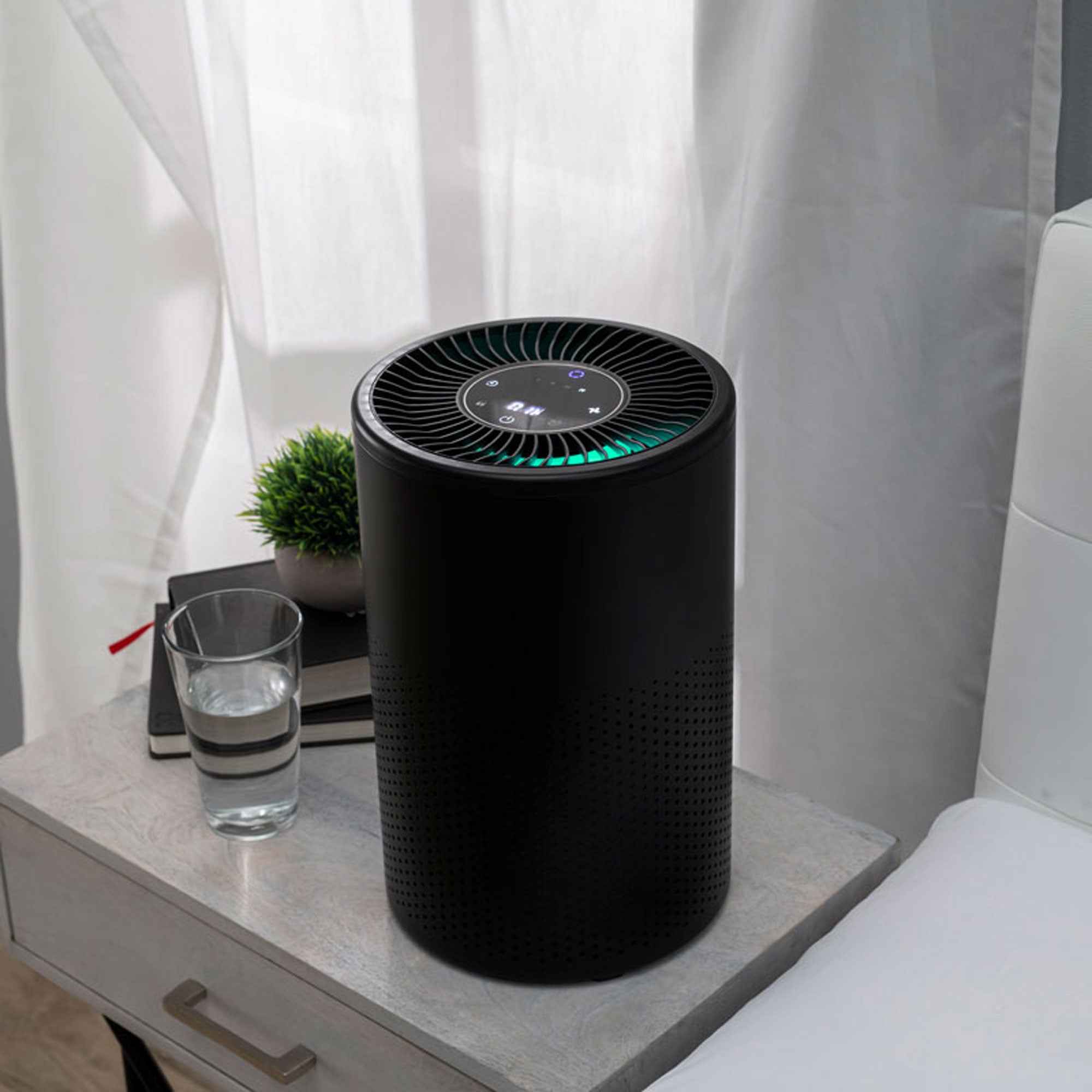
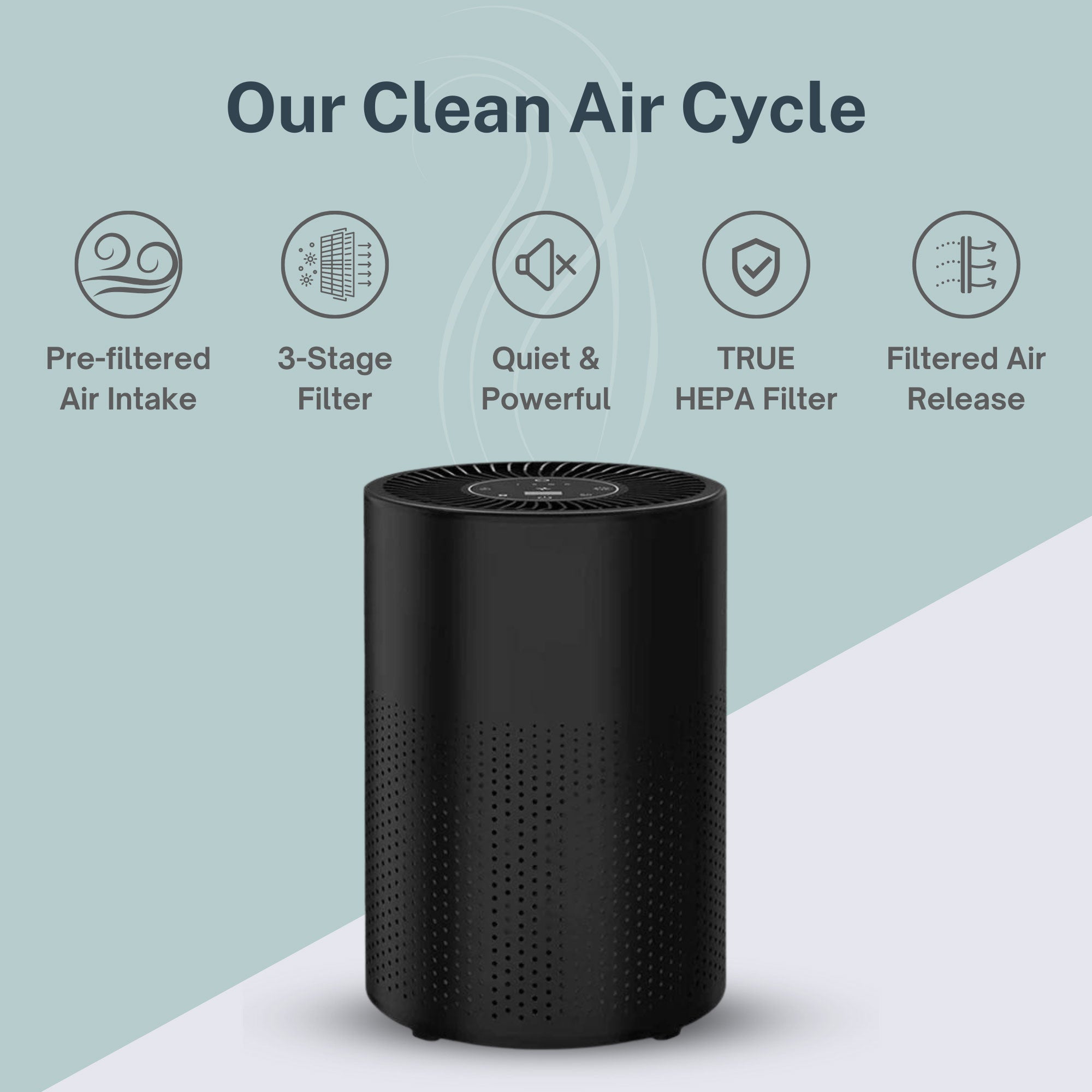
The iAdaptAir combines True HEPA filtration with an activated carbon layer, UV-C light, and bipolar ionization — a multi-stage approach that addresses both the biological particles and the gaseous compounds that produce musty odors. The UV-C component disrupts microorganisms at the cellular level as they pass through the unit, reducing the viability of any mold spores or bacteria contributing to your air quality. The bipolar ionization helps charge airborne particles so they clump together and are more readily captured.
Specifically for musty odor, activated carbon does the most direct work on what you smell. In spaces with ongoing moisture or HVAC odor concerns, the carbon layer will saturate faster than in a cleaner environment — so watch the filter life indicator and replace on time. A spent carbon filter stops adsorbing odors even as the unit continues running.
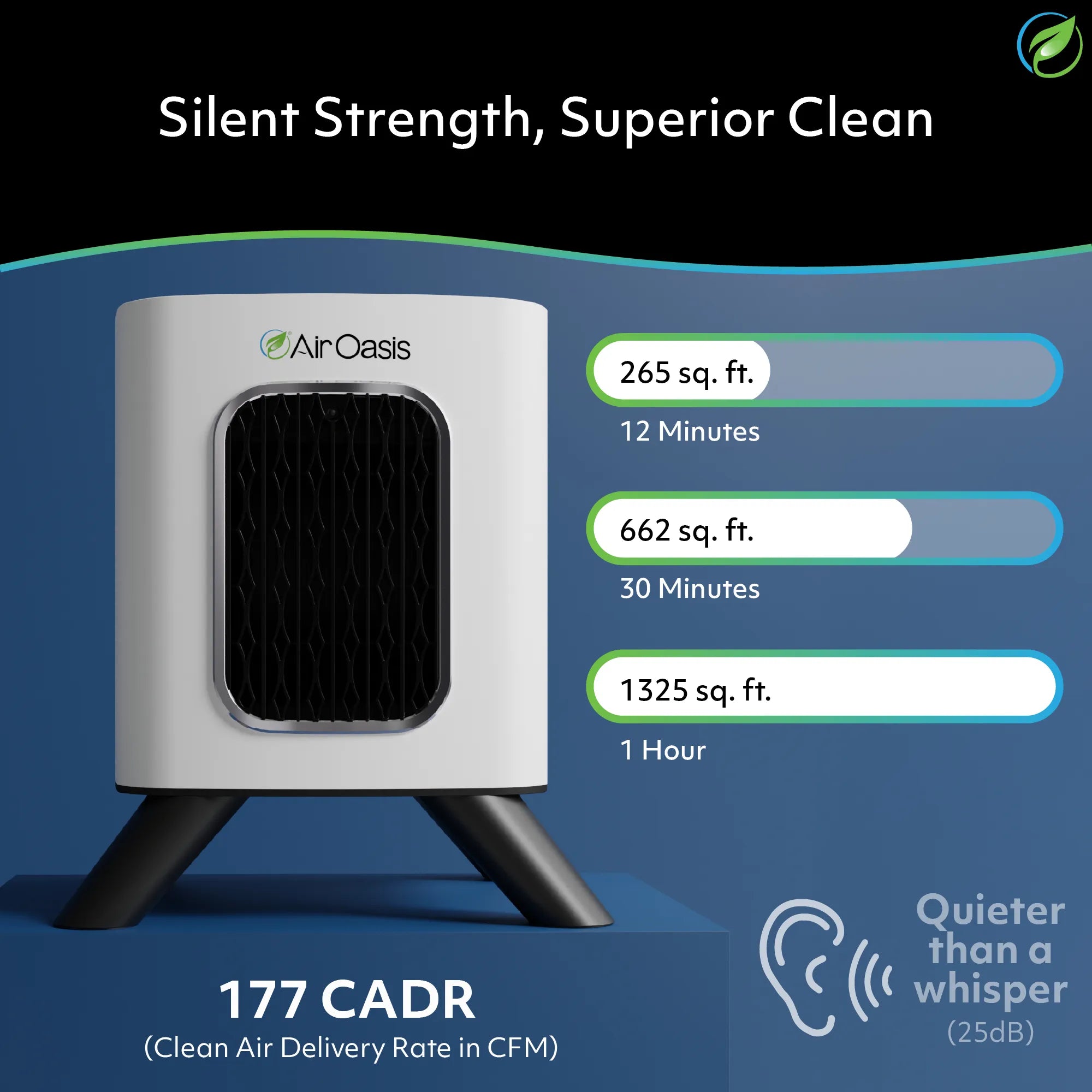
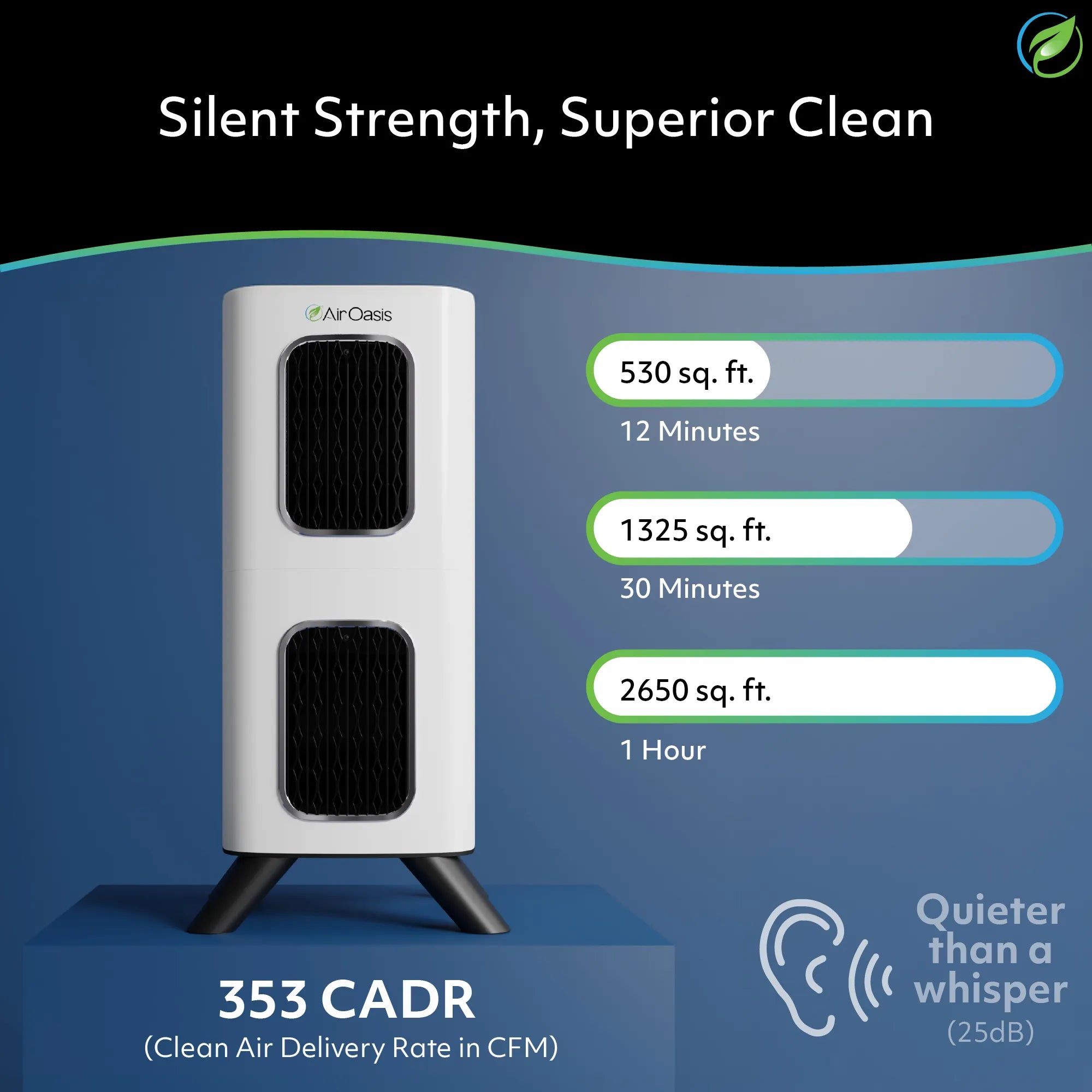
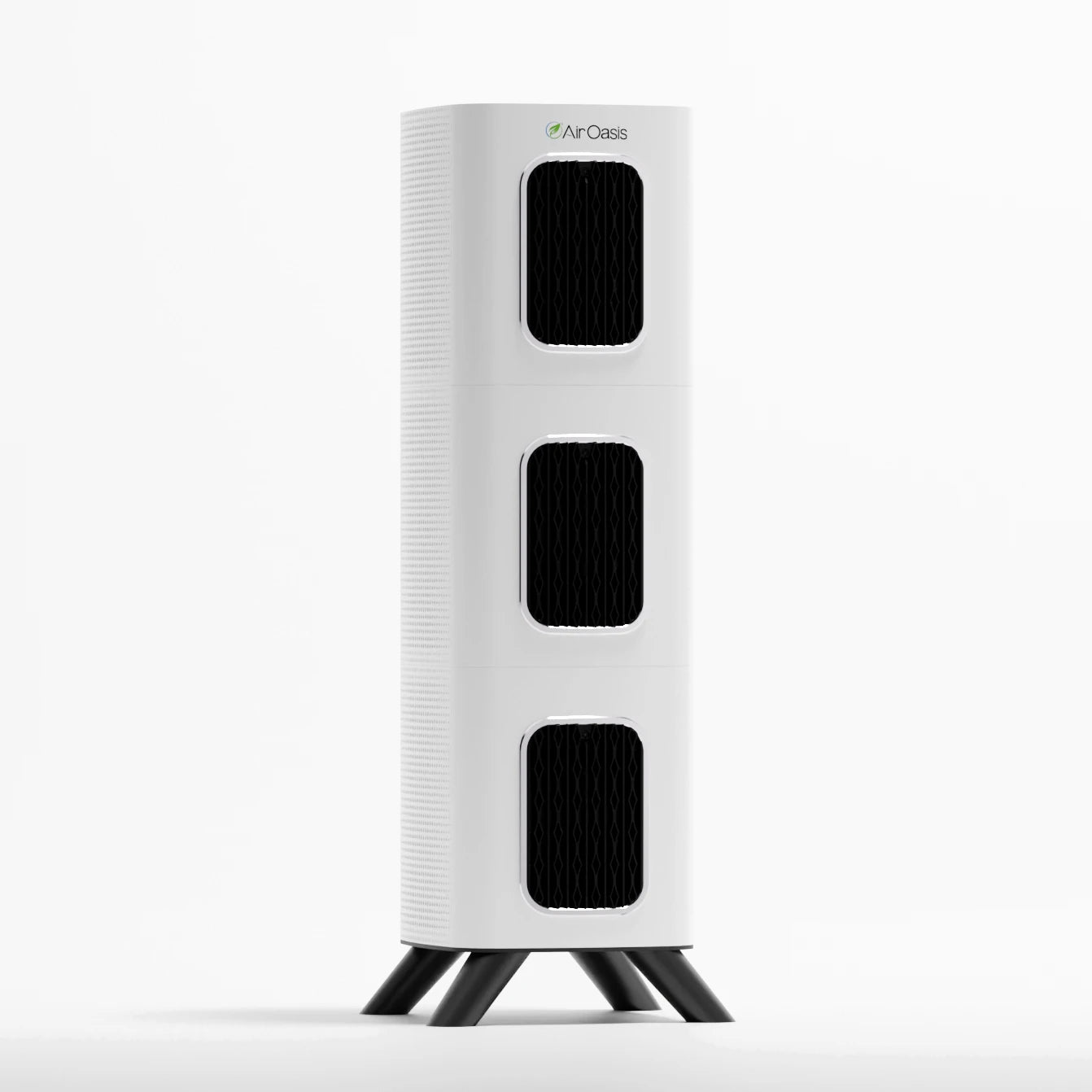
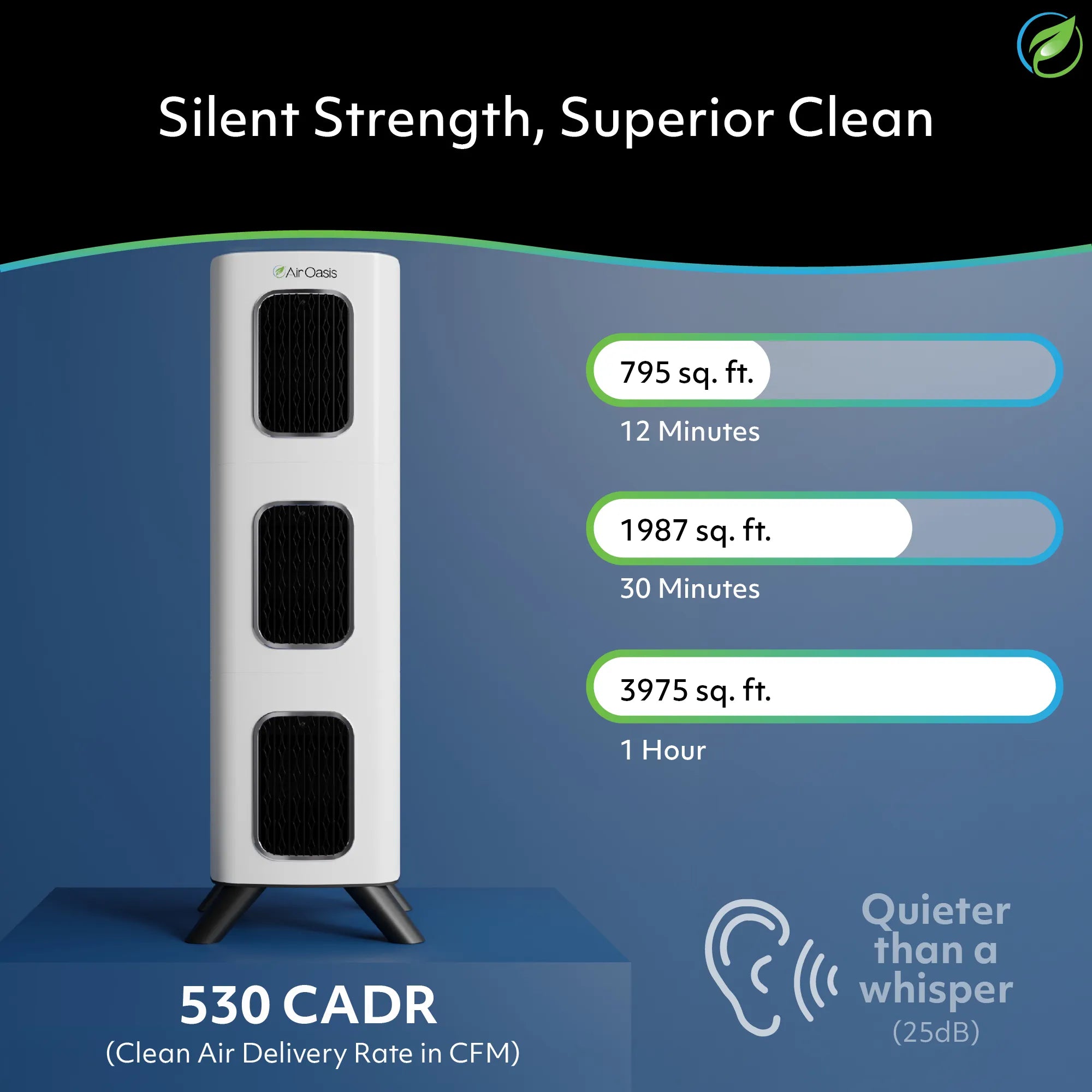
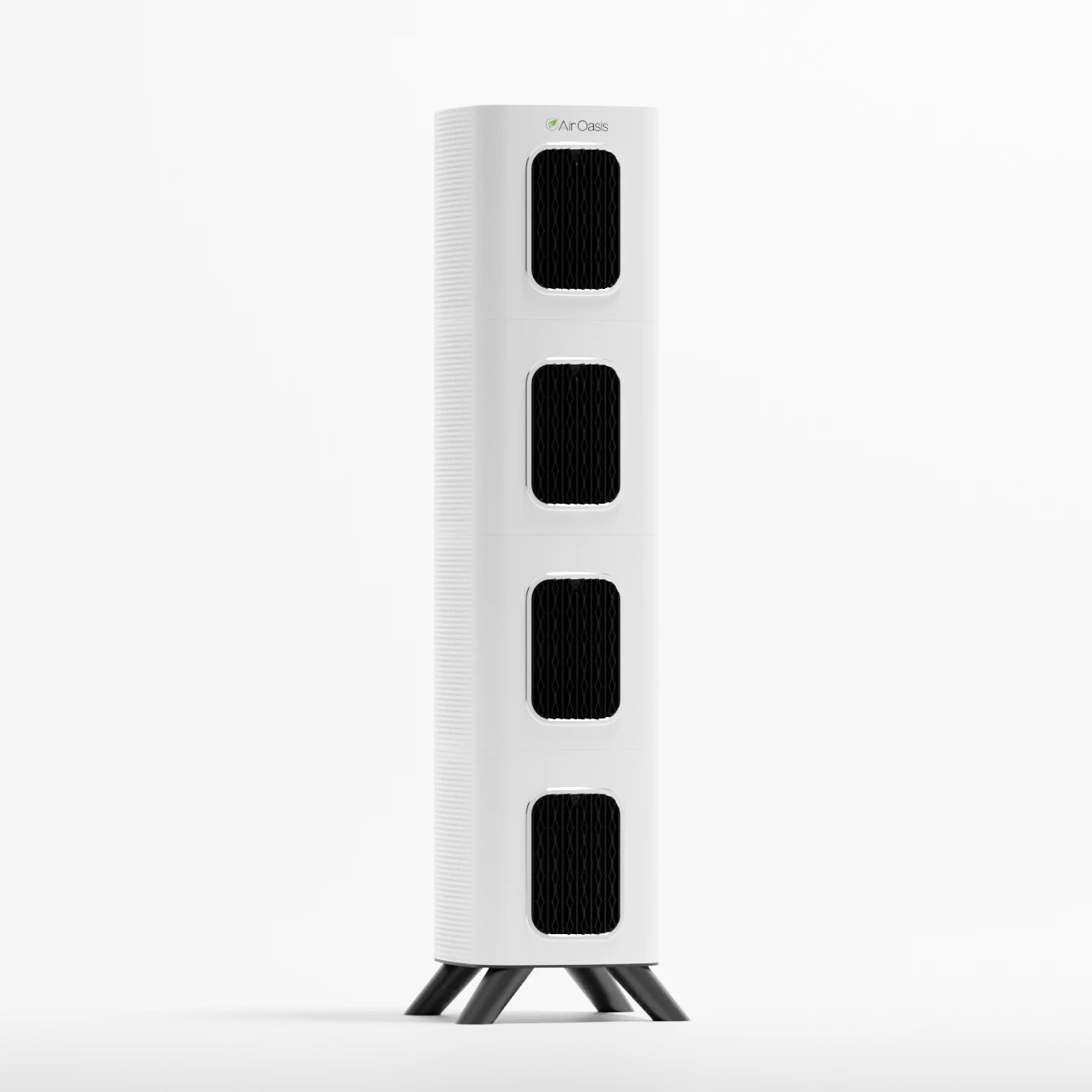
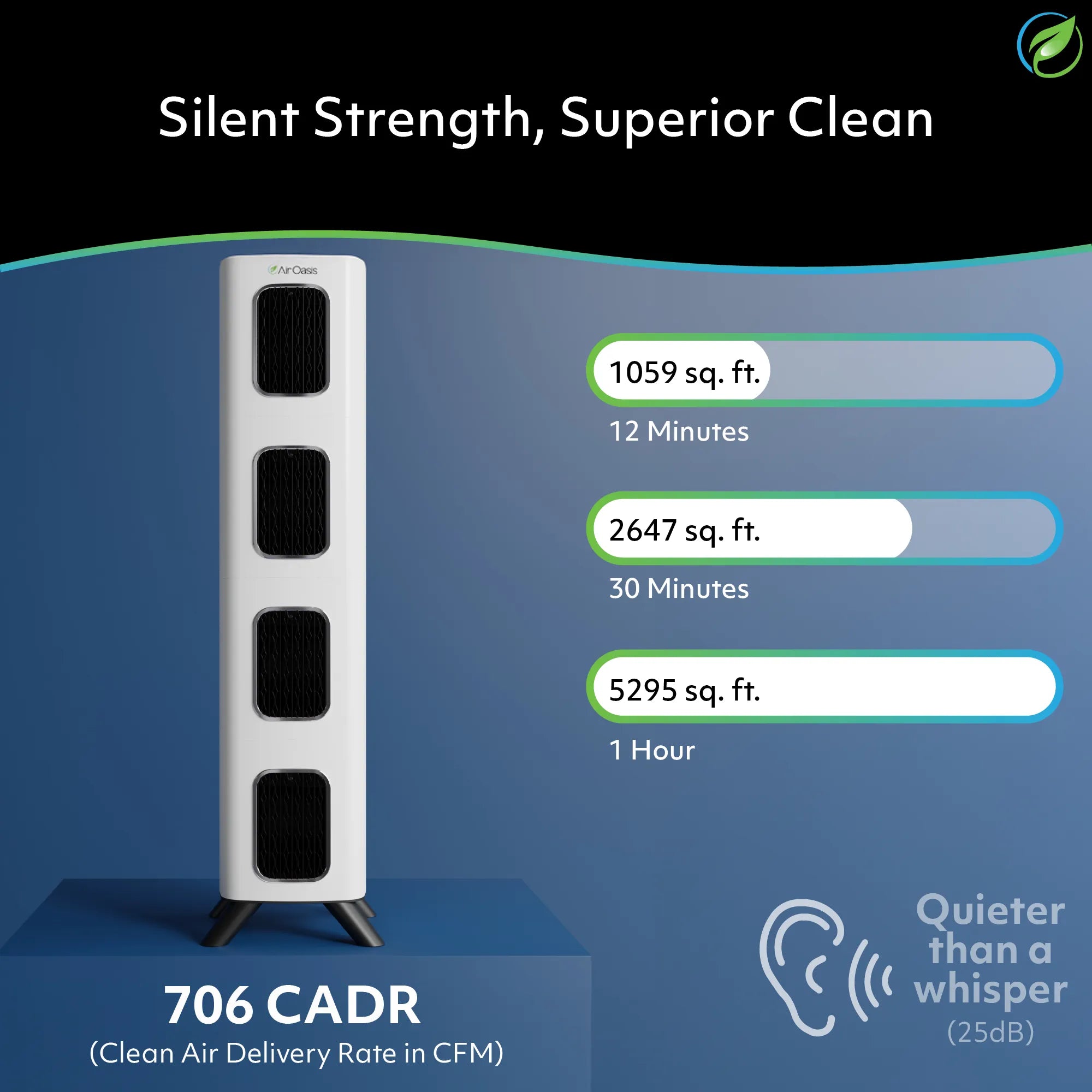
Size the unit to the room. The iAdaptAir 2S covers up to 265 square feet, the 2M handles up to 530, the 2L covers up to 795, and the 2P covers up to 1,059 square feet. For a basement or a room with persistent odor issues, sizing up ensures the air cycles frequently enough to stay ahead of ongoing MVOC production.
The smell is telling you something — worth listening to
A musty smell that persists after cleaning, airing out, and checking the obvious spots is real information. It means something biological is active somewhere in your home — producing gases, affecting your air quality, and worth finding out. It may not be the visible mold colony you were looking for. But the message is the same: there's more moisture, or more microbial activity, than there should be.
Track it down. Address the humidity. Clean the HVAC. And give your indoor air the support it needs to stay genuinely clean.
Shop Air Oasis and find the iAdaptAir model built for your space. Breathe Better, Live Better.