Lofts are genuinely appealing spaces. High ceilings, open floor plans, exposed beams, large windows — they feel airy and expansive. But that openness creates a real challenge for air purification. Many loft owners buy an air purifier based on floor area, plug it in, and wonder why the air still doesn't feel as clean as expected. The answer almost always comes down to how loft spaces fundamentally differ from standard rooms — and whether the purifier is sized and placed to handle those differences.
Why Lofts Are Uniquely Challenging for Air Purifiers
A standard bedroom or living room is a bounded space. Four walls, a door, a ceiling at a predictable height. An air purifier in that environment draws air in, filters it, and returns clean air to a defined zone. The math is straightforward.
A loft breaks most of those assumptions. Ceilings are often 12, 14, or even 16 feet high. The floor plan is typically open, with the kitchen, living area, and sometimes the sleeping area all occupying one continuous space. There are rarely interior walls to help contain and direct airflow. The total air volume in a loft can be two to three times greater than what the floor square footage alone would suggest.
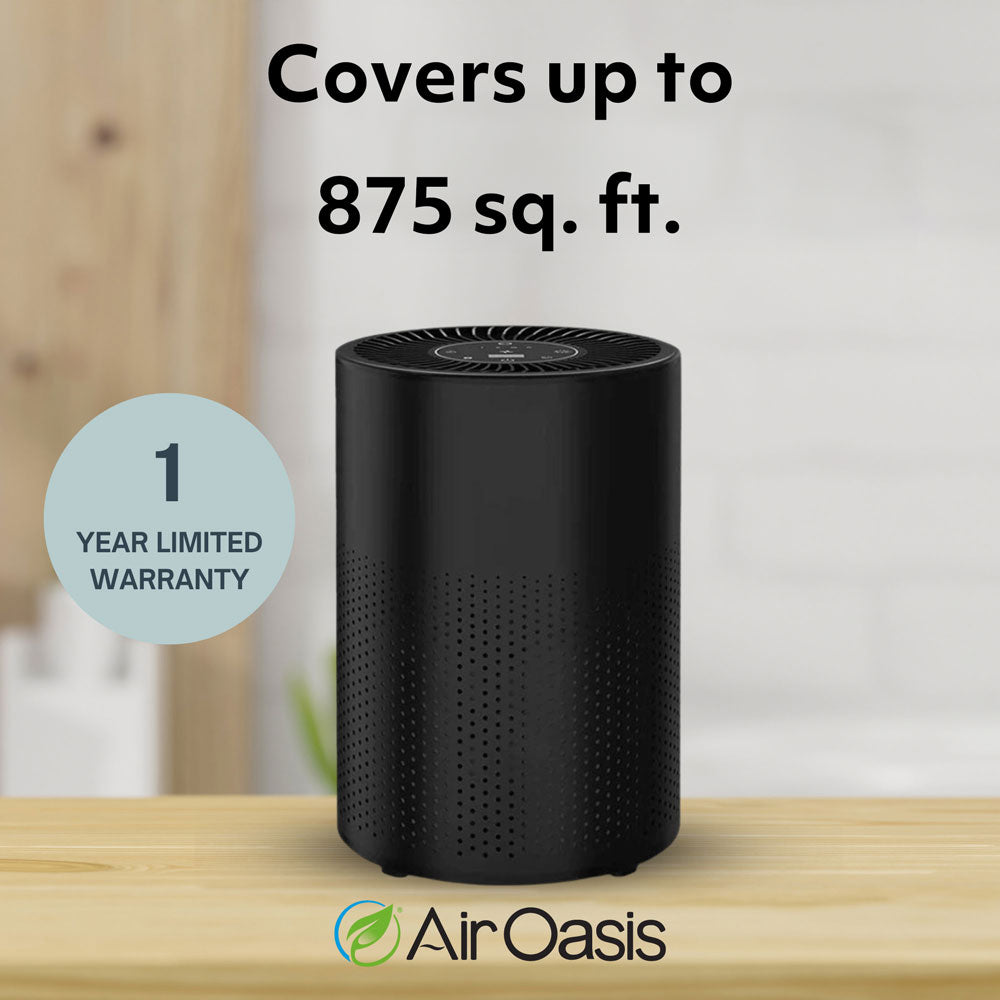
This matters because an air purifier's coverage rating is based on standard 8-foot ceilings. A purifier rated for 500 square feet under standard conditions may only effectively clean a fraction of a large loft's actual air volume. Running a unit that's undersized for the space means it cycles the same portion of air repeatedly while large pockets of the room go largely untreated.
The Volume Calculation Every Loft Owner Should Know
Before choosing a purifier for a loft, calculate the room's actual air volume. Multiply the floor length by the floor width by the ceiling height. Then divide that number by 8 — the standard ceiling height built into most coverage ratings — to find the adjusted square footage you should be sizing to.
Here's a practical example. A loft with a 600-square-foot open floor plan and 14-foot ceilings contains 8,400 cubic feet of air. Dividing by 8 gives an adjusted figure of 1,050 square feet. Even though the floor measures only 600 square feet, you need a purifier capable of handling 1,050 square feet to achieve the same air exchange performance.
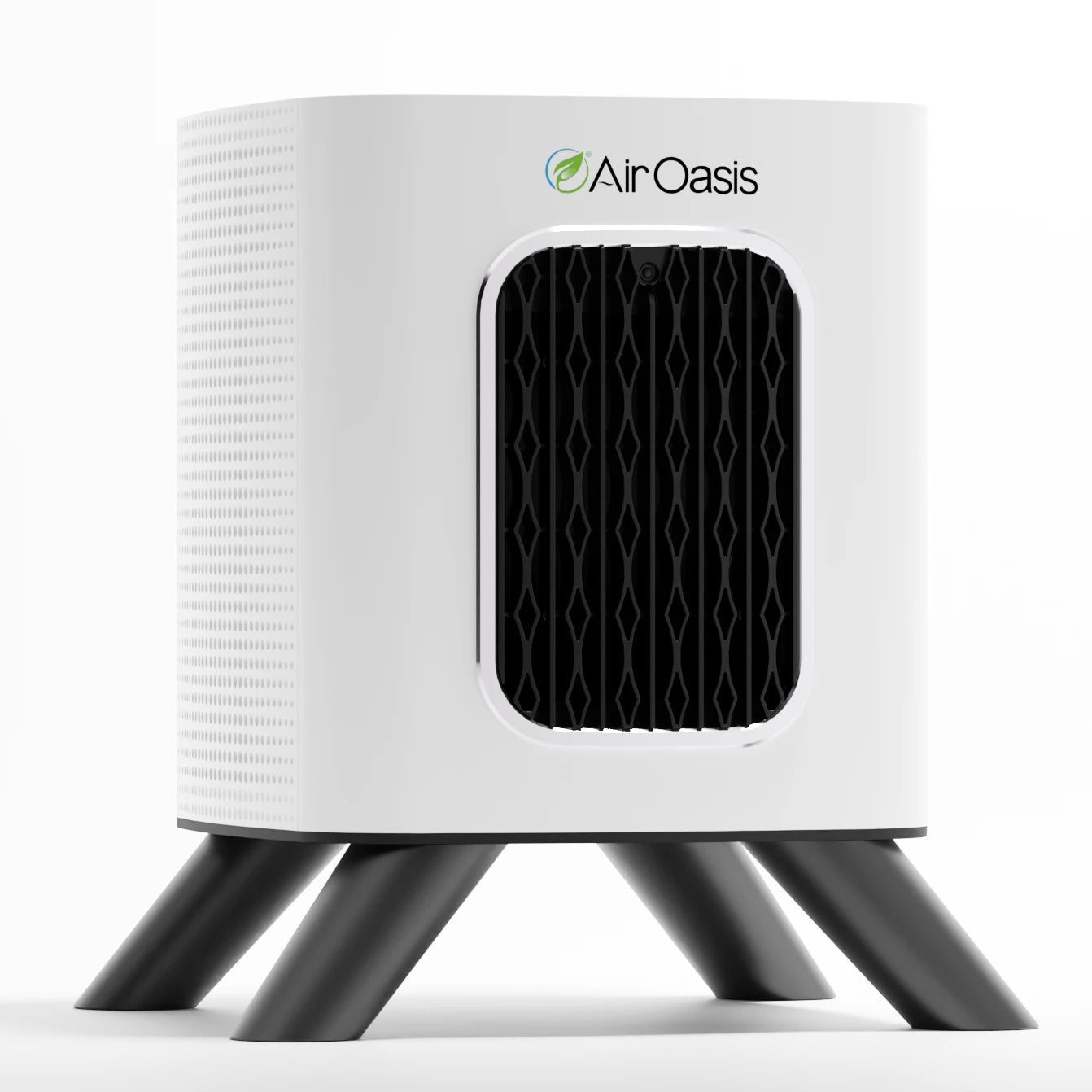
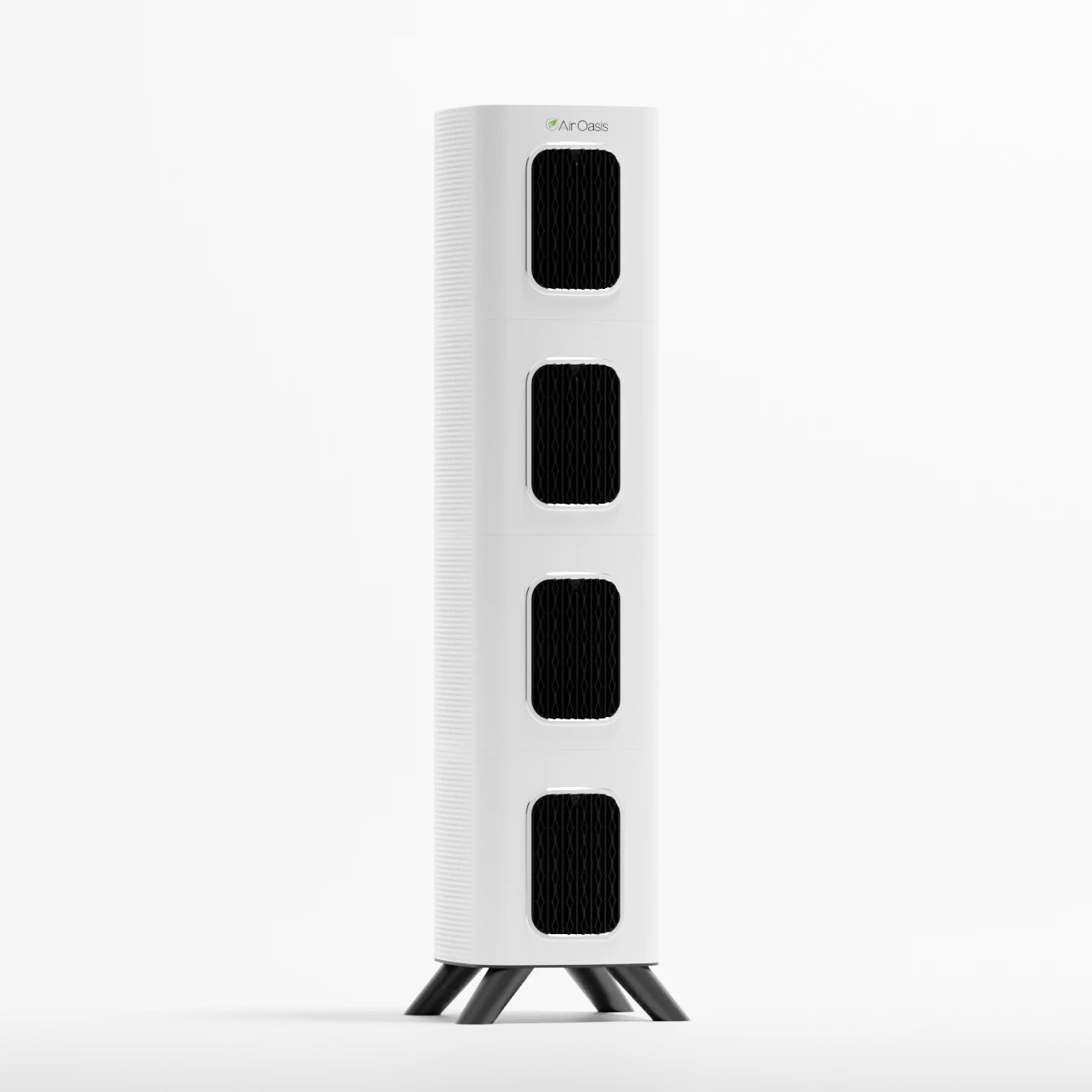
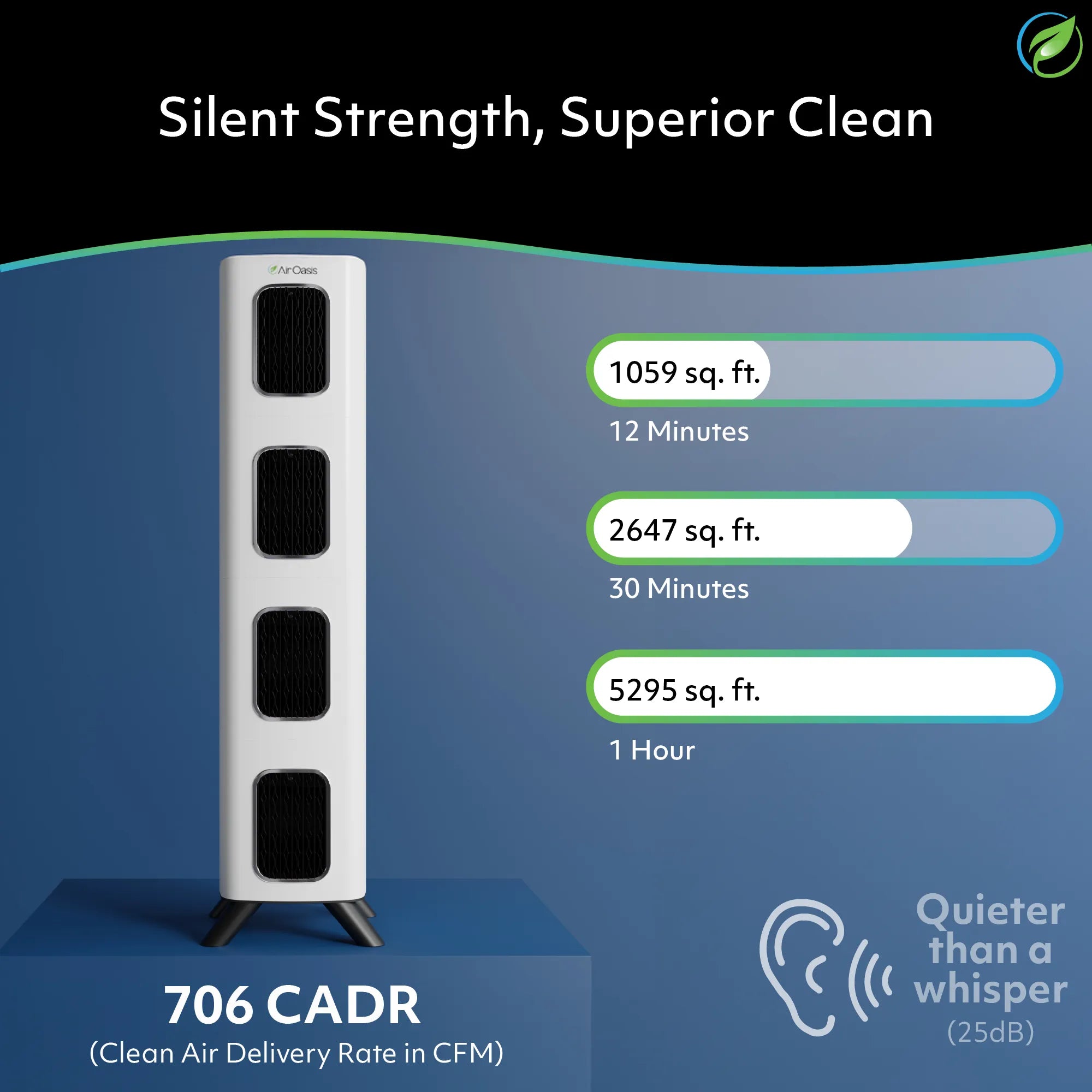
Using the iAdaptAir specs, that puts you squarely at the iAdaptAir 2P — the largest model in the line, delivering 706 CFM with a coverage rating of 1,059 square feet at a full air cycle every 12 minutes. That's the model built for this kind of challenge. A smaller unit would run continuously without ever fully cycling the loft's air volume at the rate needed for effective purification.
Understanding the iAdaptAir Line for Large Spaces
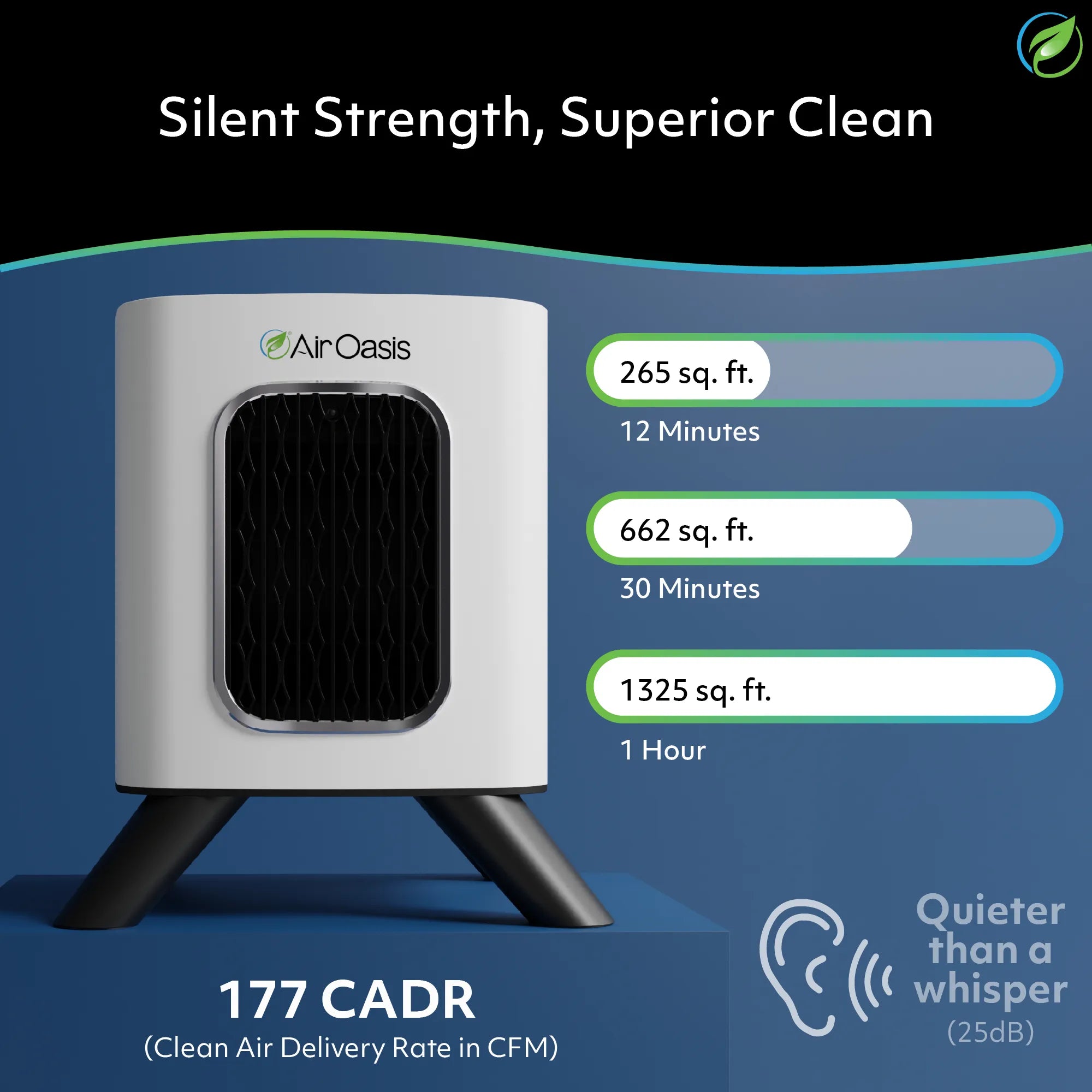
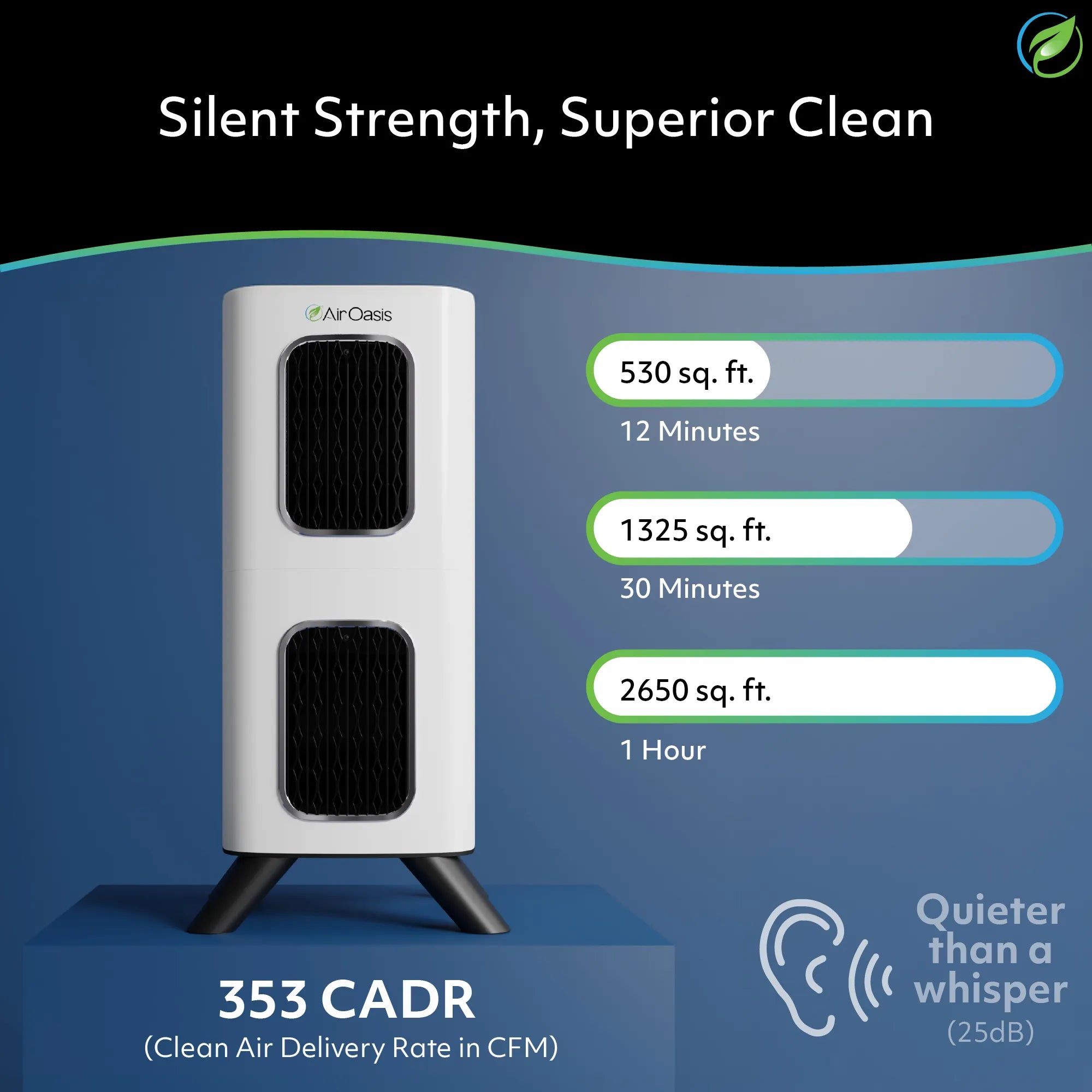
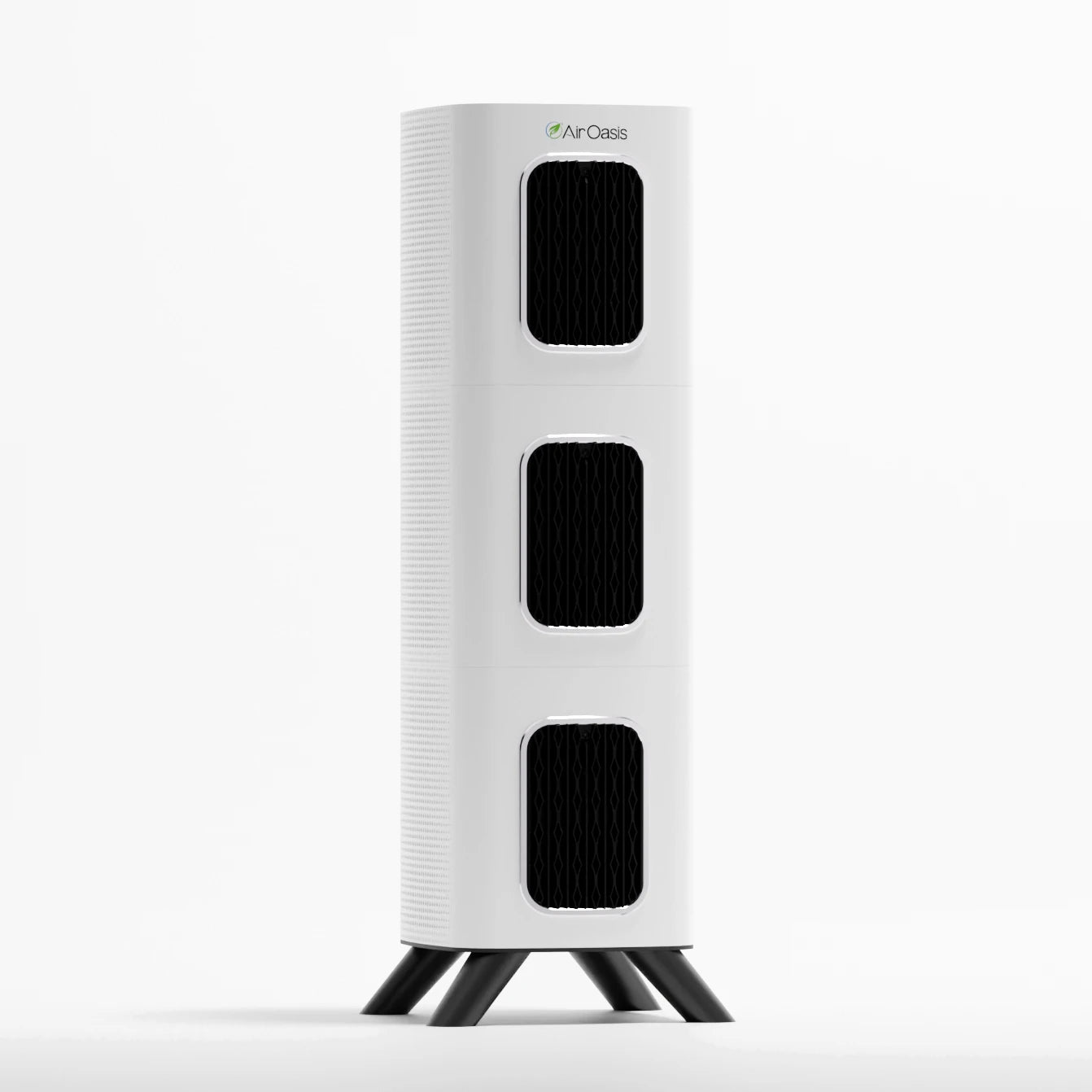
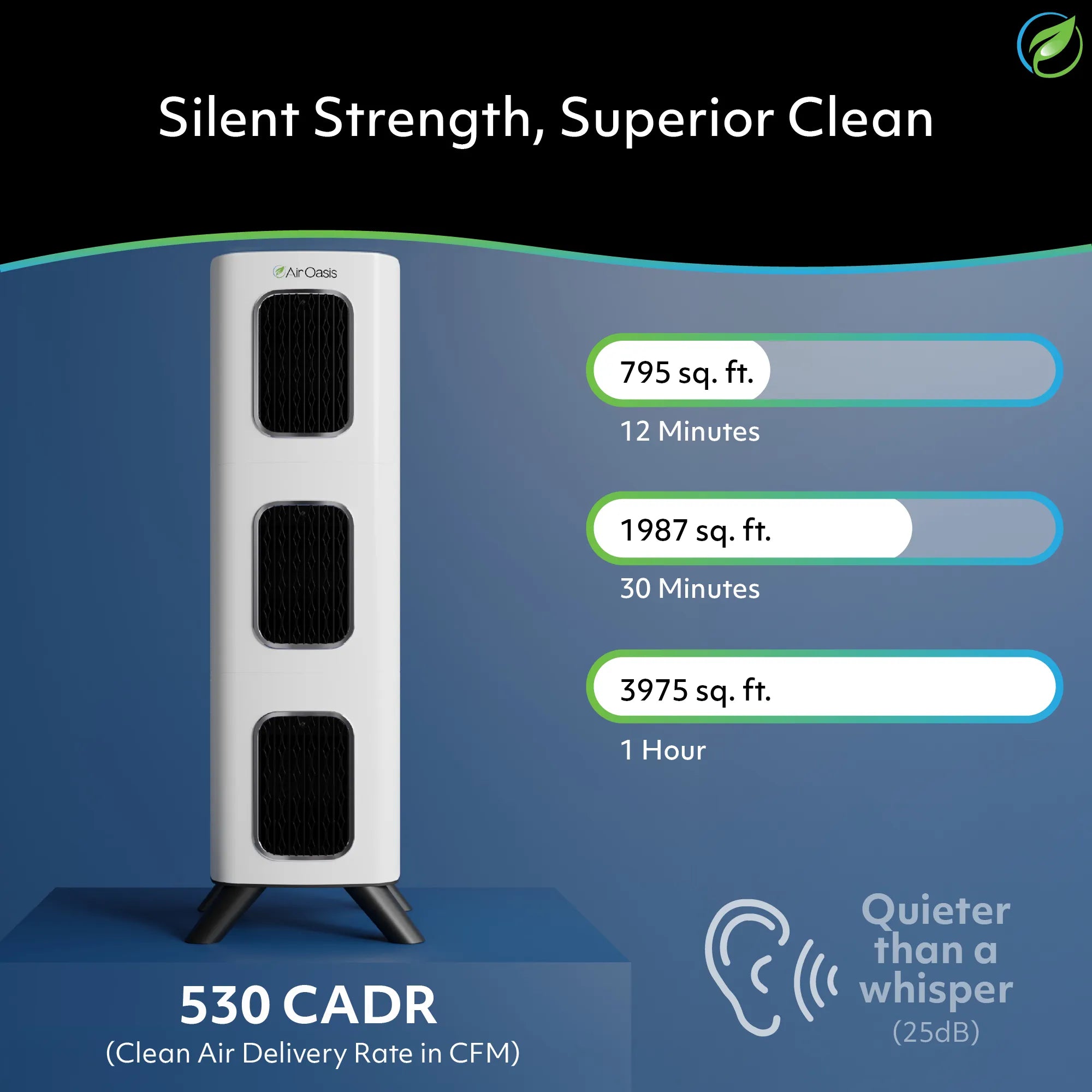
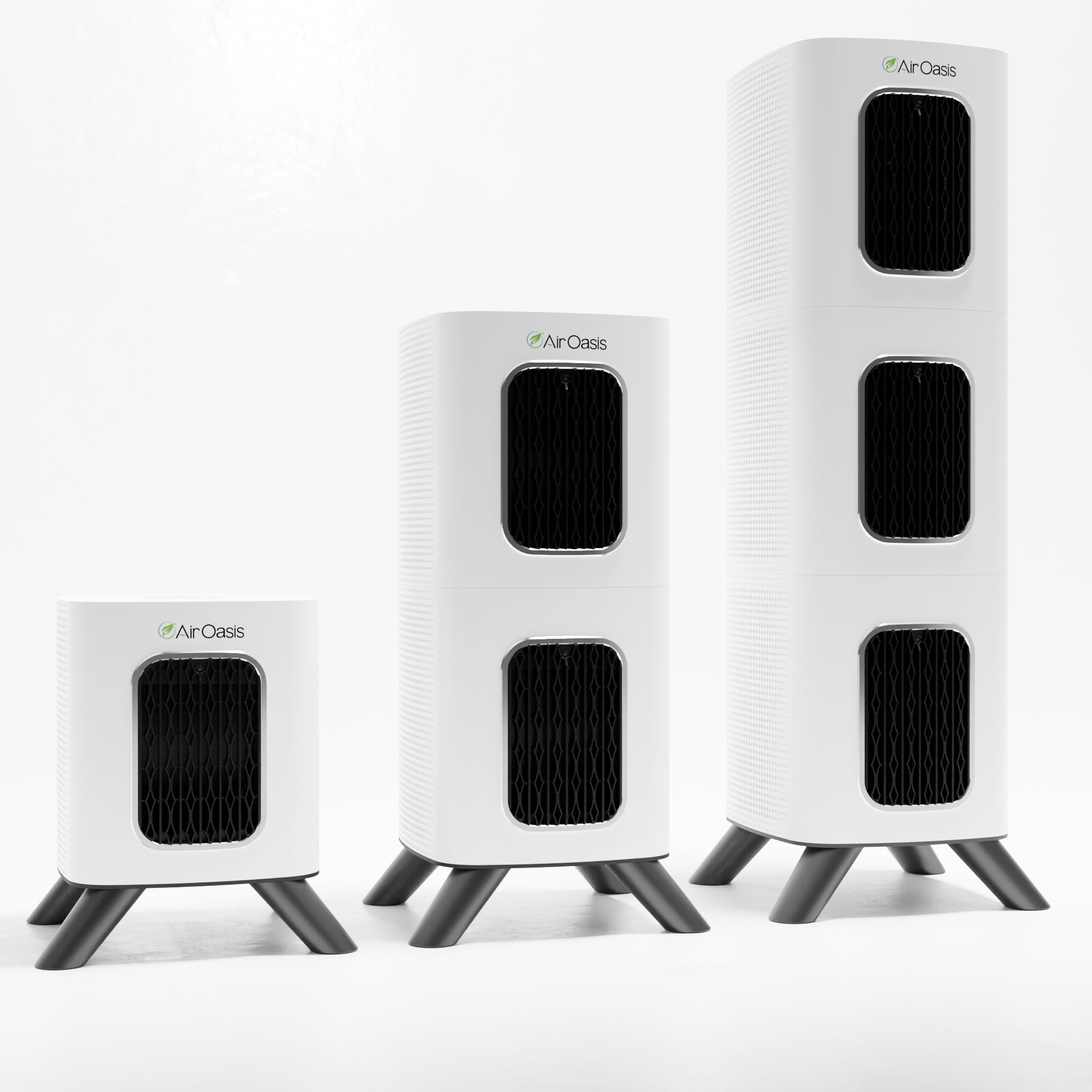
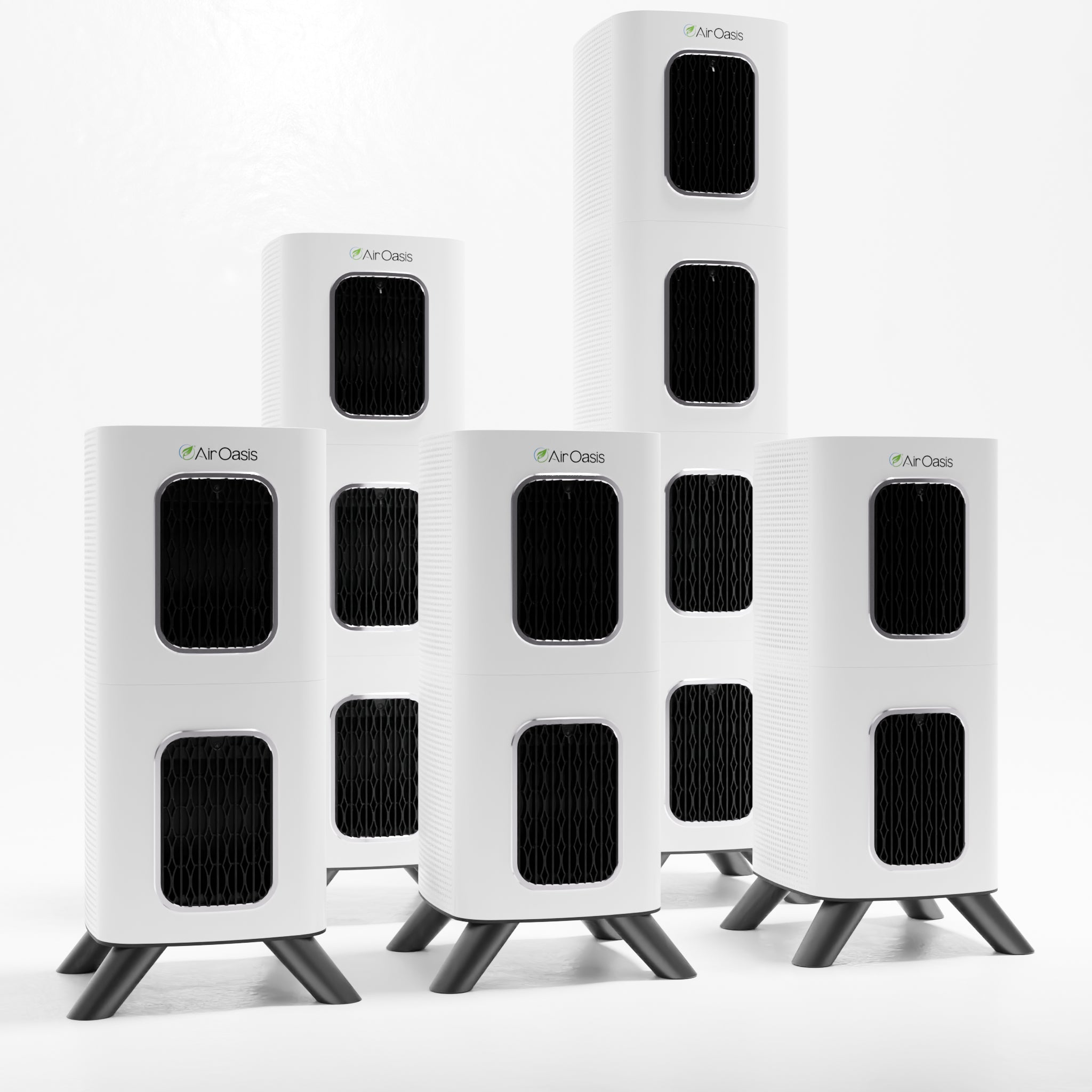
The iAdaptAir 2.0 series comes in four models. The 2S covers 265 square feet at 177 CFM. The 2M covers 530 square feet at 353 CFM. The 2L covers 795 square feet at 530 CFM. The 2P covers 1,059 square feet at 706 CFM. For most lofts — particularly those with high ceilings and open plans — the 2L or 2P is the appropriate starting point. The 2P is the right choice when the adjusted air volume calculation exceeds 800 square feet.
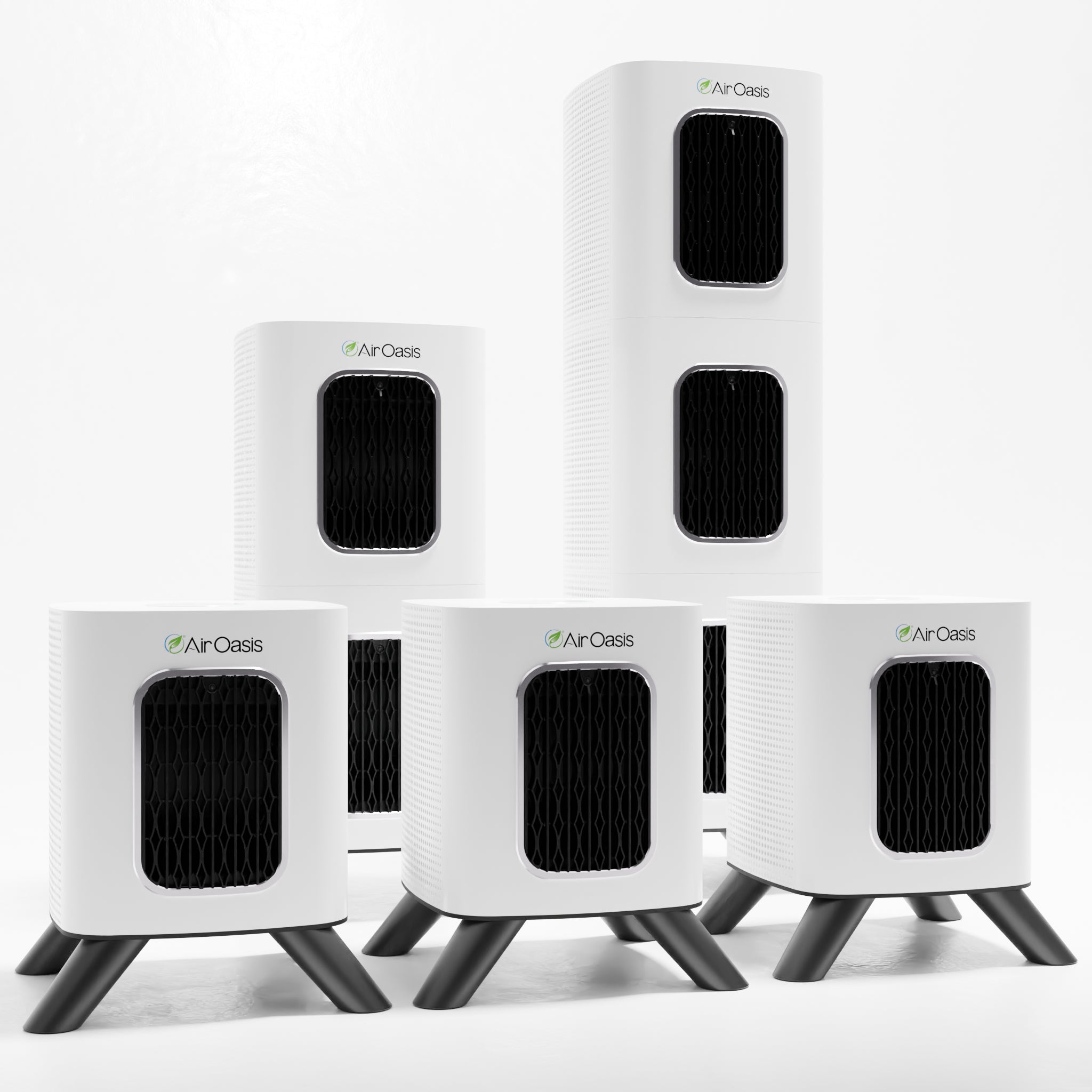
For very large lofts or lofts with distinct functional areas spread across a wide footprint, two units may be worth considering. Placing an iAdaptAir 2L at one end of the space and a 2M at the other creates overlapping coverage zones and more consistent air cycling throughout the full floor plan.
Placement in an Open Loft Space
Placement matters as much as sizing. The iAdaptAir manual specifies keeping at least four inches of clearance around all air inlets and outlets. In a loft, this means avoiding tucking the unit against a wall, into a corner, or behind furniture. Those positions restrict the airflow the unit needs to draw in and disperse clean air effectively.
In an open loft, the most effective placement is a central location on the main living level — away from walls and obstructions, in a position where the clean air it discharges can reach as much of the room as possible. If the loft has a sleeping mezzanine or raised platform, that area may benefit from its own smaller unit, such as the iAdaptAir 2S, to address the air in that more enclosed zone.
The iAdaptAir manual also notes that doors and windows should be closed during operation. In a loft with large industrial-style windows or limited insulation, drafts and air infiltration can reduce the unit's effectiveness. Closing the space as much as possible allows the purifier to cycle and clean the air it has, rather than continuously working against new outside air entering.
Air Stratification: A Real Factor in Tall Spaces
In rooms with very high ceilings, warm air rises and cool air settles closer to floor level. This thermal stratification means that the air near the ceiling and the air at breathing height are not always mixing freely. Pollutants and allergens — which vary in density — distribute differently with height.
The practical takeaway is that placing your purifier at floor level or on a low surface keeps it working in the breathing zone, which is where clean air delivery matters most. There is no benefit to elevating the purifier toward the ceiling to clean the upper air layer. The goal is to cycle the air at the level where people live and breathe — and let room air circulation gradually mix the rest.
Running ceiling fans on low speed can help in lofts. Moving air gently from the ceiling back down toward the floor helps break up stratification and brings more of the room's total air volume into contact with the purifier's intake.
Air Quality Concerns Specific to Lofts
Lofts often come with air quality considerations that are less common in standard apartments or homes. Older converted industrial lofts may have residual VOCs from previous uses, deteriorating materials, or limited ventilation infrastructure. Exposed brick and concrete surfaces accumulate dust and can harbor mold in damp conditions. Open-plan cooking areas without proper exhaust ventilation mean cooking particulates and odors spread freely through the entire space.
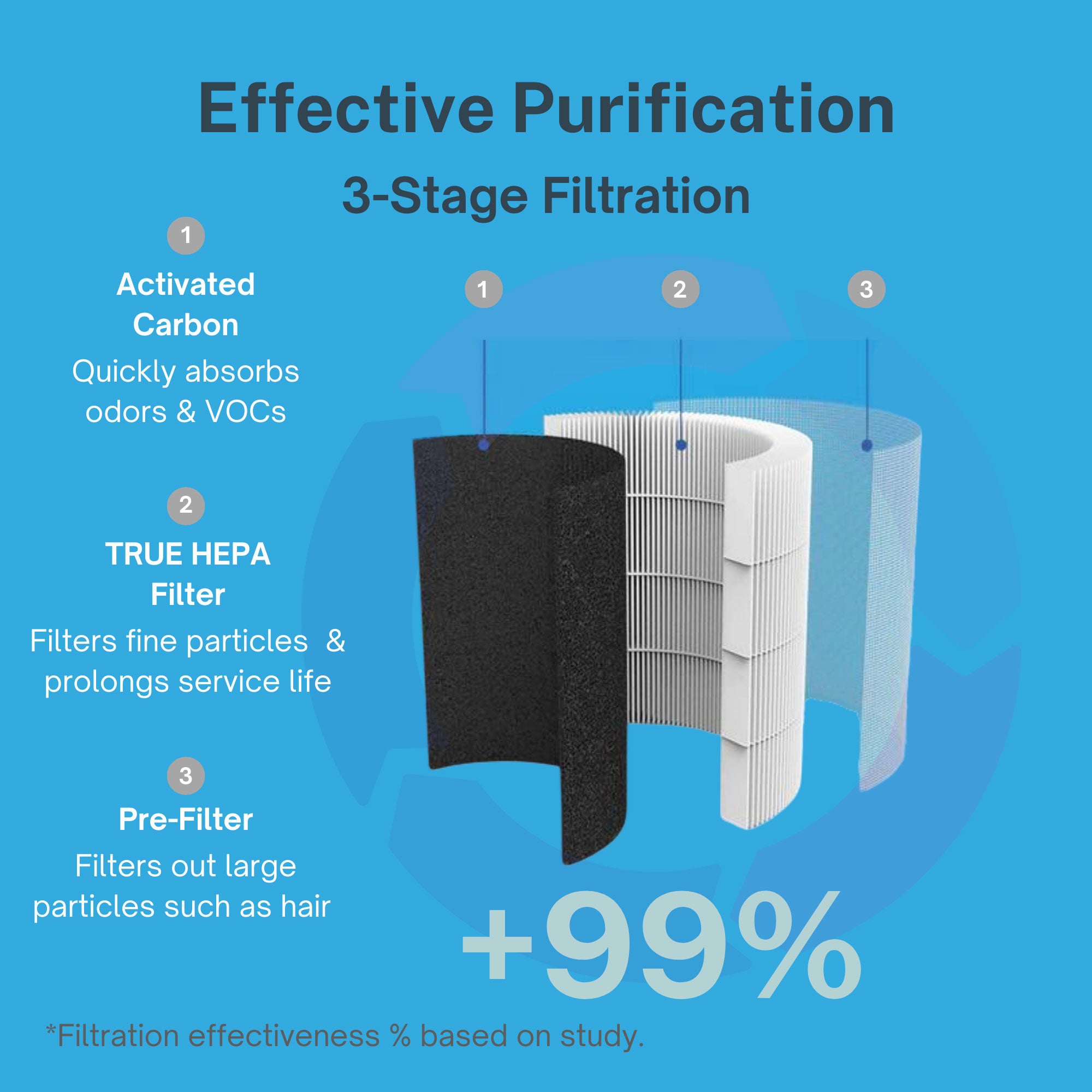
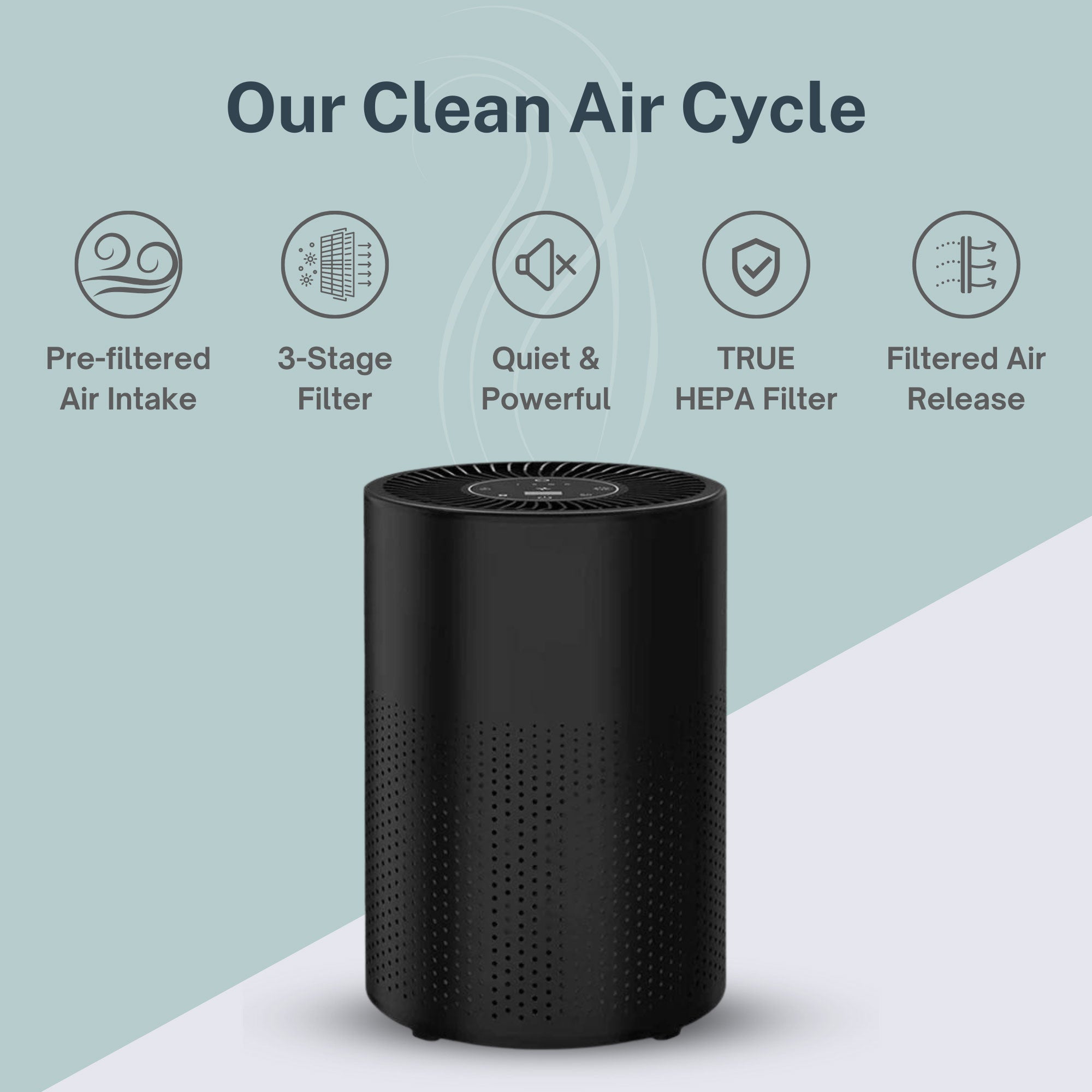
The iAdaptAir addresses these challenges with a multi-stage filtration system that includes True HEPA filtration for particles, activated carbon filtration for VOCs and odors, UV-C light to address biological contaminants, and bipolar ionization. In a loft with ongoing cooking activity, pets, or known VOC sources, the activated carbon component is particularly valuable — it targets the chemical gases and odors that HEPA alone cannot capture.
Size It Right and Your Loft Will Breathe
An air purifier absolutely can work in a loft space. The key is sizing it to the actual air volume — not just the floor area — and placing it where it can move air freely throughout the open plan. Skip that step, and even a good purifier will underperform.
Take a few minutes to calculate your loft's adjusted square footage, choose the iAdaptAir model that fits, and place it where air can move. The difference in air quality is real and noticeable. Shop Air Oasis today and find the right fit for your space.