You bought an air purifier rated for your room's square footage. You placed it correctly, changed the filters on schedule, and still something feels off. The air doesn't seem as clean as you expected. One factor that often goes unexamined: the height of your ceiling. It plays a bigger role in air purifier performance than most people realize — and it's the reason square footage alone doesn't tell the whole story.
Square Footage Is Only Half the Equation
Most air purifier coverage ratings are expressed in square feet. That's useful, but it only measures the floor area of a room. It doesn't account for how much air actually exists in that space — and that's what an air purifier has to clean.
Air volume is what matters. Volume is calculated by multiplying a room's length, width, and ceiling height. A 300-square-foot room with standard 8-foot ceilings contains 2,400 cubic feet of air. That same 300-square-foot room with 12-foot ceilings contains 3,600 cubic feet — 50 percent more air that the purifier must cycle through.
Most manufacturer coverage ratings assume a standard ceiling height of 8 feet. If your ceilings are higher — and in many older homes, open-plan spaces, lofts, and commercial environments, they are — a purifier sized for your square footage may be significantly undersized for your actual air volume.
What CADR Tells You and Why It Matters Here
CADR stands for Clean Air Delivery Rate. It measures how quickly a purifier delivers filtered air, expressed in cubic feet per minute (CFM). This is the most accurate way to evaluate whether a purifier can handle a space — and it's directly relevant to the ceiling height question.
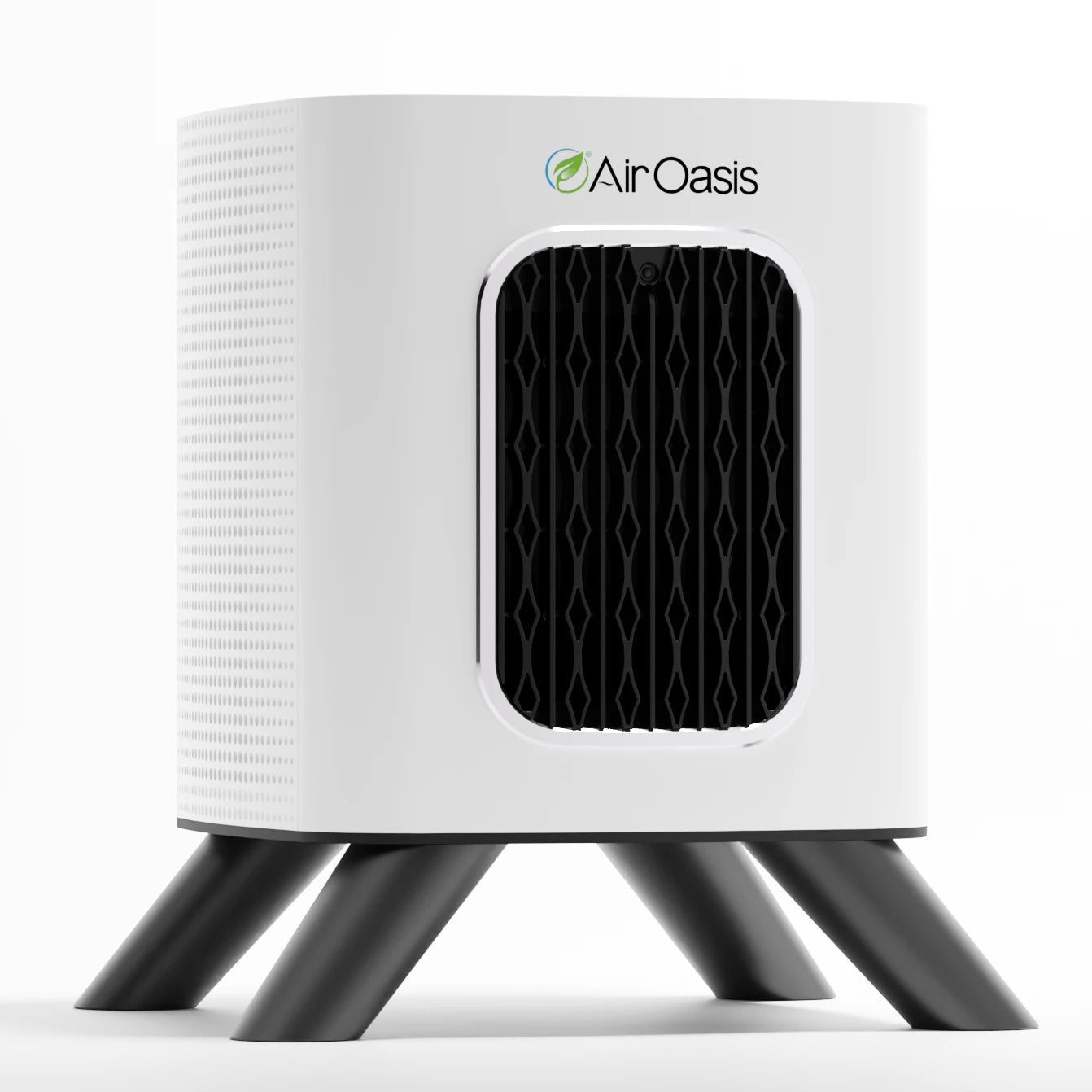
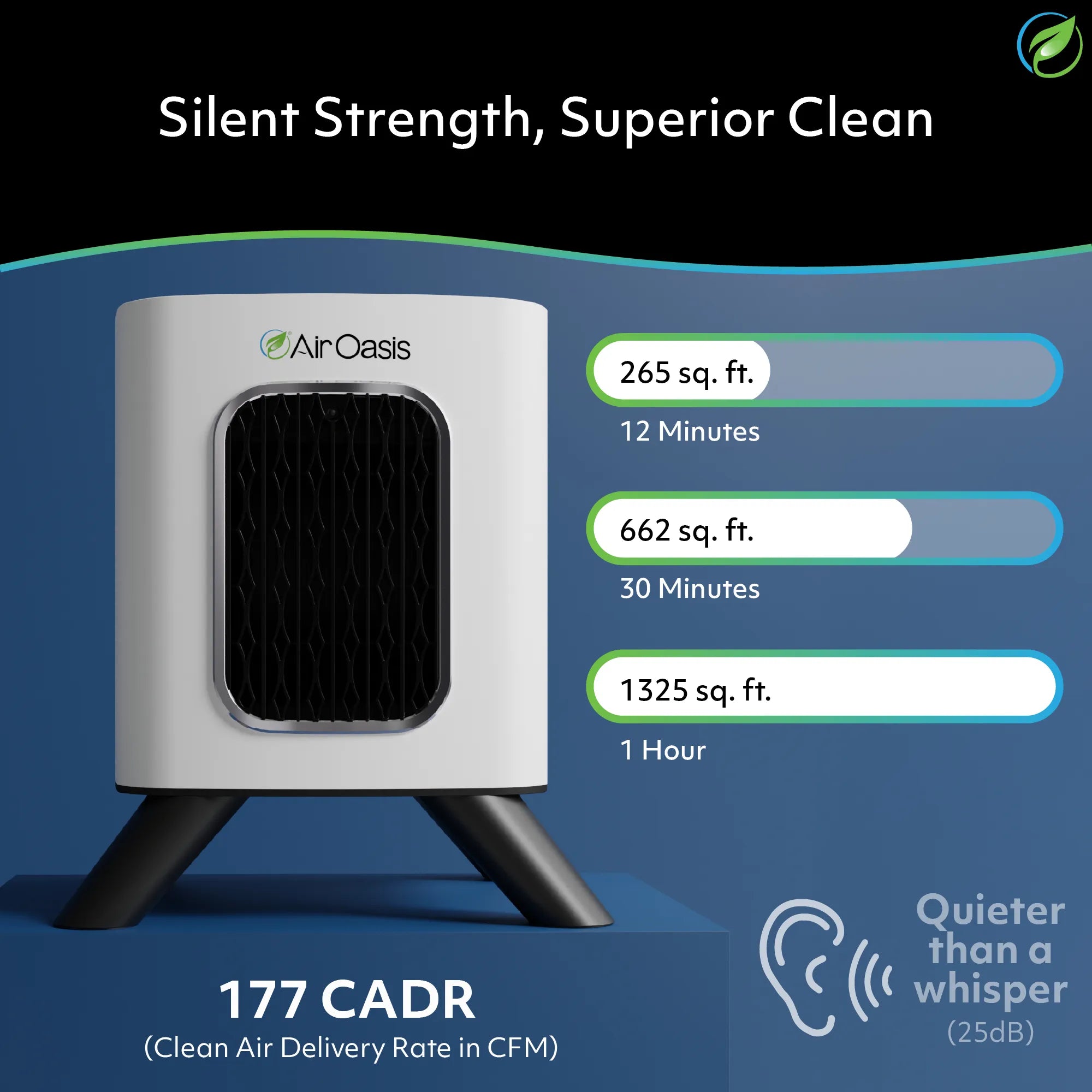
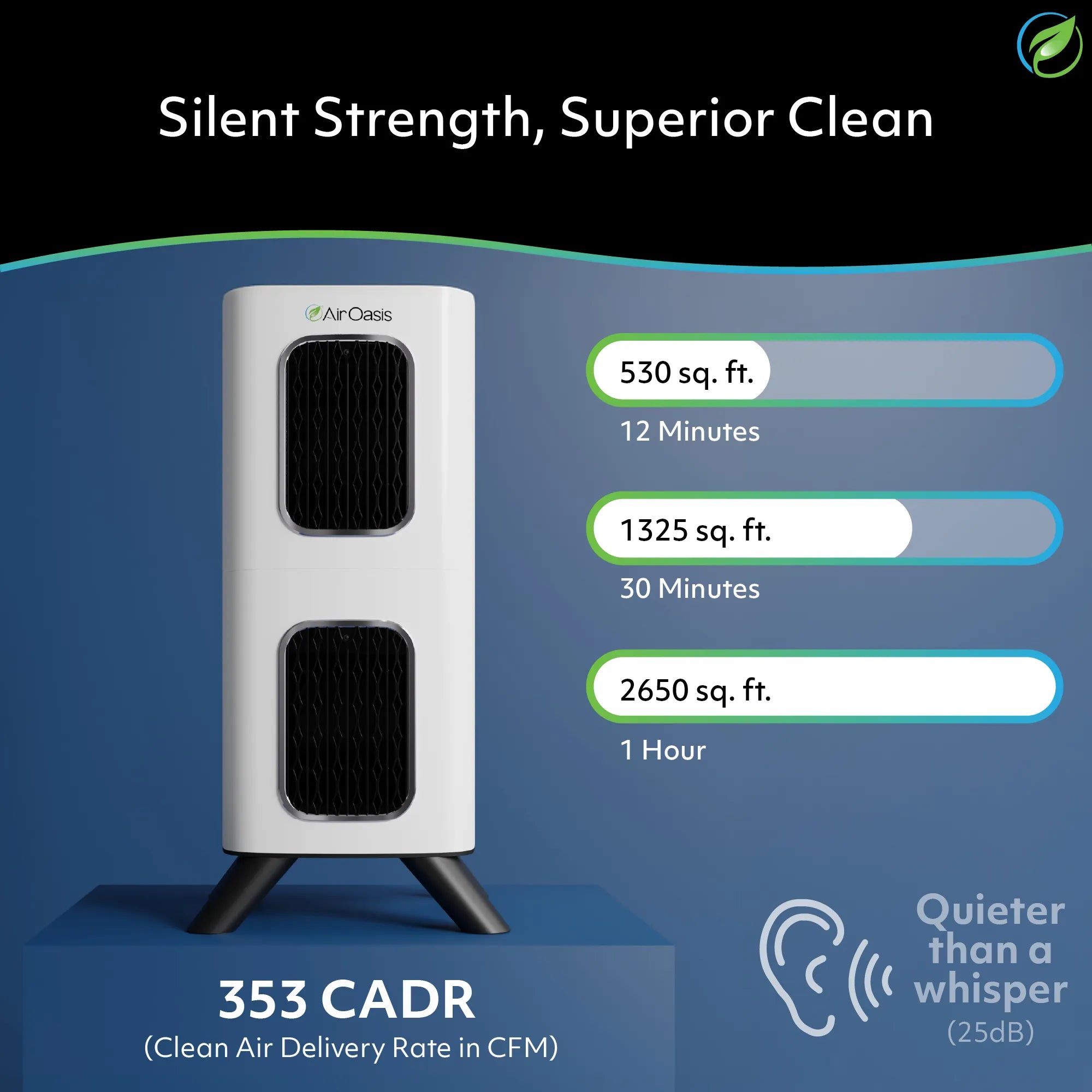
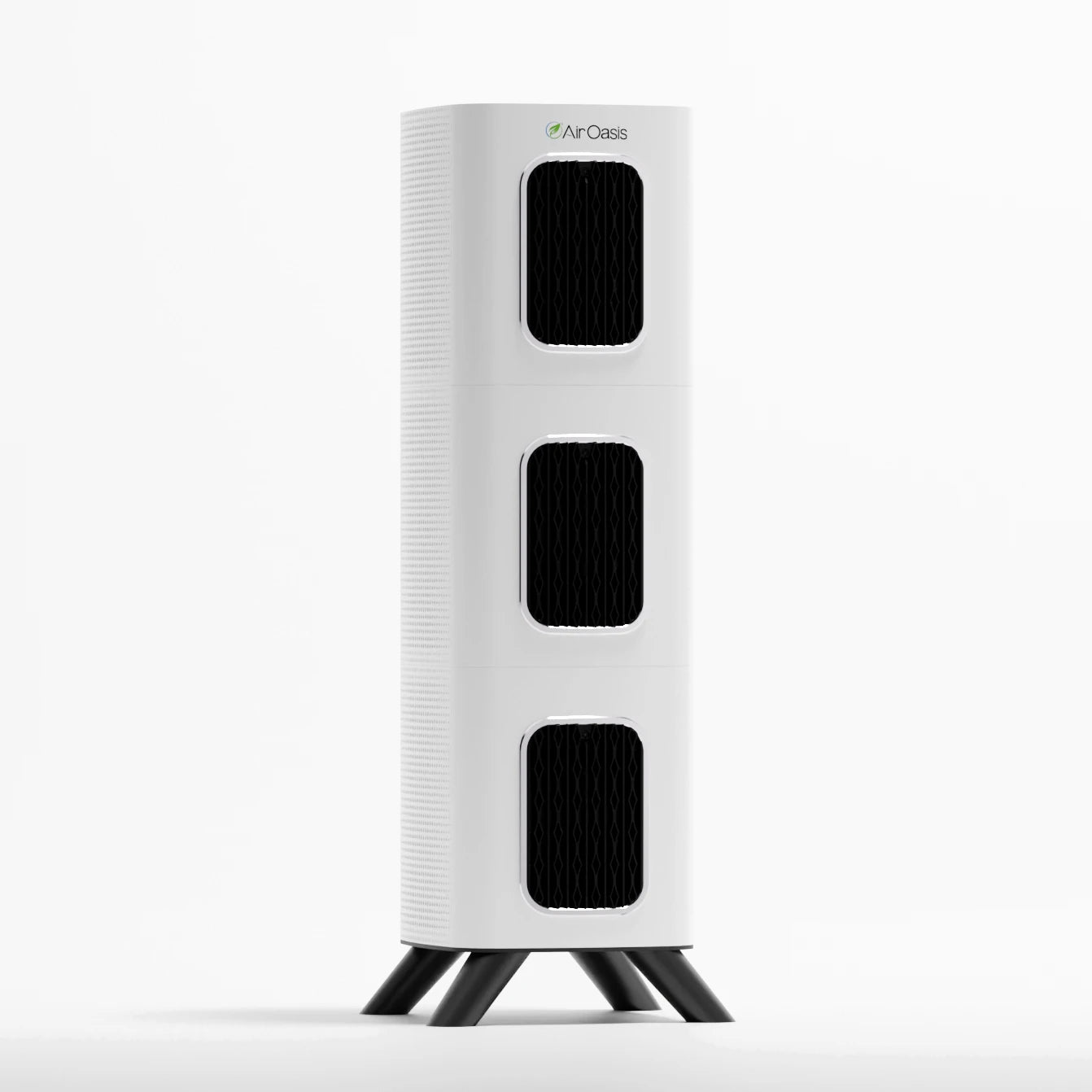
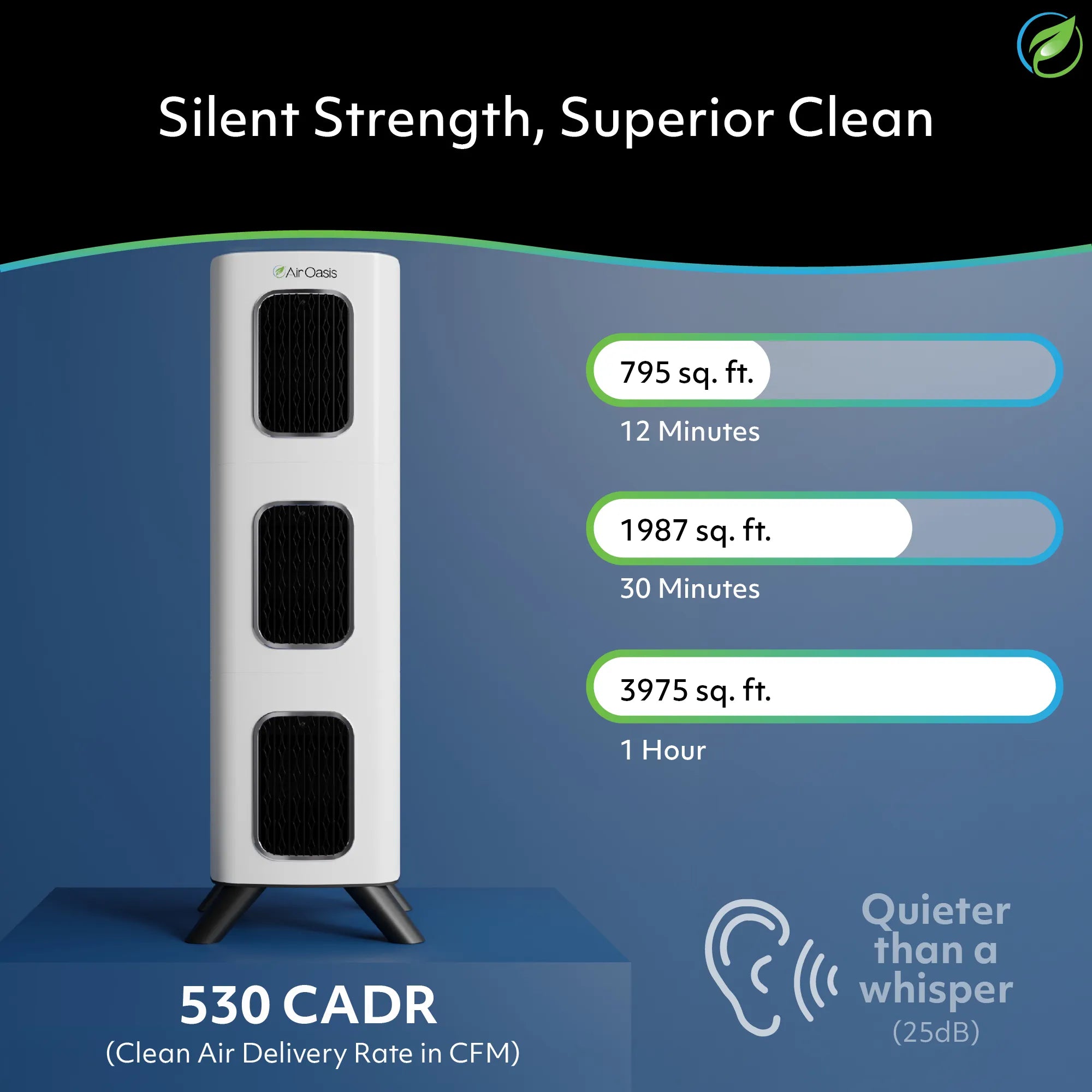
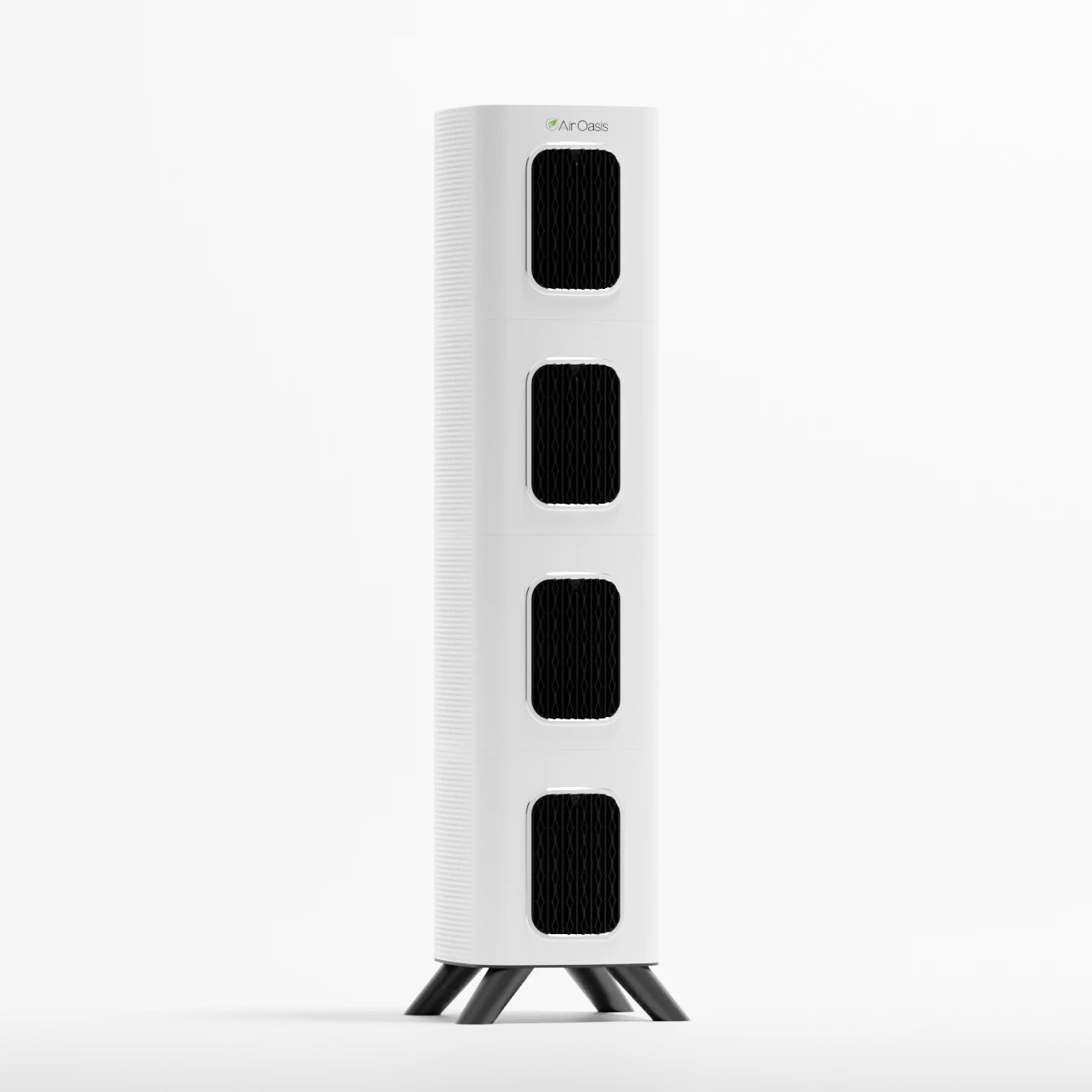
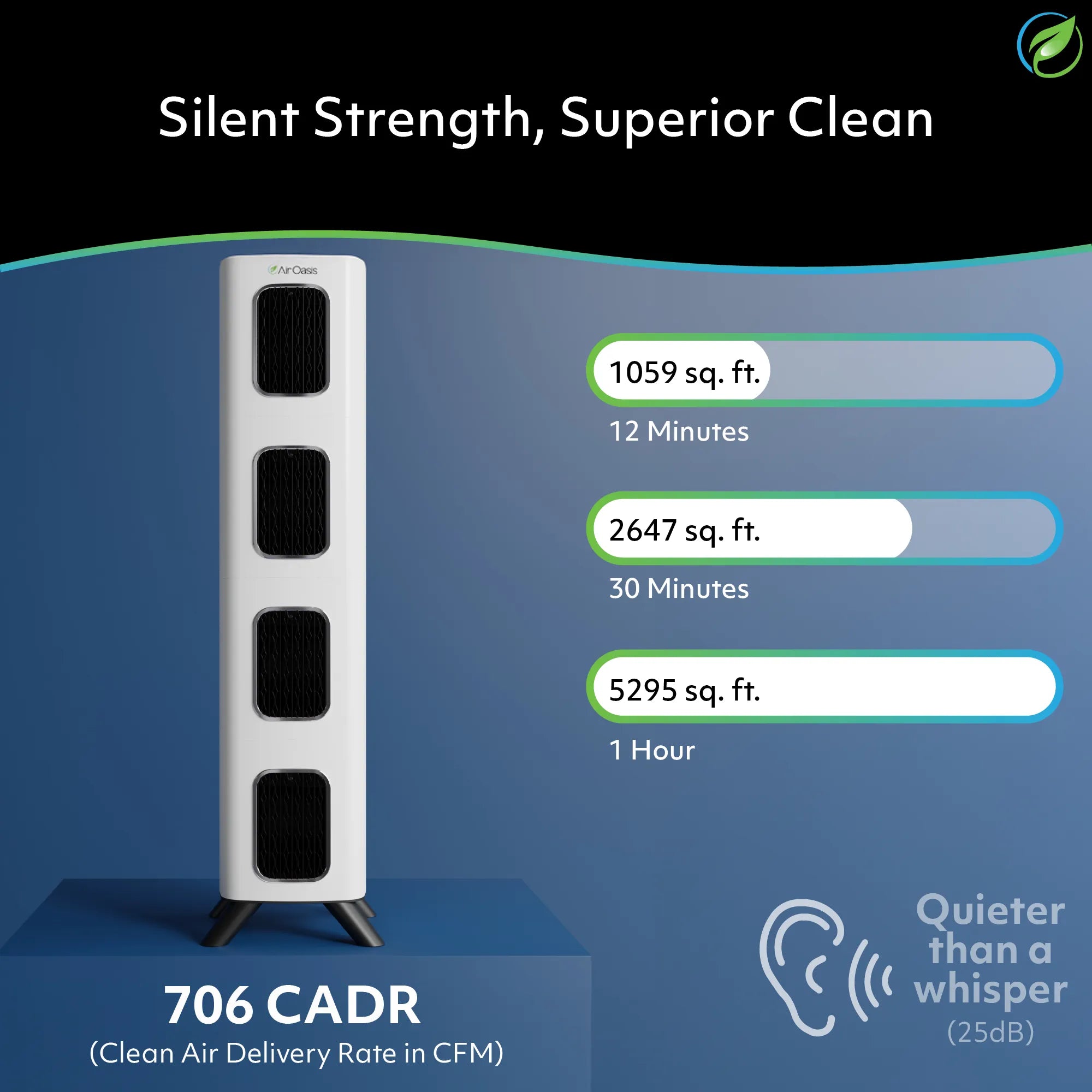
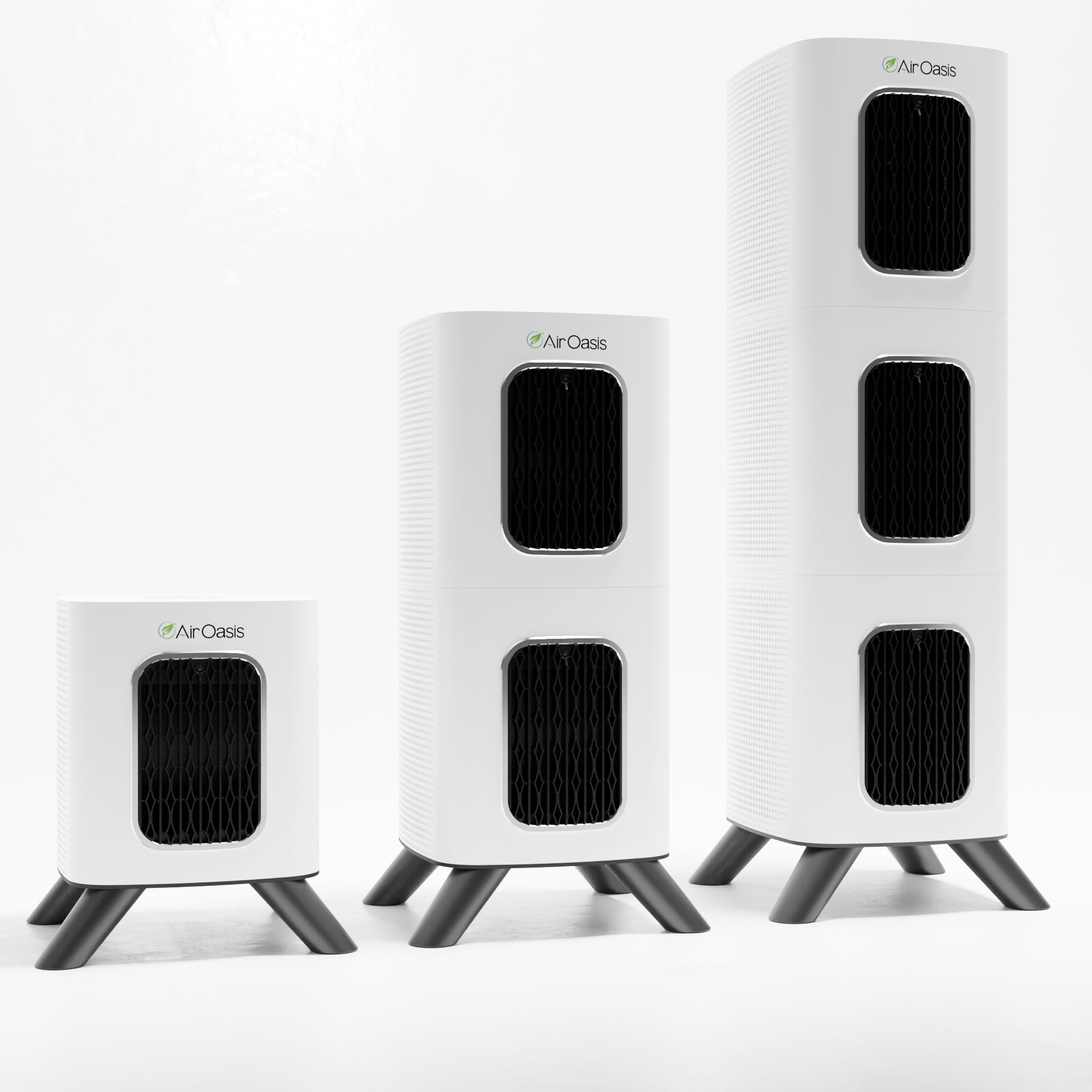
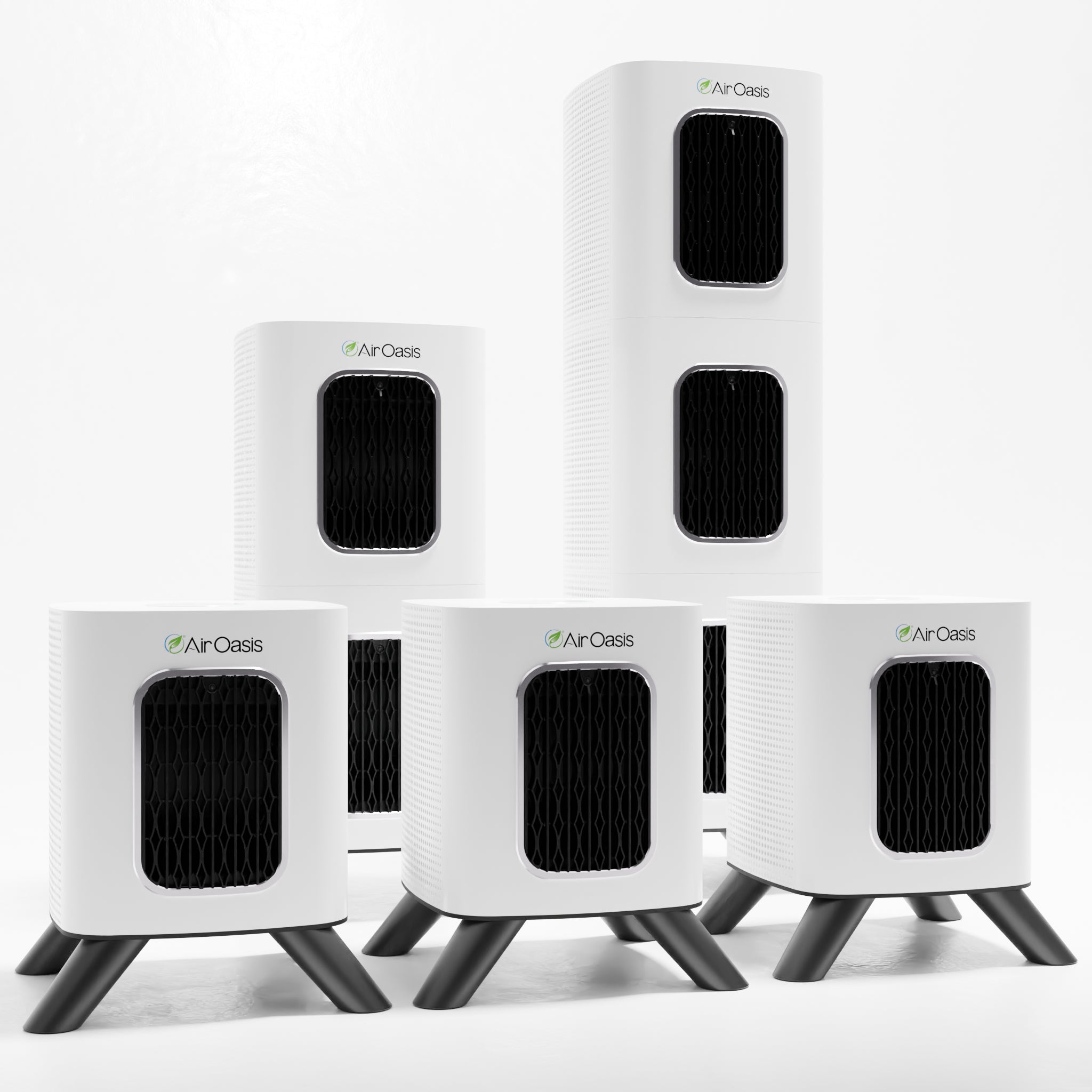
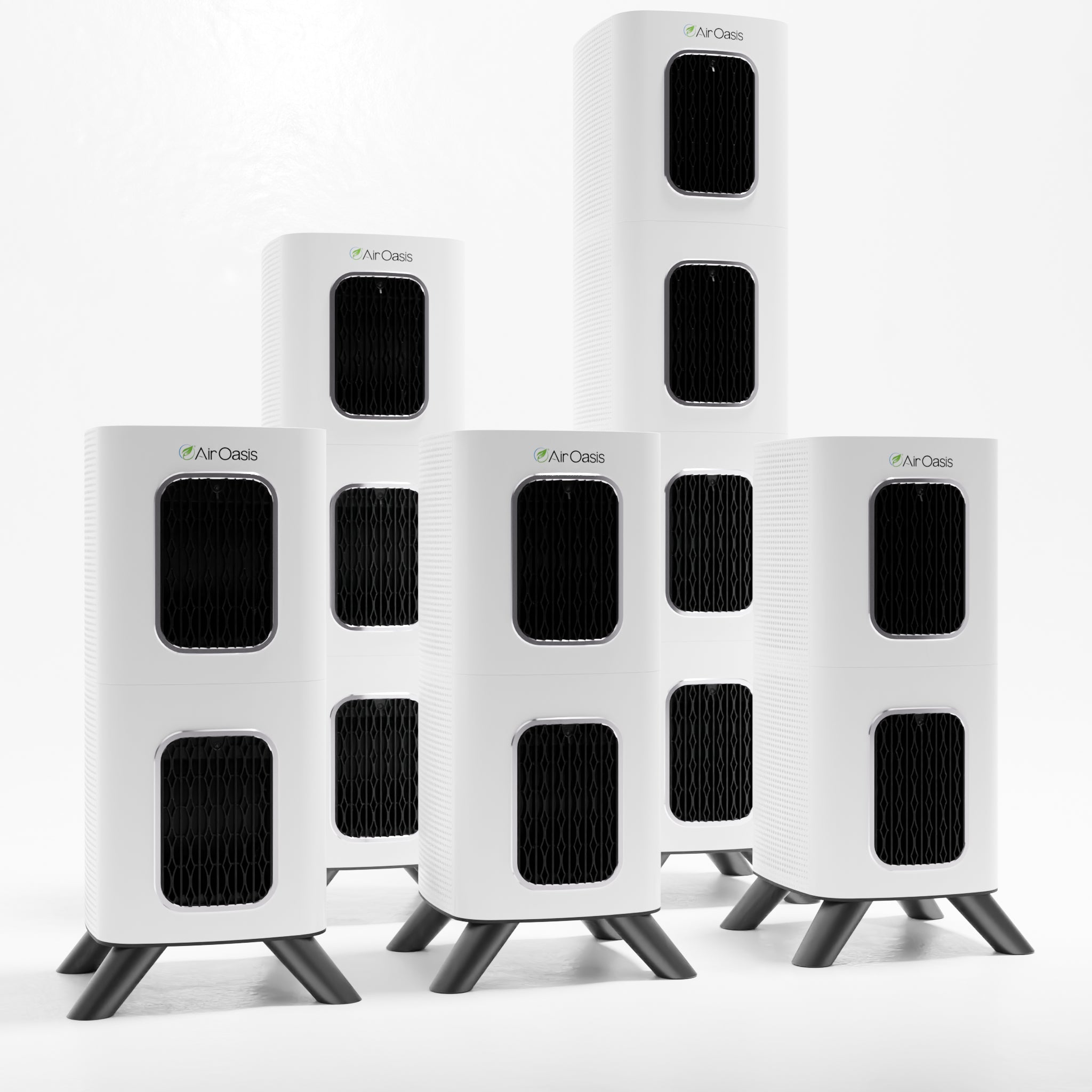
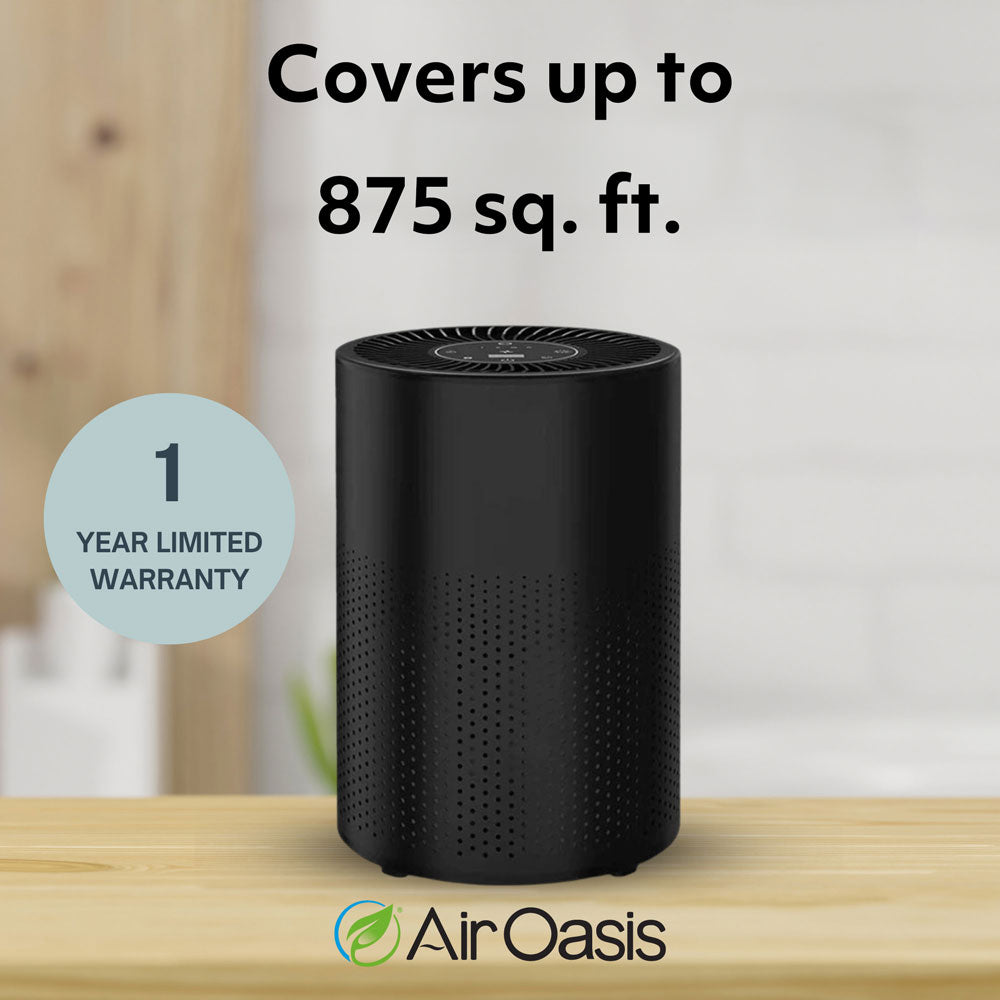
The iAdaptAir by Air Oasis publishes specific CADR ratings for each model in the product line. The 2S model delivers 177 CFM and is rated for 265 square feet. The 2M delivers 353 CFM for 530 square feet. The 2L delivers 530 CFM for 795 square feet. The 2P — the largest in the series — delivers 706 CFM and covers 1,059 square feet. All coverage ratings are based on achieving a full air cycle every 12 minutes, which is the standard used to assess effective purification.
In a room with standard 8-foot ceilings, these ratings work as stated. But in a room with 10- or 12-foot ceilings, you need to recalculate based on volume, not just floor area. A practical rule: if your ceilings are 10 feet high rather than 8, reduce the effective coverage of your purifier by roughly 20 percent. At 12 feet, reduce it by about 33 percent.
How to Size Your Purifier for High Ceilings
The calculation is straightforward. Measure your room's length, width, and ceiling height. Multiply all three together to get cubic footage. Then divide by 8 — the standard ceiling height used in coverage ratings — to find the equivalent square footage you should use when selecting a purifier.
For example, a 20-foot-by-20-foot living room with 12-foot ceilings has a volume of 4,800 cubic feet. Dividing by 8 gives you 600 square feet. Even though the room's floor area is only 400 square feet, you need a purifier rated for at least 600 square feet to achieve the same air exchange rate.
Using that math with the iAdaptAir line, that room would call for the 2M model, which is rated for 530 square feet — or ideally the 2L at 795 square feet to give yourself appropriate headroom in performance.
This is also why the iAdaptAir manual recommends ensuring you have the right size purifier for the room, occupancy, and contaminant load. Occupancy matters too. More people in a space means more particles, more CO2, and more demand on the purifier. High ceilings combined with high occupancy make correct sizing even more critical.
The Air Exchange Rate Question
Effective air purification isn't just about moving air through a filter once. It's about how many times per hour the purifier cycles all the air in the room. Most performance standards call for four to six complete air exchanges per hour in a residential setting. In rooms with high allergen loads, pets, or occupants with respiratory sensitivities, aiming for the higher end of that range is worthwhile.
In a room with high ceilings, achieving four to six air exchanges per hour requires more purifier output than a standard room. A unit that comfortably meets that standard in an 8-foot-ceiling room may only manage two or three exchanges in the same footprint with 12-foot ceilings. That gap shows up as reduced effectiveness — the purifier is running but not keeping pace with the volume of air that needs cleaning.
Placement Also Matters in Tall Spaces
In rooms with very high ceilings, air stratification is a real factor. Warm air rises, and in tall spaces it can pool near the ceiling while cooler air — and more of the particulate matter — stays lower. This means placing a purifier on the floor or at a standard table height remains the right approach for most residential use. The goal is to clean the air people breathe, not the air where the ceiling meets the wall.
The iAdaptAir is designed with this in mind. Its air inlet and outlet positioning support effective room-level air circulation. The manual specifies keeping at least four inches of clearance around the inlets and outlets to ensure proper airflow. In large or tall rooms, placing the unit away from walls and corners allows it to draw and discharge air more freely, improving its effective reach.
Choosing the Right iAdaptAir for Your Space
If you're working with standard 8-foot ceilings, size to square footage using the iAdaptAir coverage specs directly. If your ceilings are taller, use the volume-based calculation above. When in doubt, size up. Running a slightly larger unit at a lower fan speed is quieter, gentler on filters, and more effective than pushing a smaller unit at maximum output.
The iAdaptAir 2P, at 706 CFM and 1,059 square feet of coverage, is the right choice for large open-plan living areas, great rooms, and commercial spaces — especially those with elevated ceilings. For most bedrooms and standard rooms with 8- to 9-foot ceilings, the 2S or 2M will deliver strong performance. For open-concept kitchens and living areas, the 2L is a reliable fit.
Right-Size Your Purifier and Breathe the Difference
Ceiling height is a real variable in air purifier performance — and ignoring it means potentially getting less clean air than you're paying for. Take the few minutes to calculate your room's volume, adjust your sizing accordingly, and choose a unit that can genuinely keep pace with your space.
When your purifier is sized right, it works the way it's designed to — cleaning the air efficiently, consistently, and quietly. Shop Air Oasis today and find the iAdaptAir that fits your home perfectly.