You smell it before you see it. Something acrid and woody, faint at first, then unmistakable. The AQI on your phone confirms what your nose already knows: the air outside is bad, and despite your closed windows, it's already working its way in.
Wildfire smoke doesn't wait for an invitation. It finds every gap around a window frame, every soffit vent, every return air intake in your HVAC system. In a typical home, outdoor air infiltrates at a rate that means even sealed rooms exchange their air with the outside several times per day. When that outside air is carrying fine particles from a fire burning hundreds of miles away, the distinction between "outdoor problem" and "indoor problem" collapses quickly.
Here's what to actually do — from the moment you notice smoke is entering, through the hours you're hunkered down waiting for conditions to improve.
Why wildfire smoke infiltration is different from other air quality events
Most indoor air quality problems are generated inside the home: cooking combustion, off-gassing furniture, pet dander, mold. You can address those by removing the source, improving ventilation, or filtering the air. Wildfire smoke is the opposite situation — the source is outside and potentially unavoidable for hours or days, and the standard instinct to ventilate by opening windows makes things dramatically worse rather than better.
What you are trying to do during a smoke event is create and defend a refuge. That means limiting how much contaminated outdoor air enters your home, filtering what has already entered, and keeping the filtration running continuously until outdoor air quality returns to a safe level.
Wildfire smoke particles are predominantly fine particulate matter, the fraction called PM2.5, meaning they are smaller than 2.5 microns in diameter. These are the particles that bypass the upper respiratory system and deposit deep in the smaller airways and lung tissue. They are also small enough to stay suspended in air for extended periods and to infiltrate buildings through gaps that would stop larger particles. According to the EPA, indoor concentrations of wildfire PM2.5 can reach 40 to 60 percent of outdoor levels even in homes with windows and doors closed, and higher than that in leakier construction.
The first priority: reduce how much smoke is getting in
Close everything — windows, doors, and fireplace dampers. If you have a whole-house ventilation system with an outdoor air intake, switch it to recirculation mode so it is not actively drawing smoky air inside. If your HVAC system doesn't have that option and you're uncertain, turning off the fan entirely during the worst hours is better than pulling contaminated air through ductwork and distributing it throughout the house.
The gaps that matter most are often invisible: the space beneath exterior doors, dryer vents that don't seal properly when not in use, exhaust fans in bathrooms and kitchens that have dampers that don't fully close. If you have weatherstripping tape or can stuff a rolled towel against the gap at the base of an exterior door, do it. These are imperfect solutions, but reducing infiltration rate matters even if you can't eliminate it entirely.
One counterintuitive point worth knowing: running a bathroom or kitchen exhaust fan during a smoke event depressurizes the house slightly, which increases the rate at which outdoor air infiltrates through every other gap. If you're trying to maintain a refuge, avoid running exhaust fans unless you genuinely need them.
What to run — and how to run it
Once you've minimized infiltration, the next step is cleaning the air that's already inside and managing what continues to seep in. This is where air purification does its most important work.
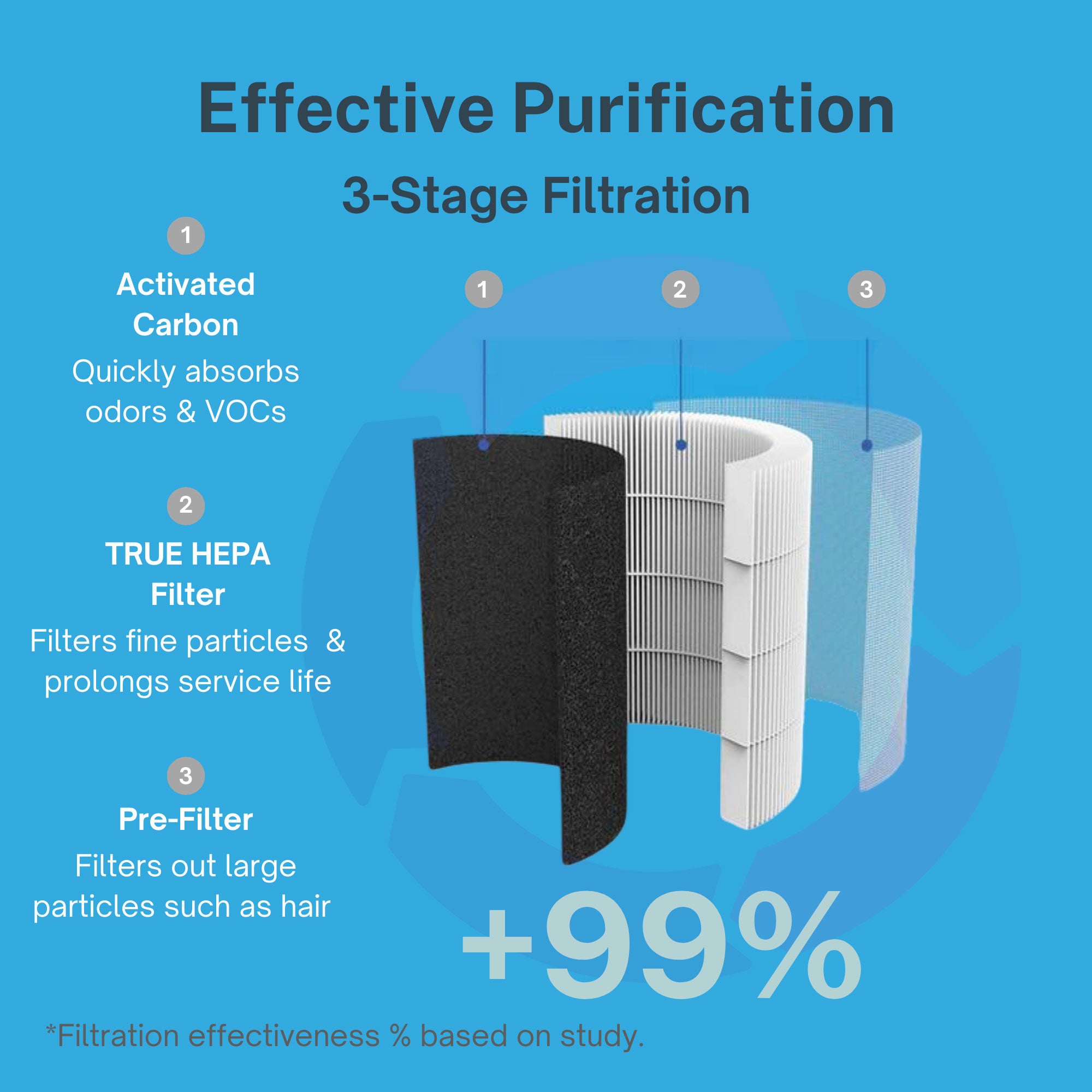
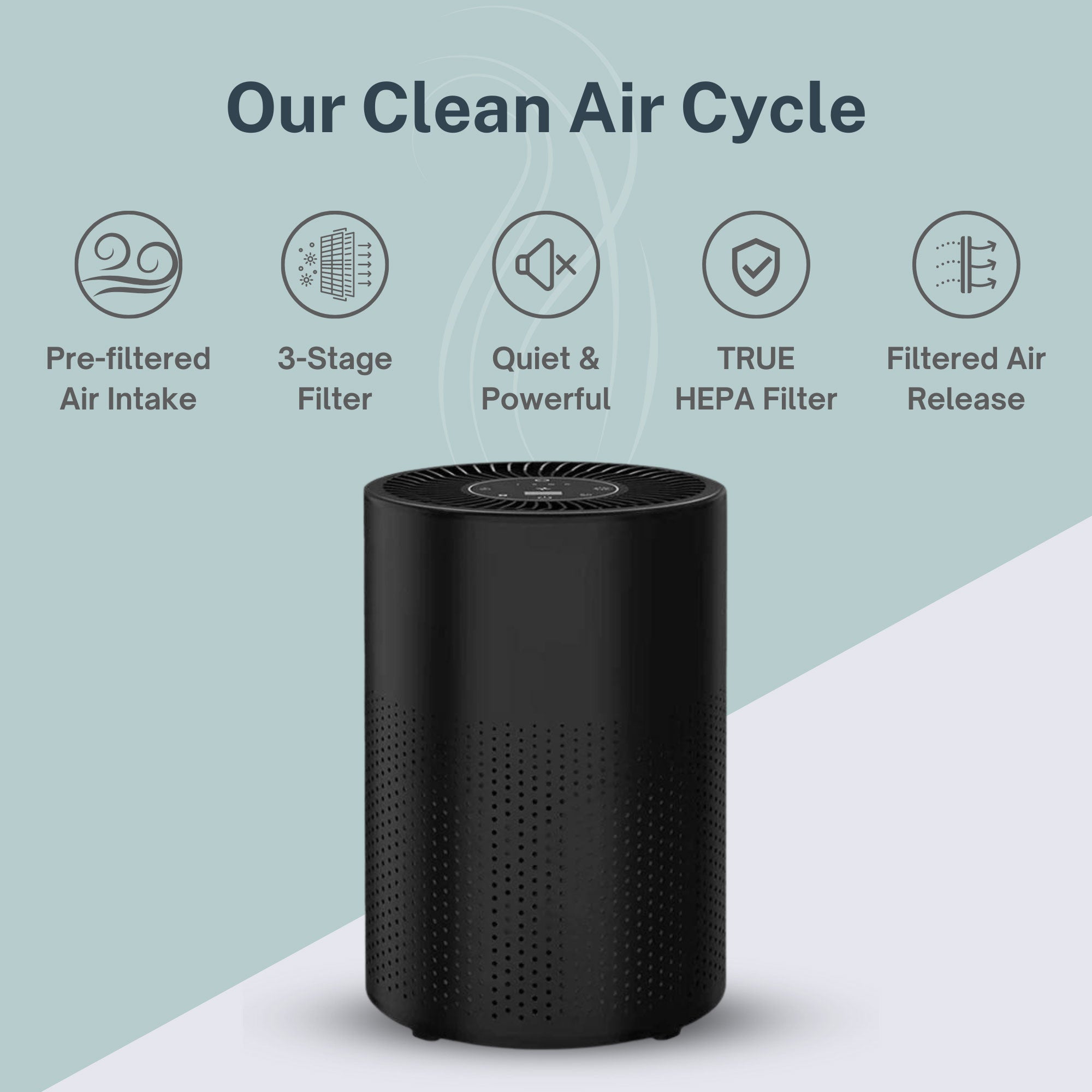
True HEPA filtration is the right tool for wildfire smoke particles. HEPA captures particles down to 0.3 microns, which covers the PM2.5 fraction that constitutes most of the health risk in wildfire smoke. Activated carbon addresses the gas-phase compounds, the volatile organic chemicals and carbon monoxide that smoke also carries, that pass through a particle filter unaffected. Both matter during a smoke event, and neither fully substitutes for the other.
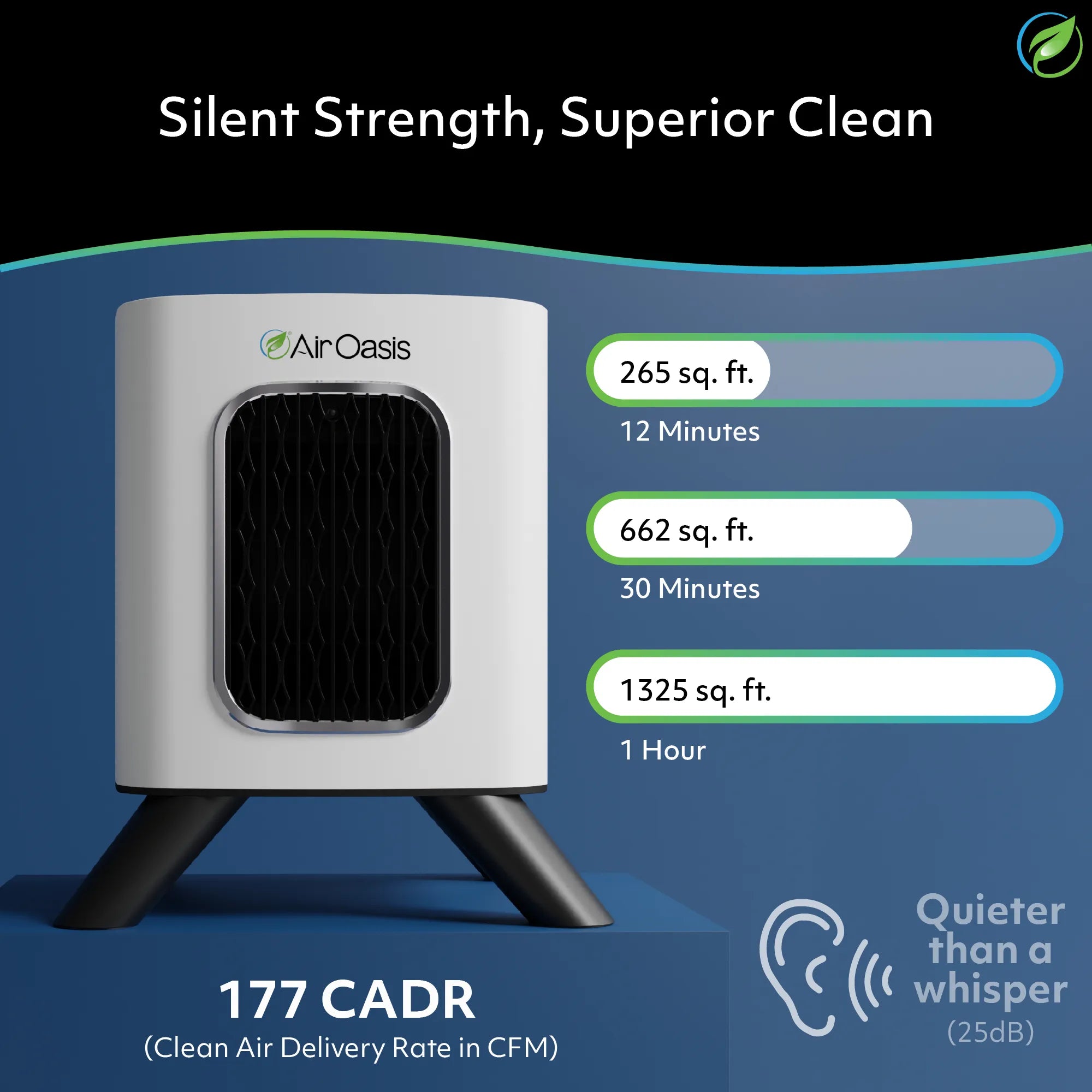
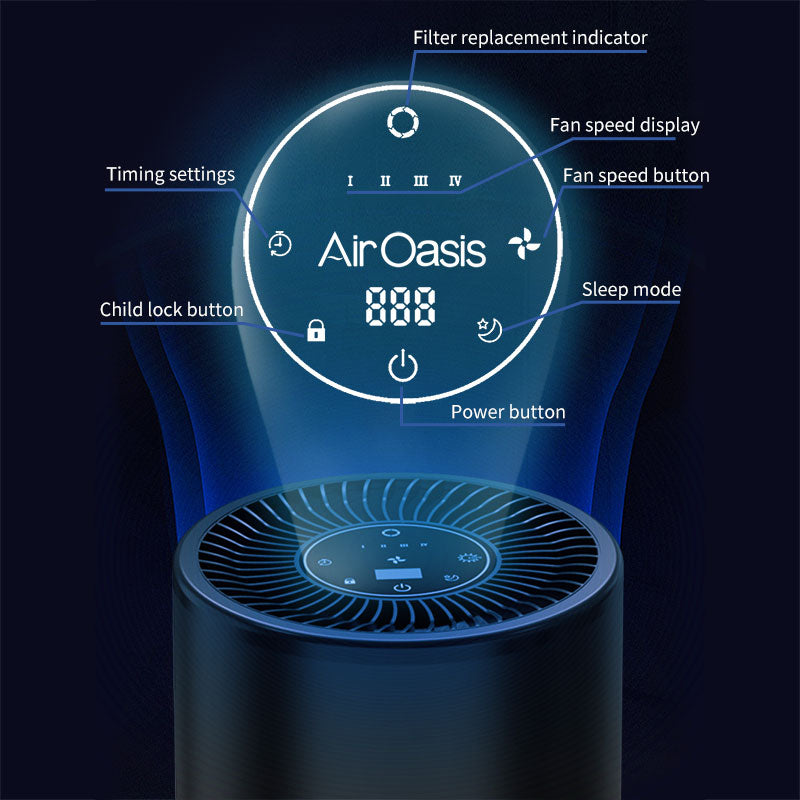
During active infiltration, run your air purifier at a higher fan speed. The goal is to cycle the room's air through the filter frequently enough to stay ahead of what's coming in. If your unit has a particle sensor and Auto mode, watch the air quality indicator: it may hold at orange or red for an extended period during a significant smoke event, which is the unit working continuously against an ongoing source rather than a problem to be solved and recovered from. That's appropriate behavior, not a sign something is wrong.
The room you're in matters more than the room with the purifier. During a smoke event, identify your refuge room — ideally an interior room on an upper floor, away from exterior walls with the most gaps — and concentrate your air purification there. Keeping the door closed while the unit runs gives it a defined, manageable volume of air to cycle, which is meaningfully more effective than running it in an open floor plan where it is competing with the entire home's air volume.
If you have multiple units, prioritize the bedroom. You will likely sleep through part of the event, and eight hours of unfiltered smoke exposure during sleep, when your respiratory system has no behavioral defenses, is exactly the situation a bedroom purifier is designed to address.
The mistake most people make
The most common error during a wildfire smoke event is treating it like a temporary problem that will resolve quickly and then opening windows the moment conditions seem slightly better. Smoke events can last days. Indoor particle concentrations that have built up over hours do not clear instantly when outdoor AQI improves, and opening windows prematurely can reintroduce outdoor particles before indoor air has had time to fully recover.
Wait for the outdoor AQI to return to a genuinely safe level — generally below 50, in the "Good" category — before opening up for ventilation. Even then, ventilate gradually, and keep your purifier running through the transition period.
A second common mistake is underestimating how far smoke travels. Wildfires hundreds of miles away routinely push PM2.5 concentrations to unhealthy levels across entire regions, particularly in the eastern United States, where smoke from western fires can arrive as a diffuse haze that doesn't smell as strongly but still carries significant particle loads. If your AQI is elevated and you don't have a local explanation, wildfire smoke from a distant fire is often the cause.
After the event: the filter question
Running an air purifier at high speed for 12 to 48 hours through a serious smoke event loads the HEPA filter significantly faster than normal operation. Wildfire smoke particles are particularly fine and numerous, which means the filter captures a high volume of material over a relatively short time. Check your filter life indicator after a major event. If the unit shows reduced remaining life, that's accurate — the filter has done heavy work. Continuing to run an overloaded filter reduces effectiveness and puts more strain on the motor.
The iAdaptAir's filter life indicator calculates remaining life from a combination of runtime, fan speed, and real-time air quality sensor readings, so it reflects what the filter has actually been through rather than just hours of operation. If the indicator is showing significant reduction after a smoke event, trust it.
What the iAdaptAir is doing during all of this
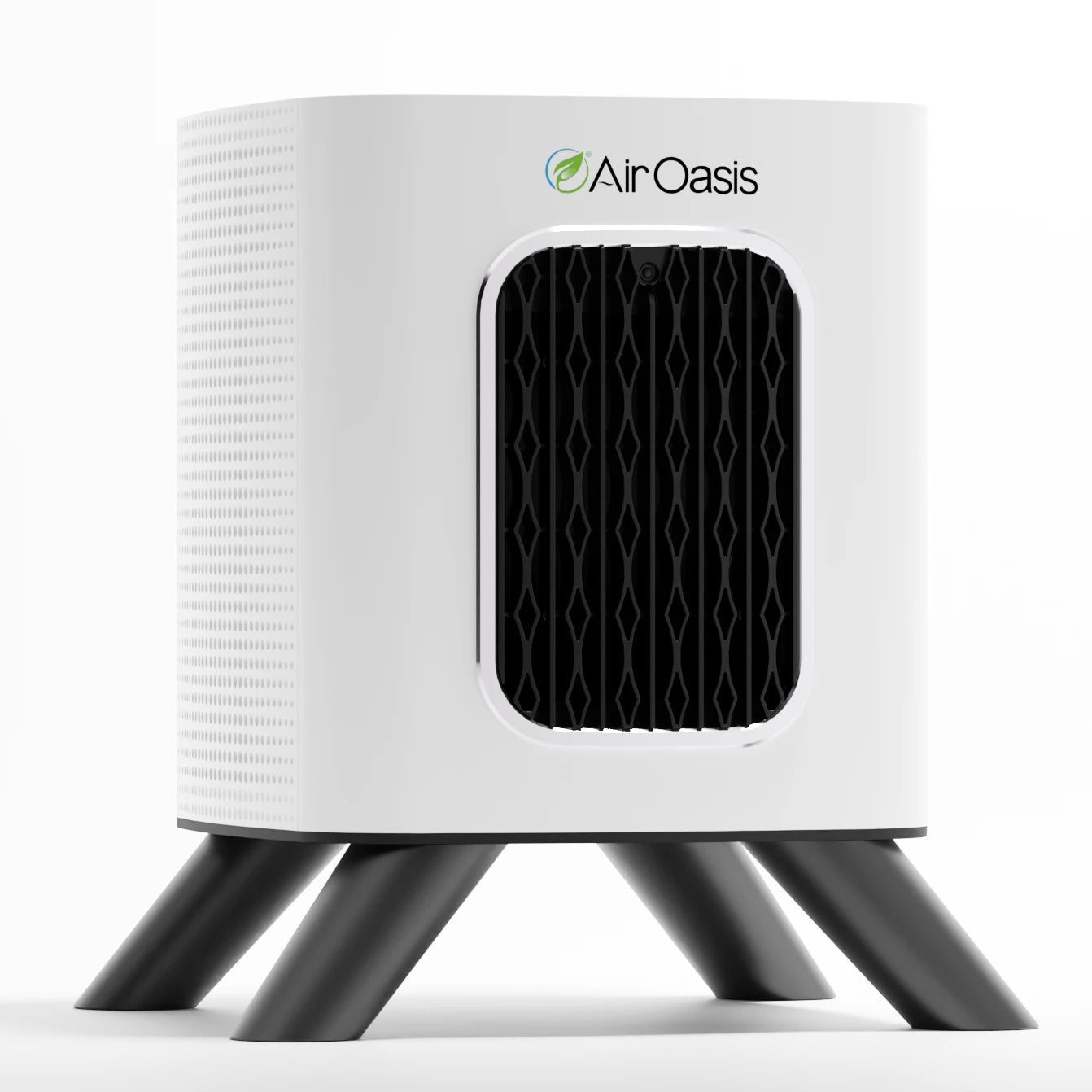
The iAdaptAir's True HEPA layer handles the particulate fraction of wildfire smoke — the PM2.5 that is the primary health concern — while the activated carbon layer adsorbs the gas-phase combustion compounds that HEPA alone cannot capture. The CARB-certified ozone-free design matters specifically in this context: when outdoor air quality is poor enough that you're keeping your home sealed, you don't want your air purifier introducing additional oxidants into the air you're breathing. UV-C and bipolar ionization address biological material in the airstream without generating ozone.
Running it at higher fan speeds during active smoke conditions, dropping back to Auto mode as outdoor AQI improves, and keeping it in the room where you're spending the most time will give you the most meaningful protection through the duration of the event.
Wildfire smoke season is now a year-round reality across much of North America. The air inside your home is the one variable you can actually control. Knowing what to do when smoke arrives — before it does — means you're not improvising when it matters most.
Shop Air Oasis and find the iAdaptAir sized for your space. Breathe Better, Live Better.